More in
Noticias de AI en el Trabajo
OpenAI Abrio la Publicidad en ChatGPT a Pequenas Empresas con Cualquier Presupuesto
jun. 6, 2026
La AI Esta en Todas Partes en el Trabajo. Solo 1 de Cada 10 Dice que Transformo el Empleo
jun. 6, 2026
El Momento de $10.5B del Vibe Coding: AI Ahora Inicia la Mayoria de los Nuevos Desarrollos de Software
jun. 6, 2026
Los Agentes de AI Tienen Ahora Mas Acceso al Sistema que sus Empleados. Pocos Estan Asegurados
jun. 5, 2026
¿Deberia Construir su AI o Comprarla? Observe lo que Compraron los Gigantes.
jun. 5, 2026
Uber Limita el Gasto de AI por Empleado a $1,500 por Puesto Tras un Descontrol Presupuestario
jun. 5, 2026
La Orden Ejecutiva de AI de Trump es Desregulatoria. Su Riesgo de Cumplimiento No Cambio
jun. 4, 2026
La AI Empujo a 220 Unicornios por Debajo de $1B. Las Empresas Pre-ChatGPT Enfrentan un Ajuste de Cuentas
jun. 4, 2026
Los Precios por Token Cayeron un 67% Este Ano. Su Factura de AI Sigue Subiendo
jun. 3, 2026
Las Pequenas Empresas que Usan AI Reportan Mayores Ingresos y Jornadas Laborales Mas Cortas
jun. 3, 2026
Windows 365 for Agents Convierte la Cloud PC en un Runtime de Agentes: Lo que los CTO Deben Blindar Antes de Desplegarlo
Turn this article into takeaways for your work.


Each assistant summarizes the article only for you and suggests best practices for your work.
Microsoft acaba de dar a los agentes de IA un escritorio Windows completo. No es una actualización de funcionalidades: es una nueva clase de superficie de ataque empresarial, y el reloj de gobernanza ya está corriendo.
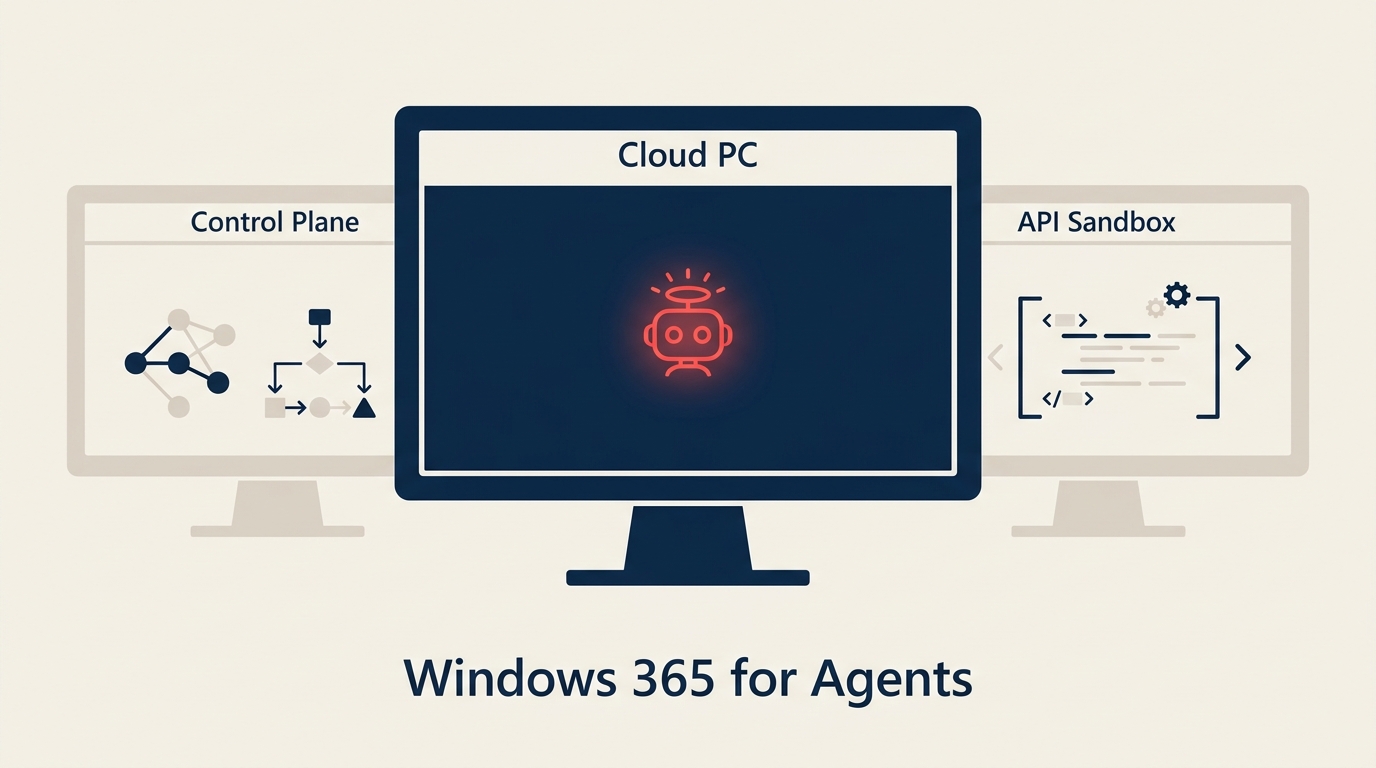
El 28 de mayo de 2026, Microsoft abrió la versión preliminar pública de Windows 365 for Agents en Estados Unidos: un runtime de Cloud PC agéntica diseñado específicamente que permite a los agentes de IA operar dentro de un entorno Windows gestionado. Como informó Help Net Security, esta es una línea de producto diferente a la Windows 365 Cloud PC orientada a humanos, construida específicamente para usuarios no humanos. Es el tercer runtime en una arquitectura de agentes empresariales que muchos CTO aún no han terminado de diseñar.
Qué Entregó Realmente Microsoft
El núcleo de esta versión es un nuevo modelo de infraestructura que Microsoft denomina "hosted on behalf of", abreviado HOBO. Bajo la arquitectura HOBO, cada agente recibe su propia máquina virtual de instancia única en Azure. Esa VM se ejecuta dentro de la suscripción de Azure de Microsoft, pero está gobernada por las políticas de Microsoft Intune (gestión de dispositivos móviles) del cliente y asegurada a través de Microsoft Entra ID (la plataforma de identidad empresarial anteriormente conocida como Azure Active Directory).
Su equipo de TI configura y audita la máquina; Microsoft gestiona el alojamiento. La documentación de Microsoft Learn sobre Windows 365 for Agents detalla el modelo técnico, incluyendo qué tipos de agentes están soportados en la versión preliminar.
La licencia requiere tres elementos: la nueva licencia Agent 365 a $15 por usuario al mes, una suscripción existente a Intune y una suscripción activa a Azure. No es una compra independiente: asume que ya está ejecutando el stack de gestión empresarial de Microsoft.
Lo que el agente recibe es un escritorio Windows completo: no un endpoint de API, no un shell en sandbox. Una barra de tareas, navegador, sistema de archivos y la capacidad de hacer clic a través de interfaces de aplicación. Ese es el objetivo. Y también es el riesgo.
Los Tres Runtimes Están Ahora Visibles
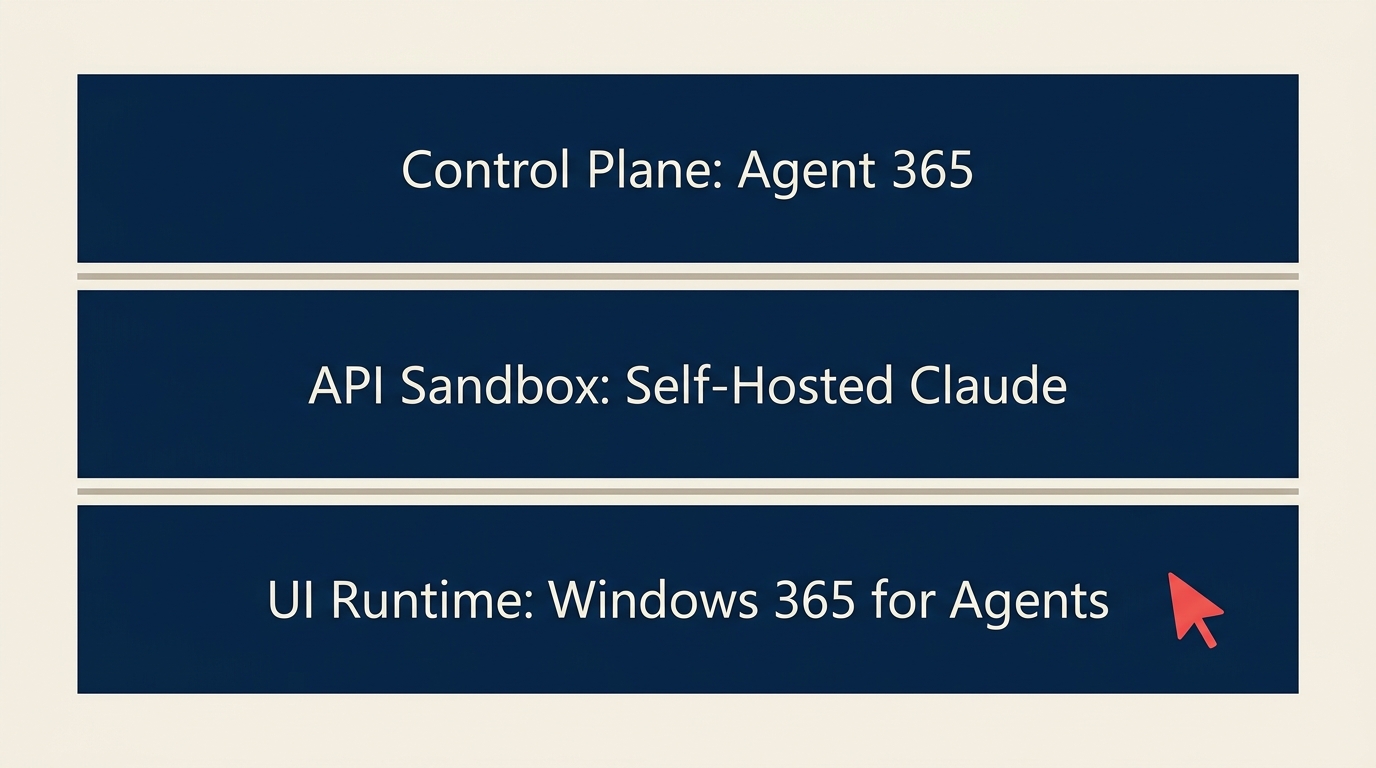
Si ha seguido la cobertura de Rework sobre el stack de agentes de Microsoft esta semana, ya ha visto dos de los tres runtimes. Microsoft Agent 365 estableció el control plane: una capa de gobernanza para registrar agentes de IA como activos identificables. Los sandboxes autogestionados de Anthropic representan el modelo de perímetro: ejecución de agentes orientada a código y API dentro de su propio firewall.
Windows 365 for Agents es el tercer componente. Llamémoslo El Marco de los Tres Runtimes: un sistema para mapear dónde vive un agente de IA, qué puede alcanzar y qué controles aplican:
| Runtime | Más adecuado para | Dónde vive el agente | Qué puede alcanzar | Mecanismo de control principal | Cuándo elegirlo |
|---|---|---|---|---|---|
| Control Plane (Agent 365) | Gobernanza e identidad en todos los agentes | Nube de Microsoft, registrado en su tenant | Permisos definidos por agente | Entra ID, registros de auditoría, RBAC | Cuando necesita un único panel de control en todos los tipos de agentes |
| Sandbox API-First (Anthropic autogestionado) | Agentes de herramientas de código, pipelines de datos, flujos de trabajo LLM | Su propio firewall / on-premise | API, bases de datos, ejecución de código | Perímetro de red, política MCP | Cuando la soberanía de datos y la auditabilidad a nivel de código son prioritarias |
| Cloud PC orientada a interfaz de usuario (Windows 365 for Agents) | Aplicaciones legacy, flujos de trabajo dependientes de UI, automatización mediante pantalla | Azure de Microsoft (HOBO), gestionado por su Intune | Escritorio Windows completo, cualquier aplicación que pueda lanzar la sesión | Política de Intune, Entra ID, grabación de sesión | Cuando el sistema objetivo no tiene API y actualmente un humano hace clic en él |
El Marco de los Tres Runtimes importa porque la mayoría de las estrategias de agentes empresariales colapsan en una única pregunta ("¿debemos usar agentes de IA?") cuando la pregunta real es "¿qué runtime se adapta a este flujo de trabajo, y qué guardrails corresponde a cada uno?"
Cada runtime eleva un nivel el techo de seguridad y gobernanza. Un agente de control plane que llama a una API está limitado por el alcance de la API. Un sandbox API-first que ejecuta código está limitado por el perímetro de red. Un agente de Cloud PC orientado a la interfaz de usuario puede hacer casi cualquier cosa que un empleado humano con esa sesión de Windows podría hacer. Ese es un perfil de riesgo materialmente diferente.
Dónde el Runtime Orientado a Interfaz de Usuario Justifica su Uso
El caso para Windows 365 for Agents es más sólido donde un empleado humano actualmente hace clic en una pantalla para realizar un trabajo que un agente bien diseñado podría gestionar con mayor consistencia. Algunas categorías concretas:
Sistemas ERP legacy. SAP GUI y Oracle Forms fueron construidos para humanos, no para API. Muchas empresas tienen instalaciones de SAP ECC donde la superficie de API REST es escasa o inexistente. Un agente con una sesión de Windows navega esas pantallas y extrae resultados sin necesidad de un proyecto de modernización de API de varios años.
Aplicaciones alojadas en Citrix y RDP. Una parte significativa del software empresarial en sectores regulados se ejecuta dentro de sesiones de Citrix o Remote Desktop Protocol. La automatización de estas ha requerido herramientas costosas específicas de Citrix. Una Cloud PC agéntica cambia ese cálculo.
Flujos de trabajo de AS/400 y emuladores de terminal. Los sistemas IBM AS/400 y los emuladores de terminal 5250 siguen ejecutando la lógica de negocio principal en miles de empresas. Los agentes que pueden operar un emulador de terminal automatizan flujos de trabajo de compras, inventario y producción que de otro modo requerirían middleware personalizado.
SaaS de terceros sin API. Algunas herramientas SaaS no ofrecen acceso por API en el nivel que la mayoría de los clientes contratan. Un agente orientado a interfaz de usuario gestiona esas situaciones sin requerir una subida de nivel o una negociación con el proveedor.
El blog de Windows 365 anticipó esta dirección desde enero de 2026, describiendo el próximo capítulo de la Cloud PC como la extensión de la plataforma a usuarios no humanos. El lanzamiento del 28 de mayo hizo eso operativo.
Dónde Añade Riesgos que Antes No Tenía
Datos Clave
- Windows 365 for Agents entró en versión preliminar pública el 28 de mayo de 2026, con un precio de $15/usuario/mes para la licencia Agent 365 (fuente: Help Net Security)
- La arquitectura HOBO coloca las VM en la suscripción de Azure de Microsoft, gestionadas a través del Intune del cliente. La sesión de Windows del agente tiene el mismo acceso a nivel de SO que un usuario humano de Cloud PC (fuente: Microsoft Learn)
- Gartner proyectó que el 40% de las aplicaciones empresariales incluirán agentes de IA integrados para 2026, lo que aumenta significativamente la superficie de ataque de la automatización orientada a interfaz de usuario (fuente: Gartner, 2025)
Un escritorio Windows completo tiene un radio de daño mucho mayor que una llamada a una API. Ese es el intercambio que los CTO deben nombrar explícitamente antes de desplegarlo.
Superficie más amplia que cualquier alcance de API. Un agente que puede lanzar cualquier aplicación en su sesión de Windows puede alcanzar todo lo que esa identidad de usuario tiene permisos para tocar. Si esas credenciales de Entra ID están sobreaprovisionadas, un estado habitual en empresas maduras, el agente hereda ese sobreaprovisionamiento.
La auditabilidad es más difícil que los registros de API. Los agentes API-first producen registros de auditoría discretos y estructurados. Un agente orientado a interfaz de usuario que navega por una pantalla produce grabaciones de sesión solo si las ha configurado. Reconstruir una secuencia de decisiones a partir de capturas de pantalla es más laborioso que analizar un registro de API. Necesitará políticas explícitas de grabación de sesiones en Intune antes de confiar en esto en un flujo de trabajo de producción.
Deriva de configuración de Intune. El modelo HOBO hace que las políticas de Intune sean el guardrail principal. Si esas políticas se desvían (referencias desactualizadas, excepciones no revisadas, acceso condicional mal configurado), la sesión de Windows del agente refleja esa deriva. Una sesión de Windows que hereda su estado de Intune también hereda su deuda de Intune.
Proliferación de licencias. Agent 365 a $15/usuario/mes se acumula sobre Intune y Azure. Sin una gobernanza del gasto desde el principio, las licencias de agentes se convierten en una línea de presupuesto opaca y voluminosa sin una atribución de valor clara.
Cada uno de estos riesgos es manejable. Pero requieren decisiones de política deliberadas antes del primer despliegue de agentes, no después. El marco de partida correcto es el modelo de gobernanza de IA agéntica: porque la brecha de gobernanza no desaparece solo por haber añadido un nuevo runtime.
La Lista de Acciones del CTO para los Próximos 60 Días
Desplegar Windows 365 for Agents sin una política de límites crea una nueva clase de activo no gestionado en su entorno. Esto es lo que debe hacer antes de que la versión preliminar pase a producción:
Audite primero los flujos de trabajo dependientes de interfaz de usuario. Mapee cada flujo de trabajo donde un humano hace clic en pantallas porque no hay alternativa de API. Esa es su lista de candidatos y su registro de riesgos. Cada flujo de trabajo que pase a una Cloud PC agéntica necesita su propio nivel de riesgo.
Pruebe con UN agente de solo lectura. No empiece con capacidad de escritura. Elija un flujo de trabajo donde el agente lea datos y los informe sin modificar el estado. Eso le da datos de grabación de sesión, validación de política de Intune y un ensayo de respuesta a incidentes.
Redacte la política de límites antes de escalar. Defina qué políticas de Intune se aplican a las Cloud PC de agentes, qué categorías de aplicaciones están fuera de límites, qué clasificaciones de datos puede acceder el agente y qué activa la terminación automática de sesión. Conviértalo en un documento con nombre que su equipo de seguridad apruebe.
Establezca límites de gasto por flujo de trabajo. Agent 365 a $15/usuario/mes se multiplica rápidamente. Asigne a cada runtime un presupuesto vinculado al flujo de trabajo que automatiza, con un propietario con nombre que apruebe los aumentos.
Defina una regla de desaprovisionamiento por uso indebido. ¿Qué debe hacer (o dejar de hacer) el agente para activar la suspensión de sesión? Defínalo de antemano, automatícelo a través de las políticas de cumplimiento de Intune y no lo debata después de un incidente.
Decida quién es propietario de la taxonomía de Cloud PC como runtime. ¿Una Cloud PC de agente es un activo de seguridad, un activo de TI o un activo de ingeniería? Déjelo indefinido y tendrá tres equipos señalándose mutuamente cuando algo salga mal.
FAQ
P: ¿Windows 365 for Agents está disponible de forma general?
No. A partir del 28 de mayo de 2026, está en versión preliminar pública en Estados Unidos. El momento para GA no ha sido anunciado. Trate el estado actual como un entorno solo para pruebas piloto: úselo para probar modelos de gobernanza, no para ejecutar cargas de trabajo de producción.
P: ¿Windows 365 for Agents reemplaza a Microsoft Agent 365?
No. Son capas diferentes. Agent 365 es el control plane: gobierna la identidad, los permisos y los registros de auditoría para todos los agentes en su tenant. Windows 365 for Agents es un runtime: da a un agente un lugar donde operar. Necesita ambos. Un runtime sin gobernanza es una sesión de agente no gestionada.
P: ¿Cómo se compara con los sandboxes autogestionados de Anthropic?
Casos de uso diferentes. Los sandboxes autogestionados y los MCP Tunnels de Anthropic están optimizados para agentes de herramientas de código que llaman a API y procesan datos dentro de su propio firewall. Windows 365 for Agents gestiona flujos de trabajo orientados a interfaz de usuario donde el sistema objetivo no tiene API. Si el agente necesita llamar a una API, use un runtime en sandbox. Si necesita hacer clic en una pantalla, use Windows 365 for Agents.
Learn More
- Microsoft Agent 365 Ya Está Disponible: Por Qué Cada CTO Necesita Ahora un Control Plane de Agentes IA
- Anthropic Just Moved AI Agents Inside Your Firewall: What Self-Hosted Sandboxes and MCP Tunnels Mean for CTOs
- 86% of CEOs Are Increasing AI Budgets, But Only 1 in 5 Has the Governance to Back It Up
- The ACE Framework: A Periodic Table for Business AI
La ventana de versión preliminar pública es su ventana de planificación. Cada decisión de gobernanza postergada ahora se convierte en una corrección costosa después del primer incidente. Comience con la política de límites, elija un piloto de solo lectura y deje que el Marco de los Tres Runtimes le guíe sobre dónde pertenece Windows 365 for Agents, y dónde no.

On this page
- Qué Entregó Realmente Microsoft
- Los Tres Runtimes Están Ahora Visibles
- Dónde el Runtime Orientado a Interfaz de Usuario Justifica su Uso
- Dónde Añade Riesgos que Antes No Tenía
- La Lista de Acciones del CTO para los Próximos 60 Días
- FAQ
- P: ¿Windows 365 for Agents está disponible de forma general?
- P: ¿Windows 365 for Agents reemplaza a Microsoft Agent 365?
- P: ¿Cómo se compara con los sandboxes autogestionados de Anthropic?
- Learn More