Die besten ServiceNow-Alternativen 2026: 10 IT-Service-Management- und Workflow-Plattformen
Turn this article into takeaways for your work.


Each assistant summarizes the article only for you and suggests best practices for your work.
ServiceNow ist zweifellos beeindruckend. Die Plattform vereint ITSM, HR-Service-Delivery, Customer-Service-Management und Security-Operations unter einem Dach und bewältigt all das zuverlässig. Wenn Sie IT für 5.000 Mitarbeitende verantworten, über das nötige Budget verfügen, ausreichend Administrationspersonal haben und einer sechs Monate langen Implementierung gewachsen sind, ist ServiceNow die richtige Wahl.
Die meisten Unternehmen befinden sich jedoch nicht in dieser Lage. ServiceNow-Lizenzen beginnen bei Enterprise-Preisen, Implementierungen dauern erfahrungsgemäß 6 bis 12 Monate, und die Plattform erfordert zertifizierte Administratoren, um Workflows überhaupt konfigurieren zu können. IT-Teams im Mittelstand, Betriebsleiter und wachsende SaaS-Unternehmen zahlen damit für eine Infrastruktur, die sie nie vollständig nutzen werden. Wenn Sie prüfen, ob ServiceNow für Sie geeignet ist, oder diese Entscheidung bereits getroffen haben, stellt dieser Leitfaden 10 Plattformen vor, die ITSM und Workflow-Management in einem vernünftigeren Maßstab abdecken. Falls Freshservice (ein Freshworks-Produkt) auf Ihrer Liste steht, lohnt sich auch ein Blick auf die besten Freshworks-Alternativen für einen umfassenderen Überblick über dieses Ökosystem.
Schnellvergleichstabelle
| Tool | Am besten geeignet für | Einstiegspreis | Wichtigste Stärke | Wichtigste Einschränkung |
|---|---|---|---|---|
| Rework | Teamübergreifende Ops-Workflows (IT + Vertrieb + Betrieb) | Ab 999 USD/Jahr für 5 Nutzer (rework.com/pricing) | Unified Inbox + CRM + Workflow-Automatisierung | Keine dedizierte ITSM-Plattform |
| Jira Service Management | Dev-nahe ITSM-Umgebungen | Kostenlos (bis zu 3 Agenten) | Tiefe Atlassian-Integration | Kann für nicht-technische Teams komplex werden |
| Freshservice | Mittelstand-ITSM | 19 USD/Agent/Monat (jährlich) | Übersichtliche Benutzeroberfläche, schnelle Einrichtung | Erweiterte Funktionen erfordern höhere Preisstufen |
| Zendesk | Kundenseitiger IT-Support | Ca. 55 USD/Agent/Monat | Multichannel-Support + Reporting | Teuer bei Skalierung; geringere ITIL-Tiefe |
| BMC Helix | Enterprise-ITSM | Individuelle Preisgestaltung | ITIL-vollständig, KI-gestützter Betrieb | Komplex, teuer, lange Implementierung |
| Ivanti | Endpoint- und Service-Desk-Bündel | Individuelle Preisgestaltung | Endpoint-Management + ITSM in einem | Veraltete Benutzeroberfläche in einigen Modulen |
| ManageEngine ServiceDesk Plus | Mittelstand-ITIL-Compliance | Kostenlos (bis zu 5 Techniker) | ITIL-ready, erschwinglich | Benutzeroberfläche weniger modern als aktuelle Tools |
| SysAid | KMU bis mittelständische IT-Teams | Individuelle Preisgestaltung | Automatisierungs-Workflows, einfache Einrichtung | Begrenzte Integrationen im Vergleich zur Konkurrenz |
| InvGate | Modernes ITIL für den Mittelstand | Individuelle Preisgestaltung | Übersichtliche Benutzeroberfläche, starkes Asset-Management | Kleineres Ökosystem als Jira oder Zendesk |
| TOPdesk | Europäisches Mittelstand-ITSM | Individuelle Preisgestaltung | Einfache Bedienung, starke Präsenz in der EU | Außerhalb Europas weniger bekannt |
Passende Unternehmensgrößen
| Tool | Startup (1-50) | Wachstum (50-200) | Mittelstand (200-1.000) | Großunternehmen (1.000+) |
|---|---|---|---|---|
| Rework | Gut geeignet | Gut geeignet | Geeignet | Eingeschränkt geeignet |
| Jira Service Management | Geeignet | Gut geeignet | Gut geeignet | Geeignet |
| Freshservice | Geeignet | Gut geeignet | Gut geeignet | Eingeschränkt geeignet |
| Zendesk | Geeignet | Gut geeignet | Gut geeignet | Geeignet |
| BMC Helix | Nicht empfohlen | Nicht empfohlen | Geeignet | Gut geeignet |
| Ivanti | Nicht empfohlen | Eingeschränkt geeignet | Geeignet | Gut geeignet |
| ManageEngine ServiceDesk Plus | Geeignet | Gut geeignet | Gut geeignet | Eingeschränkt geeignet |
| SysAid | Geeignet | Gut geeignet | Geeignet | Eingeschränkt geeignet |
| InvGate | Geeignet | Gut geeignet | Gut geeignet | Eingeschränkt geeignet |
| TOPdesk | Eingeschränkt geeignet | Gut geeignet | Gut geeignet | Eingeschränkt geeignet |
Größen- und Zielgruppen-Übersicht
| Tool | Ideale Teamgröße | Primäre Zielgruppe | Sekundäre Zielgruppe | Branchenschwerpunkt |
|---|---|---|---|---|
| Rework | 10-500 | COO / Head of Ops | IT-Manager, Sales Ops | SaaS, Agenturen, Beratungsunternehmen |
| Jira Service Management | 20-5.000 | IT-Director | DevOps Lead, ITSM-Admin | Technologieunternehmen, engineering-getriebene Organisationen |
| Freshservice | 50-2.000 | IT-Manager | CTO, Ops Director | Mittelständische Unternehmen branchenübergreifend |
| Zendesk | 20-5.000 | Head of Support | IT-Manager, CX Lead | E-Commerce, SaaS, kundenseitige Betriebe |
| BMC Helix | 500-100.000 | CIO | IT Operations Director | Finanzdienstleistungen, Gesundheitswesen, öffentlicher Sektor |
| Ivanti | 200-50.000 | IT-Director | Security Lead, Endpoint Admin | Gesundheitswesen, Finanzsektor, regulierte Branchen |
| ManageEngine ServiceDesk Plus | 10-2.000 | IT-Manager | Systemadministrator | KMU, Bildungseinrichtungen, regionale Unternehmen |
| SysAid | 20-1.000 | IT-Manager | Help Desk Lead | KMU, Bildung, Nonprofit |
| InvGate | 50-2.000 | IT-Director | ITSM-Admin | Mittelstand, ITIL-fokussierte Organisationen |
| TOPdesk | 50-5.000 | IT-Manager | Facility Manager | Europäische Unternehmen, Shared-Service-Center |
Warum Teams ServiceNow verlassen
Bevor wir auf die Alternativen eingehen, lohnt ein Blick darauf, warum ServiceNow für mittelständische und wachsende Teams im Besonderen an seine Grenzen stößt.
| Schmerzpunkt | Details |
|---|---|
| Kosten | Enterprise-Lizenzierung: nicht öffentlich gelistet, aber üblicherweise ab 100.000 USD jährlich für eine sinnvolle Nutzung |
| Implementierungszeit | 6 bis 12 Monate typisch für die Erstbereitstellung; komplexe Anpassungen dauern länger |
| Admin-Abhängigkeit | Erfordert ServiceNow-zertifizierte Administratoren; Workflows lassen sich ohne entsprechende Schulung nicht selbst konfigurieren |
| Überdimensionierter Umfang | ITSM, HR Service Delivery, SecOps, CSM: Die meisten Unternehmen nutzen nur 10 bis 20 Prozent der Plattform |
| Lizenz-Komplexität | Nutzer- und modulbasierte Preisgestaltung, die sich schnell aufschaukelt, sobald weitere Anwendungsfälle hinzukommen |
| Upgrade-Aufwand | Größere Versions-Upgrades erfordern umfangreiche Regressionstests und erheblichen Admin-Aufwand |
1. Rework: Teamübergreifende Workflow-Plattform für betriebsintensive Teams
Rework ist kein ITSM-Tool. Das sei vorab ehrlich gesagt. Wenn Ihr Hauptbedarf in ITIL-zertifiziertem Incident-, Change- und Problem-Management mit integrierter Asset-Entdeckung liegt, sollten Sie sich die weiter unten aufgeführten Tools ansehen.
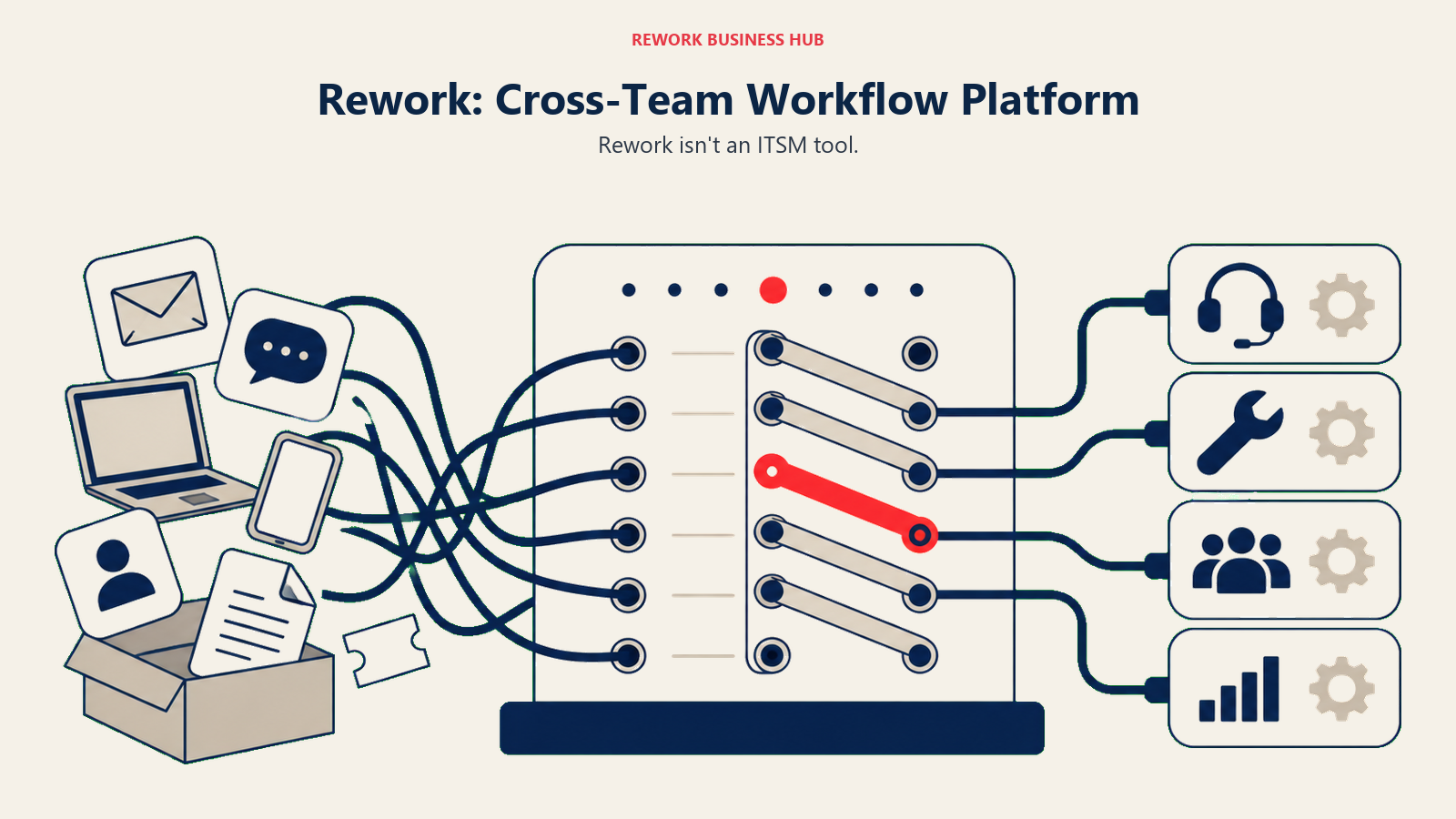
Was Rework löst, ist ein anderes Problem: das operative Chaos, das entsteht, wenn IT, Vertrieb, Customer Success und Betrieb jeweils eigene Posteingänge, eigene Pipelines und keine gemeinsame Übersicht haben. Teams, die sich in der ServiceNow-Komplexität verlieren, stellen oft fest, dass das eigentliche Problem nicht ITSM ist, sondern dass Anfragen, Aufgaben und Folgemaßnahmen zwischen Abteilungen verloren gehen.
Rework vereint CRM, Multi-Channel-Inbox und Workflow-Automatisierung auf einer Plattform. Wenn Sie planen, Workflows nach einer Migration zu strukturieren, zeigt der Leitfaden zur CRM-Workflow-Automatisierung die praktischen Konfigurationsentscheidungen, mit denen die meisten Ops-Teams konfrontiert sind. Eine IT-Anfrage, die eine Customer-Success-Folgemaßnahme oder einen Beschaffungs-Workflow auslöst, kann durchgängig abgewickelt werden, ohne drei separate Tools miteinander zu verknüpfen. Die Pipeline-Ansicht eignet sich für IT-Ticket-Warteschlangen ebenso gut wie für Vertriebspipelines.
| Was Sie erhalten | Was fehlt |
|---|---|
| Unified Inbox über E-Mail, Chat und Webformulare | Native ITIL-Prozessvorlagen (Incident, Change, Problem) |
| CRM + Ops-Workflow auf einer Plattform | Asset-Management und CMDB |
| Individuelle Pipeline-Phasen für jeden Anfragetyp | Native SLA-Durchsetzung und Alarme bei Verletzungen |
| Teamübergreifende Sichtbarkeit und Übergabe-Tracking | IT-spezifisches Reporting (MTTR, SLA-Compliance) |
| Kostenloser Tarif zum Einstieg; kein Implementierungsspezialist erforderlich | Tiefe ITSM-Integrationen (Monitoring-Tools, Patch-Management) |
Preisgestaltung: Kostenloser Tarif verfügbar. Kostenpflichtige Pläne skalieren mit der Teamgröße, ohne modulbasierte Lizenzierung.
Am besten geeignet für: Ops-Teams mit 10 bis 500 Nutzern, die teamübergreifende Workflow-Automatisierung und eine Unified Inbox benötigen, und bei denen "ITSM" das Verfolgen und Lösen interner Anfragen bedeutet, nicht die ITIL-Prozessverwaltung im großen Maßstab.
Nicht empfohlen für: IT-Teams, die zertifizierte ITIL-Workflow-Vorlagen, CMDB, Change-Advisory-Board-Workflows oder Audit-Trails für regulierte Umgebungen benötigen.
2. Jira Service Management: ITSM für entwicklungsnahe Teams
Jira Service Management (JSM) ist Atlassians Antwort auf die ServiceNow-Lücke im Mittelstand. Die Lösung basiert auf Jira Software, was sie für Engineering-Organisationen, die bereits in Confluence, Bitbucket oder dem Atlassian-Ökosystem arbeiten, besonders passend macht.
Die Methodik ist vorfallzentriert. JSM ist nach ITIL-Praktiken konzipiert, aber mit der DevOps-Sensibilität umgesetzt, die Atlassian in alles einbringt: schnell bewegen, wo möglich automatisieren, Teams in einem Tool halten. Die Integration zwischen Software-Projekten und Service-Desk-Tickets ist genuiner Mehrwert: Ein Entwickler kann einen Incident mit dem verursachenden Bug verknüpfen, beides lösen und den Regelkreis in einem einzigen Workflow schließen. Wer Atlassian-Tools grundsätzlicher vergleicht, findet in den besten Jira-Alternativen eine Übersicht darüber, wo JSMs Komplexität für nicht-technische Teams zur Hürde wird.
Für nicht-technische Teams kann JSM schwerfällig wirken. Die Konfigurationsmöglichkeiten sind umfangreich, und Formulare sowie Workflows für nicht-technische Anwendungsfälle zu optimieren, erfordert Aufwand. Für IT-Teams in Softwareunternehmen ist JSM jedoch das nächste verfügbare Äquivalent zu ServiceNow, ohne den ServiceNow-Preis.
| Was Sie erhalten | Was fehlt |
|---|---|
| Native Atlassian-Integration (Jira, Confluence, Bitbucket) | Reibungslose Erfahrung für nicht-technische Anforderer |
| ITIL-konformes Incident-, Change- und Problem-Management | Überschaubare Preise bei Skalierung (wird jenseits des kostenlosen Tarifs schnell teuer) |
| Automatisierungsregeln ohne Code | Übersichtliche Mobile-Erfahrung |
| Asset- und Konfigurationsmanagement (Insight-Modul) | ITSM-Reporting ohne Anpassungsaufwand |
| On-Call-Alarmierung und Kommunikations-Tools bei Incidents | Einfache Einrichtung für Jira-Neulinge |
Preisgestaltung: Kostenlos für bis zu 3 Agenten. Standard ab ca. 17,65 USD/Agent/Monat. Premium ab ca. 44,27 USD/Agent/Monat. Enterprise auf Anfrage.
Am besten geeignet für: IT- und DevOps-Teams in Softwareunternehmen (50 bis 5.000 Mitarbeitende), die bereits Atlassian-Tools einsetzen und ITSM benötigen, ohne das Ökosystem zu wechseln.
Nicht empfohlen für: IT-Teams in Nicht-Technologieunternehmen oder Teams, die eine schnelle, konfigurationsarme Einrichtung wünschen.
3. Freshservice: Der Mittelstand-ITSM-Standard
Freshservice ist das Tool, das die meisten mittelständischen IT-Teams zuerst in Betracht ziehen sollten, wenn sie über ihren aktuellen Helpdesk hinauswachsen und noch nicht bereit für die Komplexität von ServiceNow sind. Es ist das ITSM-Flaggschiffprodukt von Freshworks und wurde gezielt für IT-Teams in Unternehmen mit 100 bis 2.000 Mitarbeitenden entwickelt.
Die Philosophie lautet: ITIL-Compliance ohne ITIL-Schmerzen. Freshservice bietet Incident-, Problem-, Change- und Release-Management direkt nach dem Einstieg, dazu ein Asset-Management-Modul und einen Service-Katalog, den auch nicht-technische Mitarbeitende tatsächlich nutzen können. Die Einrichtung dauert Tage, nicht Monate. Die Benutzeroberfläche ist modern genug, dass Mitarbeitende Tickets darüber einreichen, anstatt direkt das IT-Team anzuschreiben.
Freshservice hat in den letzten zwei Jahren aggressiv KI-Funktionen ergänzt: automatische Kategorisierung, Lösungsvorschläge und ein virtueller Agent für häufige Anfragen. Diese Funktionen sind für Standard-IT-Anwendungsfälle gut nutzbar, reichen aber nicht an den Funktionsumfang heran, den BMC Helix oder ServiceNow auf Enterprise-Ebene bieten.
| Was Sie erhalten | Was fehlt |
|---|---|
| Vollständige ITIL-Modulabdeckung direkt nach dem Einstieg | Tiefe Anpassungsmöglichkeiten für komplexe Enterprise-Workflows |
| Übersichtliche, moderne Benutzeroberfläche, die Mitarbeitende tatsächlich nutzen | Erweitertes Reporting ohne Upgrade auf höhere Preisstufen |
| Asset-Management und CMDB | Natives Endpoint-Management (erfordert Drittanbieter) |
| Service-Katalog mit Genehmigungs-Workflows | Komplexes Change-Management (eingeschränkt im Vergleich zu ServiceNow) |
| Schnelle Implementierung (Tage bis Wochen) | Native Integrationstiefe des Atlassian-Ökosystems |
Preisgestaltung: Starter 19 USD/Agent/Monat, Growth 49 USD/Agent/Monat, Pro 99 USD/Agent/Monat, Enterprise auf Anfrage, jeweils bei jährlicher Abrechnung. Freshworks veröffentlicht keinen Preis bei monatlicher Abrechnung.
Am besten geeignet für: IT-Teams in Unternehmen mit 100 bis 2.000 Mitarbeitenden, die ITIL-fähiges ITSM ohne sechsmonatige Implementierung oder ein dediziertes Admin-Team benötigen.
Nicht empfohlen für: Sehr kleine Teams (die agentenbasierte Preisgestaltung summiert sich schnell) oder große Unternehmen mit komplexem Multi-Site-Change-Management.
4. Zendesk: Kundenseitiger IT-Support mit starkem Reporting
Zendesk begann als Kundensupport-Plattform und ist dort nach wie vor marktführend. Viele IT-Teams nutzen es jedoch auch für den internen Helpdesk, was es in diesem Anwendungsfall passabel abdeckt, insbesondere wenn das IT-Team sowohl externe Kunden als auch interne Anfragen betreut und eine einheitliche Plattform bevorzugt.
Die Methodik ist auf das Kundenerlebnis ausgerichtet. Zendesk betrachtet jede Interaktion als Service-Touchpoint, was sich in der Benutzeroberfläche zeigt: übersichtliche Ticket-Formulare, Multichannel-Support (E-Mail, Chat, Telefon, Social Media) und ein Reporting, das SLA-Tracking für die Führungsebene sichtbar macht. Was fehlt, ist eine tiefe ITIL-Struktur: Es gibt weder natives Change-Management noch eine CMDB. Für einen vollständigen ITSM-Stack würde Zendesk ein ergänzendes Asset-Management-Tool benötigen. Für Teams, die Zendesk in seiner eigenen Kategorie bewerten, zeigt die Übersicht der besten Zendesk-Alternativen, wo das Kosten-Komplexitäts-Verhältnis kippt.
Wo Zendesk hervorsticht, ist das Reporting und Analytics. Das Explore-Modul liefert IT-Managern Dashboards, für die ServiceNow Aufpreis verlangen würde, und sie sind ohne Datenanalysten nutzbar.
| Was Sie erhalten | Was fehlt |
|---|---|
| Erstklassiger Multichannel-Support (E-Mail, Chat, Telefon) | Native ITIL-Prozessvorlagen (Change, Problem, Release) |
| Starkes Reporting und SLA-Tracking direkt nach dem Einstieg | CMDB oder Asset-Management |
| KI-gestützte Ticket-Weiterleitung und Antwortvorschläge | Günstige Agentenkosten bei Skalierung |
| Umfangreicher App-Marktplatz und Integrationen | Tiefe IT-spezifische Automatisierung ohne Drittanbieter-Tools |
| Übersichtliche Benutzeroberfläche, die auch nicht-technische Nutzer leicht bedienen | Komplexe Genehmigungs-Workflows |
Preisgestaltung: Suite Team ca. 55 USD/Agent/Monat. Suite Growth ca. 89 USD/Agent/Monat. Suite Professional ca. 115 USD/Agent/Monat. Enterprise auf Anfrage.
Am besten geeignet für: IT- und Support-Teams in SaaS-Unternehmen (50 bis 5.000 Mitarbeitende), die sowohl interne IT-Anfragen als auch externen Kundensupport abwickeln und Reporting über ITIL-Tiefe stellen.
Nicht empfohlen für: IT-Teams, die vollständiges ITIL-Lifecycle-Management oder eine CMDB benötigen, ohne diese selbst aufzubauen.
5. BMC Helix: Enterprise-ITSM für große IT-Organisationen
BMC Helix ist der ServiceNow-Konkurrent, der tatsächlich auf Augenhöhe mitspielt. Es handelt sich um eine Enterprise-IT-Plattform, die ITSM, ITOM, Asset-Management und KI-gestützten Betrieb auf einer Cloud-Plattform vereint, die für Organisationen konzipiert ist, die IT im großen Maßstab betreiben.
Die Philosophie bei BMC lautet: IT-Betrieb als Unternehmensdienstleistung. Helix setzt stark auf KI und Machine Learning für prädiktives Service-Management: Probleme erkennen, bevor sie zu Incidents werden, Ereignisse aus Monitoring-Tools korrelieren und Lösungen für bekannte Probleme automatisieren. Die BMC-AIOps-Fähigkeit ist ein echter Differenziator für große IT-Organisationen, die hybride Cloud-Umgebungen verwalten.
Was BMC Helix nicht bietet, ist Einfachheit. Wie ServiceNow erfordert es erfahrene Implementierungspartner, erheblichen Konfigurationsaufwand und laufende Admin-Expertise. Für Organisationen mit 500 oder mehr Mitarbeitenden, dedizierten IT-Teams und komplexer Infrastruktur ist dieser Kompromiss sinnvoll. Für alle anderen ist es das falsche Tool.
| Was Sie erhalten | Was fehlt |
|---|---|
| Vollständige ITIL-Suite: Incident, Change, Problem, Asset, CMDB | Erschwingliche Preisgestaltung für den Mittelstand |
| AIOps mit prädiktivem Incident-Management | Schnelle oder einfache Implementierung |
| Hybrid-Cloud- und Multi-Cloud-Betriebsunterstützung | Self-Service-Konfiguration ohne Schulung |
| Starke Compliance- und Audit-Trail-Funktionen | Moderne Benutzeroberfläche vergleichbar mit Freshservice oder Jira |
| Wettbewerbsfähig mit ServiceNow bei Enterprise-Funktionen | Community und Ökosystem so groß wie bei ServiceNow |
Preisgestaltung: Individuelle Enterprise-Preisgestaltung. Generell vergleichbar mit ServiceNow für äquivalente Konfigurationen.
Am besten geeignet für: IT-Betriebsteams in Unternehmen mit 500 bis 100.000 Mitarbeitenden, komplexer Infrastruktur und dediziertem ITSM-Admin-Personal, insbesondere dort, wo AIOps und Hybrid-Cloud-Management Prioritäten sind.
Nicht empfohlen für: Mittelständische Unternehmen, Teams ohne ITSM-Spezialisten oder Organisationen, die eine schnelle Bereitstellung priorisieren.
6. Ivanti: Endpoint-Management und ITSM in einem Stack
Ivanti hat einen anderen Ausgangspunkt als die meisten Tools auf dieser Liste. Statt mit einem Helpdesk zu beginnen und IT-Asset-Management hinzuzufügen, startet Ivanti beim Endpoint- und Sicherheitsmanagement und ergänzt darauf ITSM. Für IT-Teams, bei denen Endpoint-Transparenz genauso wichtig ist wie Ticket-Management, ist das ein wesentlicher Unterschied.
Das Produkt kombiniert Neurons für ITSM mit Endpoint-Management, Patch-Management und IT-Asset-Management. Ein IT-Administrator kann jedes Gerät im Netzwerk einsehen, Patch-Compliance verfolgen und diese Daten direkt mit Service-Desk-Tickets und CMDB-Einträgen verknüpfen. Diese Integration von Endpoint-Daten und Service-Management ist für sicherheitsbewusste IT-Organisationen ein echter Mehrwert.
Der Kompromiss liegt in der UI-Konsistenz. Ivanti ist teilweise durch Akquisitionen gewachsen, und einige Module wirken älter als andere. Die ITSM-Oberfläche wurde modernisiert, aber Teams, die von Freshservice oder Jira kommen, werden den Unterschied bemerken.
| Was Sie erhalten | Was fehlt |
|---|---|
| Endpoint-Management und ITSM auf einer Plattform | Konsistente, moderne Benutzeroberfläche in allen Modulen |
| Patch-Management integriert mit dem Service Desk | Einfache Preisgestaltung (modulbasierte Lizenzierung wird komplex) |
| Starkes IT-Asset-Management und Discovery | Einfaches Self-Service-Setup ohne Implementierungsunterstützung |
| Integration mit Security Operations | Großes App-Ökosystem wie bei Zendesk oder Jira |
| ITIL-zertifizierte Prozessvorlagen | Übersichtliche Mobile-Erfahrung |
Preisgestaltung: Individuelle Preisgestaltung basierend auf Endpoints und ITSM-Agenten. Mittelstandsverträge liegen typischerweise im Bereich von 50.000 bis 200.000 USD jährlich.
Am besten geeignet für: IT-Teams in Unternehmen mit 200 bis 50.000 Mitarbeitenden, bei denen Endpoint-Sicherheit, Patch-Management und ITSM auf einer Plattform zusammenarbeiten müssen, insbesondere in regulierten Branchen wie dem Gesundheitswesen oder dem Finanzsektor.
Nicht empfohlen für: Teams, die einen leichtgewichtigen Helpdesk suchen, oder Organisationen, die keine Endpoints direkt verwalten.
7. ManageEngine ServiceDesk Plus: Erschwingliches ITIL für budgetbewusste IT-Teams
ManageEngine ServiceDesk Plus ist das Tool, zu dem IT-Manager in mittelständischen Unternehmen greifen, wenn sie ITIL-Compliance benötigen, ohne den ServiceNow- oder BMC-Preis zu zahlen. Es deckt den vollständigen ITIL-Stack ab (Incident, Problem, Change, Release und Service-Katalog) zu Preisen, die auch für Unternehmen mit knappem IT-Budget zugänglich sind.
Die Philosophie lautet: umfangreiche Funktionen zu niedrigen Kosten. ManageEngine (ein Zoho-Unternehmen) entwickelt IT-Management-Tools seit zwei Jahrzehnten, und ServiceDesk Plus spiegelt das wider: funktionsreich, ITIL-konform und wirklich erschwinglich. Die On-Premises-Option ist nach wie vor verfügbar für Organisationen mit Anforderungen an die Datenhaltung, was unter modernen ITSM-Tools ungewöhnlich ist.
Der Kompromiss ist die Optik. Die Benutzeroberfläche ist funktional, aber nicht modern. Teams, die von Freshservice oder Jira kommen, werden die Oberfläche als veraltet empfinden. Für IT-Teams, die Funktionalität über Ästhetik stellen, ist das Funktions-Preis-Verhältnis jedoch kaum zu schlagen.
| Was Sie erhalten | Was fehlt |
|---|---|
| Vollständige ITIL-Modulabdeckung zu wettbewerbsfähigen Preisen | Moderne Benutzeroberfläche vergleichbar mit Freshservice oder Jira |
| Kostenloser Tarif für bis zu 5 Techniker | KI-gestützte Funktionen ohne höherwertige Pläne |
| On-Premises-Bereitstellungsoption | Starkes Community- und Marktplatz-Ökosystem |
| Asset-Management und CMDB inklusive | Schnelle, intuitive Einrichtung ohne Dokumentationslektüre |
| Active-Directory-Integration direkt nach dem Einstieg | Mobile-Erfahrung auf dem Niveau der Web-Version |
Am besten geeignet für: IT-Teams in Unternehmen mit 10 bis 2.000 Mitarbeitenden, die vollständige ITIL-Abdeckung benötigen, über begrenzte Budgets verfügen und eine ältere Benutzeroberfläche gegen umfangreiche Funktionen eintauschen können.
Nicht empfohlen für: Teams, die Nutzererfahrung priorisieren, oder Organisationen, bei denen das IT-Portal ein Frontline-Tool ist, das Mitarbeitende täglich nutzen.
8. SysAid: Helpdesk-Automatisierung für KMU und Mittelstand
SysAid positioniert sich zwischen einem einfachen Helpdesk und einer vollständigen ITSM-Plattform. Das Tool ist für IT-Teams in kleinen bis mittelgroßen Organisationen konzipiert, die mehr als ein Ticketsystem benötigen, aber nicht die Komplexität von Freshservice oder Jira Service Management anstreben.
Der Automatisierungsfokus ist SysAids Unterscheidungsmerkmal. Workflows, Eskalationsregeln und automatische Zuweisung sind ohne Code konfigurierbar, und SysAid hat generative KI-Funktionen für Ticket-Zusammenfassungen und Antwortvorschläge hinzugefügt. Der Service-Katalog und das Self-Service-Portal für Mitarbeitende sind praktisch nützlich, um das Ticket-Volumen bei häufigen Anfragen (Passwortzurücksetzungen, Software-Zugang, Hardware-Anfragen) zu reduzieren.
Die Schwäche von SysAid liegt bei den Integrationen. Der Marktplatz ist kleiner als der von Jira oder Zendesk, und Teams, die auf tiefe Integrationen mit Monitoring-Tools, Azure oder Cloud-Infrastruktur-Management angewiesen sind, werden Lücken feststellen. Für ein IT-Team, das eine unkomplizierte Windows-Umgebung mit Standard-SaaS-Tools unterstützt, spielen diese Lücken selten eine Rolle. Wer bei der ITSM-Entscheidung auch eine breitere SaaS-Tool-Konsolidierung in Betracht zieht, findet in den wahren Kosten des Software-Wildwuchses nützlichen Kontext, bevor ein weiteres Abonnement hinzukommt.
| Was Sie erhalten | Was fehlt |
|---|---|
| Starke Workflow-Automatisierung ohne Code | Großer Integrations-Marktplatz |
| KI-gestützte Ticket-Bearbeitung (generative KI-Funktionen) | ITIL-Tiefe vergleichbar mit Freshservice oder Jira |
| Übersichtliches Self-Service-Portal für Mitarbeitende | Erweiterte Asset-Management-Funktionen |
| Asset-Management-Modul inklusive | Transparente öffentliche Preisgestaltung |
| Schnelle Einrichtung (Tage, nicht Wochen) | Starkes Reporting ohne Anpassungsaufwand |
Preisgestaltung: Individuelle Preisgestaltung (typischerweise pro Techniker). KMU-Verträge beginnen häufig im Bereich von 1.200 bis 2.500 USD jährlich für kleine Teams.
Am besten geeignet für: IT-Teams in Unternehmen mit 20 bis 1.000 Mitarbeitenden, die automatisierungsgetriebenes Helpdesk-Management ohne die Komplexität oder die Kosten von Enterprise-ITSM-Plattformen wünschen.
Nicht empfohlen für: Organisationen, die umfangreiche Drittanbieter-Integrationen benötigen, oder IT-Teams, die komplexe Multi-Site-ITIL-Prozesse verwalten.
9. InvGate: Modernes ITSM mit starkem Asset-Management
InvGate ist ein neuerer Marktteilnehmer im ITSM-Bereich mit einer Designphilosophie, die sich direkt an modernen Projektmanagement-Tools orientiert. Die Oberfläche ist visuell übersichtlicher als bei den meisten Legacy-ITSM-Plattformen, was bei IT-Teams, bei denen die Akzeptanz davon abhängt, ob Mitarbeitende das Self-Service-Portal tatsächlich nutzen, einen echten Unterschied macht.
Das Produkt umfasst Service Desk und Asset-Management als zwei eng integrierte Module. Das Asset-Management ist stark: automatisierte Entdeckung, Software-Lizenzverfolgung und Hardware-Lifecycle-Management sind alle ohne ein separates Tool enthalten. InvGate Insights (das Asset-Modul) und InvGate Service Desk sind darauf ausgelegt, Daten gemeinsam zu nutzen: Ein Incident-Ticket ruft automatisch den Asset-Datensatz für das betroffene Gerät ab.
InvGates Einschränkung ist die Ökosystemgröße. Die Integrationsbibliothek wächst, ist aber kleiner als bei Atlassian oder Zendesk, und die Community aus Administratoren und Implementierungspartnern ist im Vergleich zu Tools, die seit 10 bis 15 Jahren auf dem Markt sind, dünn.
| Was Sie erhalten | Was fehlt |
|---|---|
| Moderne, übersichtliche Benutzeroberfläche, die die Self-Service-Akzeptanz verbessert | Großes Ökosystem aus Integrationen und Partnern |
| Enge Integration zwischen Service Desk und Asset-Management | Transparenz bei der Preisgestaltung |
| ITIL-konforme Prozesse ohne Überengineering | KI-gestützte Funktionen auf dem Niveau von Freshservice |
| No-Code-Workflow-Konfiguration | Tiefe DevOps- oder Engineering-Toolchain-Integration |
| Schnelle Bereitstellung im Vergleich zu Enterprise-Alternativen | Langjährige Marktpräsenz (neueres Produkt) |
Preisgestaltung: Individuelle Preisgestaltung. Typischerweise vergleichbar mit mittleren Freshservice-Tarifen, wobei die Bündelung von Service Desk und Asset-Management Kosteneinsparungen bieten kann.
Am besten geeignet für: IT-Teams in Unternehmen mit 50 bis 2.000 Mitarbeitenden, die eine moderne ITSM-Erfahrung mit integriertem Asset-Management suchen und bei denen die Nutzerakzeptanz mit Legacy-Tools ein Problem ist.
Nicht empfohlen für: Organisationen, die umfangreiche Drittanbieter-Integrationen oder komplexes Enterprise-Change-Management benötigen.
10. TOPdesk: Einfaches ITSM für europäische Mittelstandsteams
TOPdesk ist ein niederländischer ITSM-Anbieter mit starker Präsenz auf dem europäischen Markt, insbesondere in den Niederlanden, Belgien, Großbritannien und Skandinavien. Das Unternehmen entwickelt Service-Management-Software seit 1993, was ihm fundiertes ITIL-Know-how und eine stabile Kundenbasis in Bildung, öffentlichem Sektor und Shared-Service-Organisationen eingebracht hat.
Die Philosophie lautet: Einfachheit vor Funktionsdichte. TOPdesk versucht nicht, ServiceNow oder BMC beim Umfang zu übertrumpfen. Der Fokus liegt darauf, Service-Management für Organisationen zugänglich zu machen, bei denen das IT-Team klein ist und der Service Desk zwischen IT, Facility und HR geteilt wird. Das Shared-Services-Modell ist ein echter Differenziator: Mehrere Abteilungen können TOPdesk mit eigenen Service-Katalogen innerhalb einer Plattform nutzen.
Für Teams außerhalb Europas ist TOPdesk weniger verbreitet, und das Partnernetzwerk und Support-Ökosystem spiegeln das wider. Für europäische Organisationen jedoch, insbesondere in regulierten Bereichen oder mit Facility-Management-Bedarf neben IT, ist TOPdesk eine ernsthafte Option.
| Was Sie erhalten | Was fehlt |
|---|---|
| Gemeinsamer Service Desk für IT, HR und Facility | Starke Präsenz oder Support außerhalb Europas |
| ITIL-konformes Service-Management | Großer Integrations-Marktplatz |
| Übersichtliche, unkomplizierte Benutzeroberfläche | KI-gestützte Funktionen auf dem Niveau neuerer Tools |
| Starke EU-Datenhaltungs- und Compliance-Optionen | Enterprise-Anpassungsmöglichkeiten |
| Lange Marktpräsenz im öffentlichen Sektor und Bildungswesen | Breite Branchenreferenzen außerhalb der EU |
Preisgestaltung: Individuelle Preisgestaltung. SaaS-Abonnementmodell mit agentenbasierter Preisgestaltung.
Am besten geeignet für: Europäische Unternehmen mit 50 bis 5.000 Mitarbeitenden, insbesondere in Bildung, öffentlichem Sektor, Gesundheitswesen oder Organisationen, in denen IT, Facility und HR einen gemeinsamen Service Desk nutzen.
Nicht empfohlen für: Teams außerhalb Europas oder Organisationen, die tiefe Drittanbieter-Integrationen mit US-zentrischen Toolchains benötigen.
Funktionsvergleich nach ITIL-Modul
| ITIL-Modul | Rework | JSM | Freshservice | Zendesk | BMC Helix | Ivanti | ManageEngine | SysAid | InvGate | TOPdesk |
|---|---|---|---|---|---|---|---|---|---|---|
| Incident-Management | Teilweise | Ja | Ja | Ja | Ja | Ja | Ja | Ja | Ja | Ja |
| Problem-Management | Nein | Ja | Ja | Nein | Ja | Ja | Ja | Teilweise | Ja | Ja |
| Change-Management | Nein | Ja | Ja | Nein | Ja | Ja | Ja | Teilweise | Ja | Ja |
| Service-Katalog | Teilweise | Ja | Ja | Teilweise | Ja | Ja | Ja | Ja | Ja | Ja |
| Asset-Management / CMDB | Nein | Ja (Add-on) | Ja | Nein | Ja | Ja | Ja | Ja | Ja | Ja |
| SLA-Management | Teilweise | Ja | Ja | Ja | Ja | Ja | Ja | Ja | Ja | Ja |
| Self-Service-Portal | Ja | Ja | Ja | Ja | Ja | Ja | Ja | Ja | Ja | Ja |
Preisvergleich
| Tool | Einstiegspreis | Mittlere Preisstufe | Enterprise |
|---|---|---|---|
| Rework | 999 USD/Jahr (5 Nutzer) | 1.999 USD/Jahr (10 Nutzer) | rework.com/pricing |
| Jira Service Management | Kostenlos (3 Agenten) | ca. 44 USD/Agent/Monat | Individuell |
| Freshservice | 19 USD/Agent/Monat Starter (jährlich) | 49 USD/Agent/Monat Growth (jährlich) | 99 USD Pro; Enterprise auf Anfrage |
| Zendesk | ca. 55 USD/Agent/Monat | ca. 115 USD/Agent/Monat | Individuell |
| BMC Helix | Individuell | Individuell | Individuell |
| Ivanti | Individuell | Individuell | Individuell |
| ManageEngine ServiceDesk Plus | Kostenlos (5 Techniker) | ca. 23 USD/Techniker/Monat | ca. 37 USD/Techniker/Monat |
| SysAid | Individuell (KMU-freundlich) | Individuell | Individuell |
| InvGate | Individuell | Individuell | Individuell |
| TOPdesk | Individuell | Individuell | Individuell |
Implementierungsaufwand im Vergleich
| Tool | Einrichtungsdauer | Admin-Anforderung | Anpassungskomplexität |
|---|---|---|---|
| Rework | Stunden bis Tage | Self-Service | Gering |
| Jira Service Management | Tage bis Wochen | Jira-Admin-Kenntnisse | Mittel |
| Freshservice | Tage bis 2 Wochen | Self-Service | Gering bis mittel |
| Zendesk | Tage bis Wochen | Self-Service | Mittel |
| BMC Helix | 3 bis 9 Monate | Zertifizierter Admin erforderlich | Sehr hoch |
| Ivanti | 1 bis 3 Monate | ITSM-Spezialist erforderlich | Hoch |
| ManageEngine ServiceDesk Plus | 1 bis 2 Wochen | IT-Admin | Mittel |
| SysAid | Tage bis 1 Woche | Self-Service | Gering bis mittel |
| InvGate | Tage bis 2 Wochen | Self-Service | Gering bis mittel |
| TOPdesk | 2 bis 6 Wochen | ITSM-Admin | Mittel |
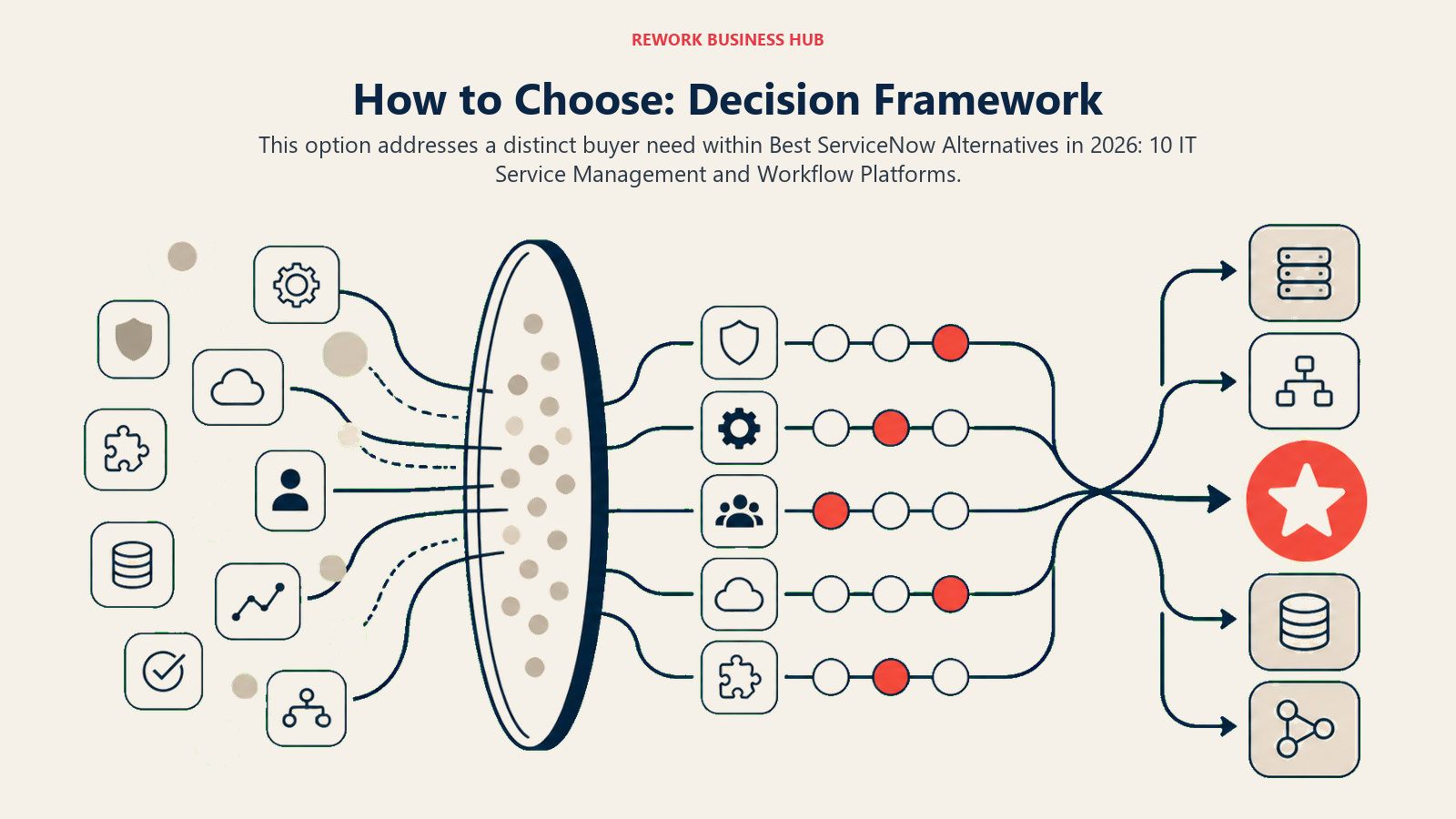
Entscheidungsrahmen: Welches Tool passt zu Ihnen?
| Wenn Sie benötigen... | Empfehlung |
|---|---|
| Vollständigen ITIL-Lifecycle (Incident, Change, Problem, CMDB) zu Mittelstandspreisen | Freshservice oder ManageEngine ServiceDesk Plus |
| ITSM integriert mit Ihrer Atlassian/Engineering-Toolchain | Jira Service Management |
| Multichannel-Support für internen IT-Bedarf und externen Kundensupport | Zendesk |
| Endpoint-Management und ITSM auf einer Plattform | Ivanti |
| Enterprise-ITSM wettbewerbsfähig mit ServiceNow | BMC Helix |
| Teamübergreifende Workflow-Automatisierung ohne dedizierte ITSM-Plattform | Rework |
| Kostengünstige ITIL-Compliance für ein schlankes IT-Team | ManageEngine ServiceDesk Plus oder SysAid |
| Modernes ITSM mit übersichtlicher Benutzeroberfläche und integriertem Asset-Management | InvGate |
| Service-Management für europäische Teams einschließlich Facility und HR | TOPdesk |
| Ein Tool, das Ihr Team wirklich täglich nutzen wird | Freshservice, InvGate oder Rework |
Die nächsten Schritte
Wenn Sie ServiceNow evaluiert haben und die Kosten oder die Komplexität das ausschlaggebende Argument sind, ist der schnellste Weg nach vorne, sich auf zwei Tools einzugrenzen, die Ihrem primären Anwendungsfall entsprechen, und dann einen zweiwöchigen Piloten mit echten Tickets durchzuführen.
Für IT-Teams mit Standard-ITSM-Bedarf ist Freshservice der empfohlene Ausgangspunkt. Für engineering-getriebene Organisationen eignet sich Jira Service Management. Für Ops-Teams, bei denen IT nur ein Teil eines umfassenderen Workflow-Problems ist, lohnt es sich, Rework parallel zu einem dedizierten ITSM-Tool zu testen, bevor man sich für eine vollständige ITIL-Infrastruktur entscheidet, die möglicherweise nicht benötigt wird.
Die Entscheidung muss nicht endgültig sein. Die meisten dieser Tools bieten Testversionen oder kostenlose Tarife an. Wählen Sie das Tool, das zu Ihrer Teamgröße passt, führen Sie es zwei Wochen lang mit Ihrem tatsächlichen Incident-Volumen aus und prüfen Sie, ob der Workflow standhält. Dieser Pilot liefert mehr Erkenntnisse als jede Vergleichstabelle. Und wenn Sie im gleichen Bewertungszyklus auch Ihren kundenseitigen Support-Stack überprüfen, lohnt es sich, die besten Zendesk-Alternativen und die besten Freshdesk-Alternativen parallel zu lesen. Der IT-Helpdesk und der Kundensupport-Desk landen häufig auf der gleichen Konsolidierungs-Shortlist.
Weiterführende Lektüre:

On this page
- Schnellvergleichstabelle
- Passende Unternehmensgrößen
- Größen- und Zielgruppen-Übersicht
- Warum Teams ServiceNow verlassen
- 1. Rework: Teamübergreifende Workflow-Plattform für betriebsintensive Teams
- 2. Jira Service Management: ITSM für entwicklungsnahe Teams
- 3. Freshservice: Der Mittelstand-ITSM-Standard
- 4. Zendesk: Kundenseitiger IT-Support mit starkem Reporting
- 5. BMC Helix: Enterprise-ITSM für große IT-Organisationen
- 6. Ivanti: Endpoint-Management und ITSM in einem Stack
- 7. ManageEngine ServiceDesk Plus: Erschwingliches ITIL für budgetbewusste IT-Teams
- 8. SysAid: Helpdesk-Automatisierung für KMU und Mittelstand
- 9. InvGate: Modernes ITSM mit starkem Asset-Management
- 10. TOPdesk: Einfaches ITSM für europäische Mittelstandsteams
- Funktionsvergleich nach ITIL-Modul
- Preisvergleich
- Implementierungsaufwand im Vergleich
- Entscheidungsrahmen: Welches Tool passt zu Ihnen?
- Die nächsten Schritte