Wie CS die Roadmap ohne Überversprechen kommuniziert: Ein Framework für ehrliche Gespräche
Turn this article into takeaways for your work.


Each assistant summarizes the article only for you and suggests best practices for your work.
So funktioniert die Überversprechen-Kette. Ein CSM ist in einem Bindungsgespräch mit einem Account, der still Alternativen evaluiert hat. Der Kunde fragt nach einer Funktion, auf die er gewartet hat. Der CSM weiß, dass sie "kommt", weil er sie vor drei Monaten in einem Produkt-All-Hands erwähnt hörte. Also sagt er "Ich glaube, das kommt in Q2", nicht als Zusage, nur als Signal, dass sich Dinge bewegen. Der Kunde nimmt es in seine interne Planung auf. Q2 kommt und geht. Die Funktion wird nicht ausgeliefert. Der Kunde eskaliert und verweist auf "das, was Ihr CSM uns gesagt hat". Der CSM verliert Glaubwürdigkeit. Die Verlängerung wird kompliziert.
Der CSM war nicht böswillig. Er versuchte zu helfen. Aber "versuchen zu helfen" ohne ein Kommunikations-Framework ist das, was Überversprechen im großen Maßstab erzeugt. Jede improvisierte Roadmap-Antwort ist eine kleine Wette, dass Product nicht den Kurs ändert. Diese Wette verliert regelmäßig. HBRs Untersuchung zur Funktionsbindung bestätigt, dass die Funktionen, die Kunden für Bindungsentscheidungen nutzen, oft andere sind als die, die sie angezogen haben, was Roadmap-Genauigkeit zu einem direkten Treiber der Verlängerung macht, nicht nur der Zufriedenheit.
Das Ziel dieses Artikels ist nicht, CSMs dazu zu bringen, weniger zu sagen. Es ist, ihnen eine strukturierte Sprache zu geben, um die richtigen Dinge zu sagen: Dinge, die ehrlich über Ungewissheit sind, ohne dem Kunden das Gefühl zu geben, dass Sie keinen Plan haben.
Warum dieses Problem existiert
CSMs sind incentiviert, zu halten und auszuweiten. Das ist der richtige Anreiz. Aber wenn ein Kunde über Abwanderung nachdenkt, fühlen sich Roadmap-Andeutungen wie das schnellste verfügbare Werkzeug an. Ein CSM, der eine Funktion "in Entwicklung" erwähnt, tut etwas Rationales. Er bietet dem Kunden einen Grund zu bleiben. McKinseys Untersuchung zur Net Revenue Retention zeigt, dass NRR die einzelne Metrik ist, die am stärksten mit langfristiger Wertschöpfung im B2B-SaaS korreliert, was bedeutet, dass die Kosten eines Überversprechens, das Abwanderung treibt, weit über den einzelnen Account hinaus anwachsen.
Das strukturelle Problem ist, dass Product und CS auf unterschiedlichen Zeithorizonten operieren. Product arbeitet in vierteljährlichen Zyklen. Funktionen verschieben sich zwischen Prioritäten, wenn sich Marktbedingungen ändern, die Engineering-Kapazität sich ändert oder eine größere strategische Initiative Vorrang erhält. Kunden denken in jährlichen Verpflichtungen. Sie unterzeichnen einen Vertrag für ein Jahr, planen einen Workflow um aktuelle Fähigkeiten und erwarten, dass die Dinge, von denen ihnen gesagt wurde, sie "kommen", innerhalb eines vorhersehbaren Fensters eintreffen. Unternehmen mit geringerem Reifegrad der Ausrichtung zwischen CS und Product spüren es am akutesten, weil es keinen gemeinsamen Betriebsrhythmus zwischen den Teams gibt.
Zwischen diesen beiden Zeitlinien sitzt der CSM, der keine genehmigte Sprache hat, um den Unterschied zwischen "zugesagt", "geplant" und "wir denken darüber nach" zu kommunizieren.
Wenn es kein Framework gibt, improvisieren CSMs. Wenn sie improvisieren, nutzen sie, was immer sie aufgeschnappt haben: in einem Produkt-All-Hands, in einer Slack-Nachricht von einem PM, in einer Demo, in der sie saßen. Sie bieten diese Fragmente als Versprechen an, weil sie versuchen zu helfen. Und dann landen die Versprechen nicht. Die folgenden Fehlermuster sind vorhersehbar, und sie haben alle dieselbe Lösung.
Key Facts: Roadmap-Kommunikation und Kundenvertrauen
- 73 % der B2B-SaaS-Kunden nennen "Roadmap-Transparenz" als wichtigen oder sehr wichtigen Faktor in Verlängerungsentscheidungen, laut Gainsights State-of-Customer-Success-Untersuchung.
- Organisationen, in denen CS-Teams vor den Verlängerungssaisons strukturierte Roadmap-Briefings erhalten, berichten von 31 % weniger Verlängerungseskalationen, die mit Lücken bei Funktionserwartungen zusammenhängen, laut TSIA-Benchmark-Daten.
- Überversprechen ist die führende Ursache für Vertrauenserosion in Kundenbeziehungen, genannt von 61 % der B2B-Käufer, die sich gegen eine Verlängerung entschieden, laut Salesforces State-of-the-Connected-Customer-Untersuchung.
Die drei Kommunikations-Fehlermuster
Überversprechen: Der CSM bietet einen konkreten Zeitplan ohne Freigabe von Product an. "Wir erwarten, dass das bis Q2 ausgeliefert wird" wird zu einer Kundenerwartung, selbst wenn es beiläufig gesagt wird. Wenn die Funktion auf Q4 rutscht, fühlt sich der Kunde getäuscht, und technisch wurde er das. Dies ist das sichtbarste Fehlermuster und das, auf das CS-Führungskräfte hin prüfen.
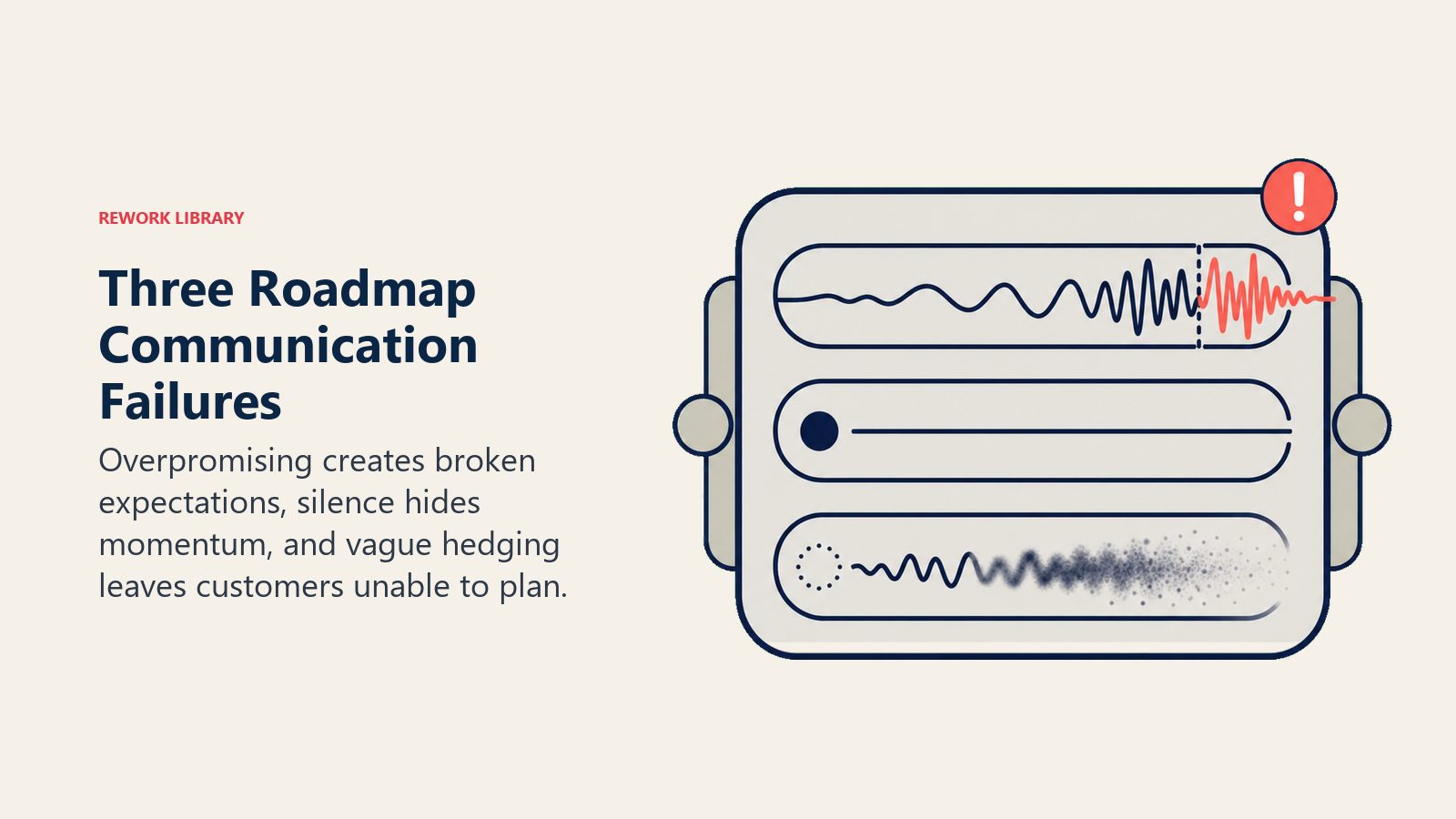
Unterkommunizieren: Der CSM sagt nichts über die Roadmap, weil er Angst hat, sich auf etwas Falsches festzulegen. Der Kunde nimmt an, dass nichts passiert. Kunden, die keinen Fortschritt bei ihren Bedürfnissen sehen können, beginnen, Alternativen zu evaluieren, nicht unbedingt, weil sie gehen wollen, sondern weil sie keinen Grund zu bleiben sehen können. Dieses Fehlermuster ist unsichtbar bis zum Verlängerungsgespräch, wenn es zu spät ist. Es ist auch ein Symptom des Funktionsanfragen-Friedhof-Problems: Wenn CSMs zu viele Kundenanfragen unbeantwortet haben verstreichen sehen, hören sie auf, überhaupt etwas zu versprechen.
Vage versprechen: Der CSM sagt "das ist auf unserem Radar" oder "wir denken definitiv darüber nach", eine Sprache, die eine Erwartung andeutet, ohne echten Inhalt zu liefern. Das ist das Schlechteste aus beiden Welten. Der Kunde hört Zusage; der CSM beabsichtigte keine Zusage; niemandes Erwartungen sind abgestimmt. Wenn die Funktion nicht ausgeliefert wird, fühlt sich der Kunde getäuscht, obwohl nichts Konkretes gesagt wurde.
Alle drei Fehlermuster teilen eine Grundursache: keine gemeinsame Sprache zwischen CS und Product dafür, was verschiedene Phasen der Roadmap tatsächlich bedeuten.
Das vierstufige Sprach-Framework
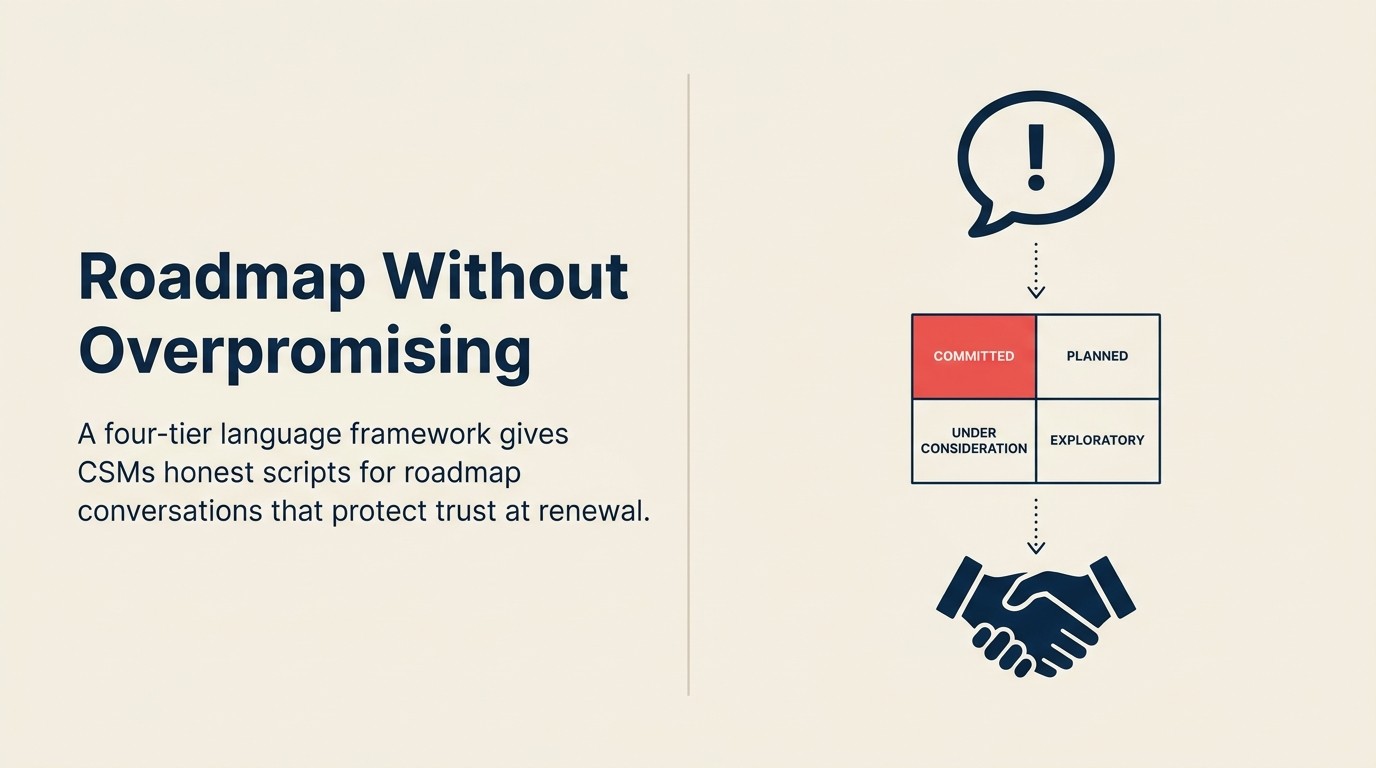
Das Framework teilt den Roadmap-Status in vier Stufen, jede mit genehmigter Sprache, die CSMs direkt in Gesprächen nutzen können.
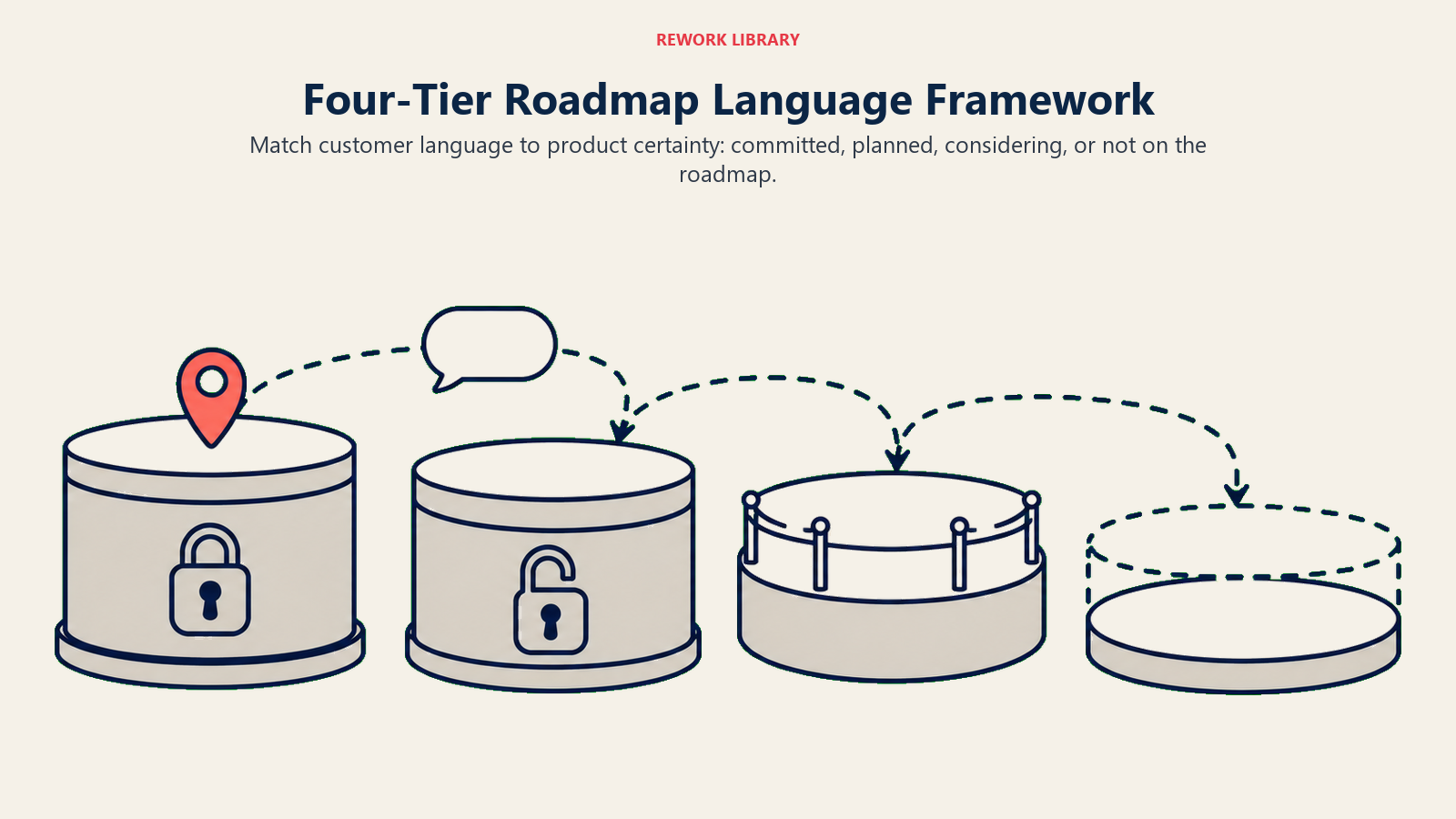
Stufe 1: Zugesagt
Die Funktion ist im aktuellen Sprint oder für das nächste Quartal festgelegt. Product hat bestätigt, dass sie ausgeliefert wird. Dies ist die einzige Stufe, auf der ein CSM direkt sagen kann, dass etwas kommt.
Wann zu nutzen: Nur wenn Sie eine ausdrückliche Bestätigung von einem PM oder aus dem Pre-QBR-Briefing haben, dass dieses Element festgelegt ist.
Genehmigte Sprache:
- "Das ist für Q2 bestätigt. Ich kann Ihnen sagen, es wird ausgeliefert."
- "Unser Team hat sich dazu für das nächste Quartal verpflichtet. Ich bin zuversichtlich bei diesem Zeitplan."
- "Diese hier ist festgelegt. Sie werden sie vor Ihrem Verlängerungstermin haben."
Was zu vermeiden ist: Fügen Sie keine Einschränkungen hinzu, die die Zusage untergraben ("soweit ich weiß", "ich glaube", "ich denke"). Wenn es Stufe 1 ist, sagen Sie es selbstbewusst.
Stufe 2: Geplant
Die Funktion ist auf der Roadmap mit zugeteilten Ressourcen. Sie hat echte Dynamik. Aber sie ist noch nicht in einem Sprint, und Zeitpläne können sich verschieben.
Wann zu nutzen: Wenn ein PM bestätigt hat, dass das Element auf der Roadmap mit Priorität und Ressourcen steht, aber kein Sprint-Datum festgelegt hat.
Genehmigte Sprache:
- "Das steht auf unserer Roadmap für H2. Ich gebe Ihnen kein Datum, hinter dem ich nicht stehen kann, aber es ist ein priorisiertes Element."
- "Unser Team hat das im Plan für die zweite Jahreshälfte. Ich gebe Ihnen lieber eine Spanne als ein Datum, das ich zurücknehmen muss."
- "Ich kann bestätigen, dass das geplant ist. Was ich Ihnen nicht geben kann, ist ein konkretes Auslieferungsdatum. Das ist kein Ausweichen, das ist mein genaues Bild davon, wo die Entscheidung steht."
Was zu vermeiden ist: Sagen Sie nicht "geplant" und fügen Sie dann einen Zeitplan hinzu, den Sie aus dem Gedächtnis gezogen haben. Wenn es Stufe 2 ist, ist die ehrliche Antwort eine Halbjahresspanne, kein Quartal.
Stufe 3: In Erwägung
Der Kundenbedarf ist validiert. Product hat das Problem anerkannt. Aber er ist nicht priorisiert, er hat keine Ressourcen, und er schafft es vielleicht oder vielleicht nicht in den nächsten Roadmap-Zyklus.
Wann zu nutzen: Wenn Sie wissen, dass ein PM die Anfrage gehört hat und sie intern besprochen wurde, aber keine Zusage zum Bauen gemacht wurde.
Genehmigte Sprache:
- "Ich möchte ehrlich zu Ihnen sein, wo das steht. Der Bedarf ist auf unserem Radar. Wir hören es von Ihrem Team und von anderen. Aber es wurde noch keinem Roadmap-Slot zugesagt. Ich melde mich, wenn sich das ändert."
- "Ihr Feedback dazu wurde gehört. Wir sind gerade im Bewertungsmodus, was bedeutet, dass ich Ihnen keinen Zeitplan geben kann. Was ich tun kann, ist sicherzustellen, dass Ihr Anwendungsfall Teil des Priorisierungsgesprächs ist."
- "Das ist eine, die wir intern aktiv diskutieren. Ich sage Ihnen lieber, dass sie in Erwägung steht, als ein Datum zu erfinden."
Was zu vermeiden ist: Lassen Sie "in Erwägung" nicht in eine Stufe-2-Antwort abdriften. Wenn es keine Ressourcenzusage gibt, ist die ehrliche Antwort Stufe 3, selbst wenn der Kunde frustriert ist.
Stufe 4: Nicht auf der Roadmap
Die Funktion wird nicht gebaut. Nicht im nächsten Quartal, nicht im aktuellen Planungshorizont. Dies ist die am schwersten zu kommunizierende Stufe, aber gut gemacht ist sie vertrauensbildender als eine vage Antwort.
Wann zu nutzen: Wenn Sie Klarheit von Product haben, dass dieses Element nicht im Plan ist.
Genehmigte Sprache:
- "Ich werde offen mit Ihnen sein. Das steht nicht auf unserer aktuellen Roadmap. Ich weiß, dass das nicht ist, was Sie hören wollten. Können wir darüber sprechen, was diesen Bedarf antreibt? Es gibt vielleicht einen Weg, ihn anders zu adressieren."
- "Unser Team hat eine bewusste Entscheidung getroffen, sich für diesen Planungszyklus anderswo zu konzentrieren. Ich sage Ihnen das lieber direkt, als dass Sie um etwas herum planen, das nicht kommt."
- "Das passiert nicht in naher Zukunft. Ich möchte verstehen, ob das Ihre Entscheidungsfindung ändert. Wenn ja, möchte ich sicherstellen, dass wir das richtige Gespräch führen."
Was zu vermeiden ist: Mildern Sie eine Stufe 4 nicht mit "es kommt vielleicht irgendwann" ab, es sei denn, Sie haben einen konkreten Grund, das zu glauben. Vage Hoffnung ist für einen Kunden, der eine Verlängerungsentscheidung trifft, nicht nützlich.
Was CS von Product braucht, um dies gut zu nutzen
Das Framework funktioniert nur, wenn CS die Information hat, um es genau anzuwenden. Das erfordert vier Dinge von Product:
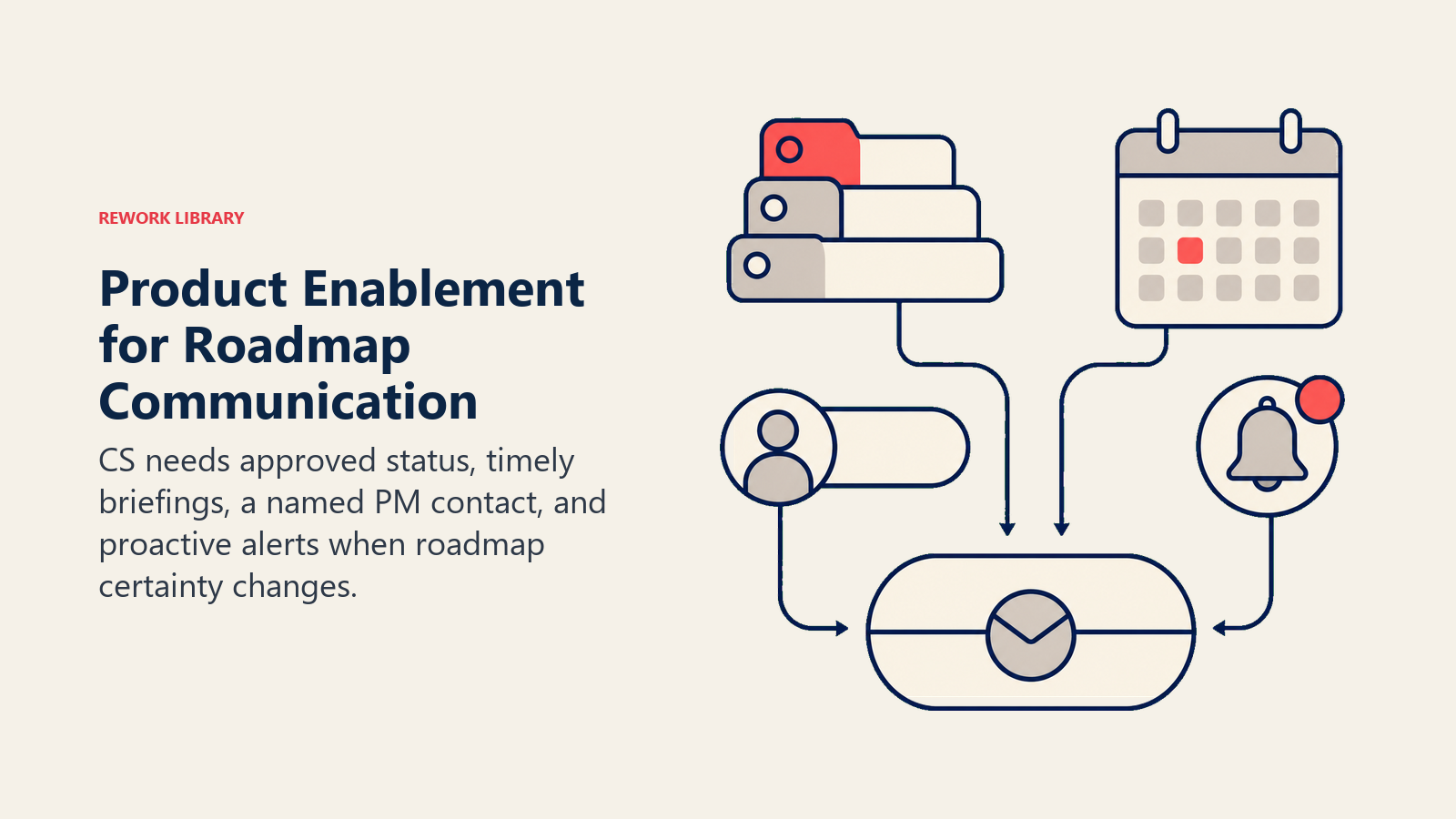
Roadmap-Zugang auf der richtigen Vertraulichkeitsstufe. CSMs müssen nicht alles im Produkt-Backlog sehen. Aber sie müssen für die obersten 20 bis 30 am häufigsten nachgefragten Funktionen wissen, welche Stufe gilt. Ein Pre-QBR-Briefing-Dokument vom PM, selbst eine einfache Tabelle, erreicht das. Der CS-PM-1:1-Rhythmus ist der feste Mechanismus, der diese Information zwischen Planungszyklen am Fließen hält, nicht nur vor Verlängerungsspitzen.
Ein Briefing-Rhythmus vor Verlängerungs- und QBR-Saisons. Zwei bis vier Wochen vor Verlängerungsspitzen sollten CS-Führungskräfte ein Briefing von Product erhalten, was CSMs sagen können und was nicht. Welche Elemente sind dieses Quartal Stufe 1? Welche sind von Stufe 2 zu Stufe 3 gewechselt? Was wurde offiziell von der Roadmap entfernt?
Ein namentlich benannter PM für Roadmap-Fragen. CSMs brauchen eine bestimmte Person, der sie vor einem Gespräch schreiben können: "Ich habe einen Account, der nach X fragt. Kann ich ihnen sagen, es ist Stufe 2?" Die Antwort dauert für einen PM, der die Roadmap kennt, eine Minute. Ohne dies improvisieren CSMs.
Genehmigte Sprach-Leitplanken pro Quartal. Product und PMM sollten zu Beginn jedes Quartals veröffentlichen, was für die externe Kommunikation genehmigt ist. Kein vollständiges Roadmap-Dokument. Nur ein klares Signal, was sicher zu sagen ist und was nicht.
Das Problem der QBR-Roadmap-Folie
Die meisten CS-Teams nehmen eine Roadmap-Folie in QBR-Decks auf. Das ist nicht von sich aus falsch, aber die Folie erzeugt ein Kommunikationsrisiko, wenn sie nicht sorgfältig konstruiert ist. Die vierteljährliche Kundenfeedback-Überprüfung ist auch der richtige Moment, um abzugleichen, was letztes Quartal auf Roadmap-Folien gesagt wurde, mit dem, was tatsächlich ausgeliefert wurde, und etwaige Lücken zutage zu fördern, bevor Kunden sie ansprechen.
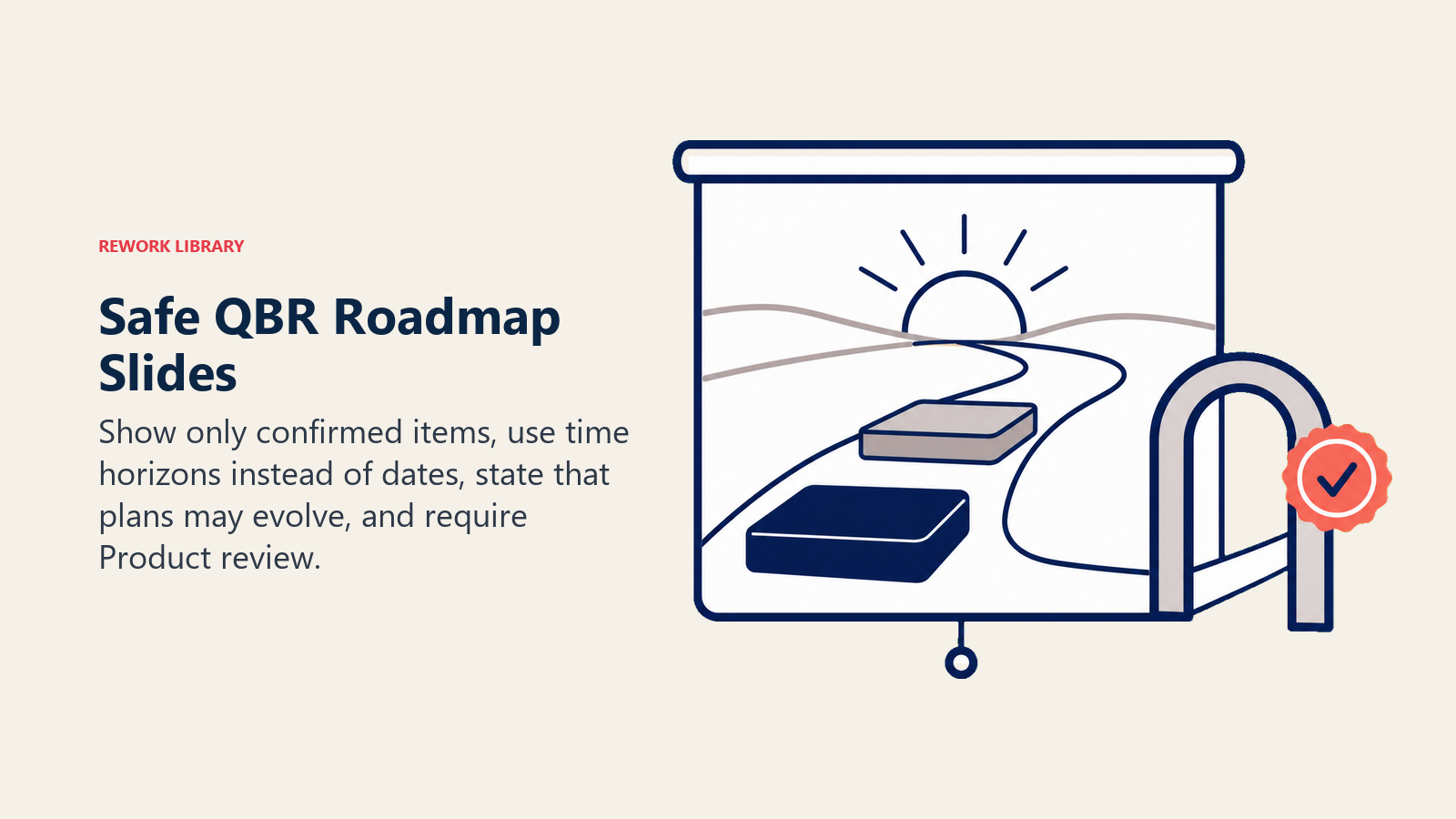
Eine QBR-Roadmap-Folie sollte:
- Nur Stufe-1- und Stufe-2-Elemente zeigen (nichts, das "in Erwägung" oder unentschieden ist)
- Zeithorizonte verwenden, keine konkreten Daten ("H2 2026", nicht "September")
- Einen klaren Haftungsausschluss enthalten: "Dies spiegelt unsere aktuelle Richtung wider und kann sich weiterentwickeln"
- Von Product überprüft werden, bevor sie zum Kunden geht
Eine QBR-Roadmap-Folie sollte nicht:
- Funktionen enthalten, von denen ein PM nicht bestätigt hat, dass sie geplant sind
- Jedes Element im Backlog so zeigen, als ob alles vorangeht
- "Demnächst" als Sammelbegriff für alles verwenden, was jemals intern besprochen wurde
- Von CS ohne Freigabe von Product erstellt werden
Eine Roadmap-Folie zu zeigen ist nicht dasselbe wie ein Roadmap-Gespräch zu führen. Die Folie ist ein Dokument. Das Gespräch ist, wo das Vertrauen aufgebaut oder erodiert wird. Schulen Sie CSMs auf den Unterschied: Die Folie setzt Kontext, aber was sie als Antwort auf Fragen sagen, ist, wo das Stufen-Framework am meisten zählt.
Umgang mit Kundenwiderspruch
"Aber Sie sagten, es würde bis Q2 fertig sein." Wenn ein Kunde auf etwas verweist, das ein vorheriger CSM sagte, streiten Sie nicht darüber, ob die Zusage gemacht wurde. Beginnen Sie mit Anerkennung: "Ich verstehe, dass Sie das erwartet haben, und es tut mir leid, dass wir diese Erwartung nicht erfüllt haben. Lassen Sie mich Ihnen ein ehrliches Update geben, wo die Dinge heute stehen." Verwenden Sie dann die passende Stufen-Sprache. Schieben Sie die Schuld nicht auf den vorherigen CSM. Versprechen Sie nicht, zu untersuchen. Seien Sie einfach genau über den aktuellen Stand und fragen Sie, was der Kunde wissen muss, um seine Entscheidung zu treffen.
Wenn sich die Antwort seit dem letzten Gespräch geändert hat. Dies ist das unangenehmste Szenario. Ein CSM sagte einem Kunden letztes Quartal, eine Funktion sei Stufe 2, und sie ist jetzt Stufe 3 oder Stufe 4. Der Kunde muss das proaktiv hören, nicht in einem Verlängerungsgespräch. "Ich möchte einer Sache vor unserem nächsten QBR zuvorkommen. Der Status von X hat sich geändert, seit wir zuletzt sprachen. Hier ist, was ich heute weiß." Proaktive Offenlegung einer Änderung ist immer besser als reaktive Offenlegung in einem heiklen Gespräch.
Wann Product oder PMM hinzuzuziehen sind. Wenn die Verlängerung eines Kunden wirklich von einer bestimmten Funktion abhängt, sollte dieses Gespräch nicht auf CSM-Ebene bleiben. Ziehen Sie den PM hinzu, der für diesen Bereich verantwortlich ist, um ein direktes Gespräch mit dem Kunden über die Produktrichtung zu führen. Das signalisiert, dass der Bedarf des Kunden ernst genommen wird. Es nimmt den CSM auch aus der Position, Produktentscheidungen zu vertreten, die er nicht besitzt. Die PMM-als-Brücke-Rolle zwischen CS und Product ist es wert, verstanden zu werden, bevor man strukturiert, wie diese Dreiwege-Gespräche aufgesetzt werden.
Verantwortlichkeiten der CS-Führung
CS-Führungskräfte setzen den Kommunikationsstandard. Das bedeutet:
Prüfen, was CSMs tatsächlich sagen. Die Überprüfung von Gesprächsaufzeichnungen ist nicht nur zum Coachen von Kommunikationsfähigkeiten. Sie ist zum Abfangen von Überversprechen, bevor sie zu Verlängerungseskalationen werden. Ein monatliches Audit roadmapbezogener Gespräche in Calls wird zutage fördern, ob CSMs im Stufen-Framework bleiben oder improvisieren. Forresters Untersuchung zum B2B-Käufervertrauen identifiziert Konsistenz als den zweithöchsten Vertrauenshebel bei globalen Käufern, was das Audit zu einer direkten Investition in die Konsistenz macht, die bestimmt, ob Kunden verlängern. Accounts, bei denen bereits Überversprechen gemacht wurden, sind ein Abwanderungssignal. Sie durch die Brille einer Strategie für Funktionsakzeptanz zu behandeln (was braucht der Kunde tatsächlich zum Erfolg, unabhängig vom versprochenen Zeitplan?) hilft, das Bindungsgespräch konstruktiv neu zu rahmen.
Ein Pre-Verlängerungs-Briefing durchführen. Vor jeder Verlängerungssaison führen Sie eine 45-minütige Sitzung durch, in der Product die obersten 10 am häufigsten nachgefragten Funktionen durchgeht und bestätigt, in welche Stufe jede fällt. CSMs gehen mit genehmigter Sprache für jedes Gespräch, das sie in den nächsten 90 Tagen führen werden, hinaus.
Eskalationspfad für echte Überversprechen. Wenn ein CSM sich auf einen Zeitplan festgelegt hat, den er nicht hätte machen sollen, zählt der Wiederherstellungsprozess. Die CS-Führung überprüft das Gespräch, bestätigt, was gesagt wurde, zieht den PM hinzu, und gemeinsam entscheiden sie, wie der Kunde neu angegangen wird. Lassen Sie CSMs das nicht alleine bewältigen. So bleibt es verborgen. Der Prozess des Schließens der Feedback-Schleife ist das richtige Vehikel, um die Erwartung eines Kunden nach einem Überversprechen zurückzusetzen: Er gibt CS einen strukturierten Weg, anzuerkennen, was gesagt wurde, und neu zu rahmen, was tatsächlich kommt.
Die einseitige Schnellreferenz
| Stufe | Status | Sicher zu sagen | Genehmigter Sprach-Einstieg |
|---|---|---|---|
| 1: Zugesagt | Im Sprint oder für das nächste Quartal festgelegt | Konkrete Zusage | "Das ist für [Q/Datum] bestätigt." |
| 2: Geplant | Roadmap mit Ressourcen, nicht im Sprint | Halbjahresspanne, kein Datum | "Das ist für H[X] geplant. Ich gebe Ihnen kein Datum, hinter dem ich nicht stehen kann." |
| 3: In Erwägung | Validierter Bedarf, noch nicht priorisiert | Ehrliche Bewertungssprache | "Das wird gerade bewertet. Ich kann Ihnen gerade keinen Zeitplan geben." |
| 4: Nicht auf der Roadmap | Nicht im aktuellen Planungshorizont | Direktes ehrliches Nein | "Das steht nicht auf unserer aktuellen Roadmap. Lassen Sie mich erklären, worauf wir uns stattdessen konzentrieren." |
Dos: Verwenden Sie die Stufen-Sprache genau. Bestätigen Sie den Status mit einem PM vor einem Gespräch, wenn Sie unsicher sind. Aktualisieren Sie Kunden proaktiv, wenn sich der Status ändert.
Don'ts: Kombinieren Sie keine Stufe-3-Sprache mit angedeuteten Zeitplänen. Sagen Sie nicht "demnächst" für irgendetwas unter Stufe 1. Verwenden Sie nicht "wir arbeiten definitiv daran", ohne zu bestätigen, dass es Stufe 1 oder 2 ist.
Wie Sie die Entscheidung zwischen öffentlicher und kontrollierter Roadmap handhaben, prägt, was CSMs standardmäßig sagen können. Das Stufen-Framework funktioniert am besten, wenn es mit einem klaren Modell dafür gepaart ist, was Kunden ohne Nachfragen sehen können. Und für den einzelnen Moment, in dem ein Kunde fragt "Wann kommt X?", hat der Artikel Umgang mit genau dieser Frage die konkreten Skripte und den Entscheidungsbaum für die Nutzung in Echtzeit.
Das 4-Stufen-Framework für Roadmap-Kommunikation: Eine Referenz
Das 4-Stufen-Framework für Roadmap-Kommunikation benennt die vier Zustände, die jede Funktionsanfrage einnehmen kann, ordnet jedem genehmigte Sprache zu und gibt CSMs ein gemeinsames Vokabular, um es konsistent über Accounts hinweg zu nutzen.
| Stufe | Zustand | Was es bedeutet | Genehmigte Eröffnungsphrase |
|---|---|---|---|
| 1: Zugesagt | Im Sprint oder für das nächste Quartal festgelegt | Product hat bestätigt, dass sie ausgeliefert wird; sagen Sie es direkt | "Das ist für [Q/Datum] bestätigt." |
| 2: Geplant | Roadmap mit Ressourcen, noch nicht im Sprint | Echte Dynamik; Zeitplan ist eine Halbjahresspanne, kein Quartal | "Das ist für H[X] geplant. Ich gebe Ihnen kein Datum, hinter dem ich nicht stehen kann." |
| 3: In Erwägung | Kundenbedarf validiert; keine Ressourcen zugesagt | Ehrlich über die Bewertung; kein Zeitplan angedeutet | "Das wird gerade bewertet. Ich kann Ihnen gerade keinen Zeitplan geben." |
| 4: Nicht auf der Roadmap | Nicht im aktuellen Planungshorizont | Direktes ehrliches Nein; keine vage Hoffnung, außer Sie haben einen konkreten Grund | "Das steht nicht auf unserer aktuellen Roadmap. Lassen Sie mich erklären, worauf wir uns stattdessen konzentrieren." |
Der Wert des Frameworks sind nicht die Stufen selbst. Es ist das gemeinsame Vokabular. Wenn Product, CS und PMM alle dieselben vier Zustände verwenden, wird individuelle CSM-Improvisation selten, weil jeder weiß, welche genehmigte Phrase gilt. Das häufigste Umsetzungsversäumnis ist, das vierteljährliche Briefing auszulassen, das die Stufen-Zuordnungen aktuell hält. Ohne dieses Update kehren CSMs zur Nutzung veralteter Status zurück, was das Überversprechen-Problem neu erzeugt, das das Framework verhindern sollte.
Rework Analysis: Das größte Improvisationsrisiko in einem privaten Roadmap-Modell ist nicht, dass CSMs lügen. Es ist, dass sie Ungewissheit mit der optimistischsten Interpretation dessen füllen, was sie gehört haben. Ein CSM, der vor drei Monaten eine Funktion in einem All-Hands erwähnt hörte, hat keine Möglichkeit zu wissen, ob sie jetzt Stufe 1 oder Stufe 4 ist. Ohne einen genehmigten Briefing-Zyklus greifen sie standardmäßig zu Stufe-2-Sprache für alles. Das 4-Stufen-Framework beseitigt diesen Standard: Wenn Sie keine PM-Bestätigung für die Stufe haben, ist die richtige Antwort immer "lassen Sie mich das bestätigen und mich zurückmelden", keine Vermutung. Das Framework diszipliniert Improvisation aus dem System, aber nur, wenn der Pre-Verlängerungs-Briefing-Rhythmus aufgebaut und gepflegt wird.
Mehr erfahren

Principal Solution Architect
On this page
- Warum dieses Problem existiert
- Die drei Kommunikations-Fehlermuster
- Das vierstufige Sprach-Framework
- Was CS von Product braucht, um dies gut zu nutzen
- Das Problem der QBR-Roadmap-Folie
- Umgang mit Kundenwiderspruch
- Verantwortlichkeiten der CS-Führung
- Die einseitige Schnellreferenz
- Das 4-Stufen-Framework für Roadmap-Kommunikation: Eine Referenz
- Mehr erfahren