Turn this article into takeaways for your work.


Each assistant summarizes the article only for you and suggests best practices for your work.
Apakah Jualan Kitaran Panjang?
Jualan kitaran panjang merujuk kepada transaksi kompleks yang merangkumi 6-18 bulan (atau lebih lama) dari hubungan awal hingga deal ditutup. Penglibatan ini melibatkan pelbagai pemegang kepentingan, proses penilaian yang meluas, keperluan tersuai, dan perubahan organisasi yang signifikan.
Keadaan Ideal untuk Jualan Kitaran Panjang
Kerangka kitaran panjang diperlukan apabila:
- Saiz deal: ACV RM100K ke atas (selalunya RM500K-RM5M ke atas)
- Pembuat keputusan: 5-15+ pemegang kepentingan terlibat
- Kerumitan produk: Tinggi, memerlukan penyesuaian atau integrasi
- Masa ke nilai: Bulan untuk pelaksanaan
- Impak organisasi: Perubahan proses atau sistem yang signifikan
- Segmen pasaran: Akaun enterprise, industri terkawal
Prinsip Teras
1. Hubungan Melebihi Transaksi
Jualan kitaran panjang mengutamakan kedalaman hubungan:
Nilai Deal = Kekuatan Hubungan × Kesesuaian Penyelesaian × Kesediaan Organisasi

Kejayaan memerlukan pembinaan kepercayaan merentas pelbagai pemegang kepentingan dari masa ke masa
Implikasi Utama:
- Pelaburan dalam pembangunan akaun jangka panjang
- Pelbagai titik hubungan di luar proses jualan formal
- Pembinaan hubungan eksekutif
- Penyampaian nilai sebelum kontrak ditandatangani
2. Asimetri Maklumat sebagai Kelebihan
Pemahaman pelanggan yang mendalam menjadi parit kompetitif:
- Pengetahuan orang dalam tentang dinamik keputusan
- Kesedaran tentang landskap politik
- Pemahaman tentang keutamaan yang tidak dinyatakan
- Akses kepada rangkaian pengaruh tidak formal
3. Kesabaran dan Kegigihan
Kitaran panjang menuntut penglibatan yang berterusan:
- Pelbagai titik hubungan selama 12-18 bulan
- Bertahan melalui perubahan kepimpinan
- Menyesuaikan diri dengan peralihan keutamaan
- Mengekalkan momentum melalui kelewatan
Perjalanan Pelanggan Kitaran Panjang
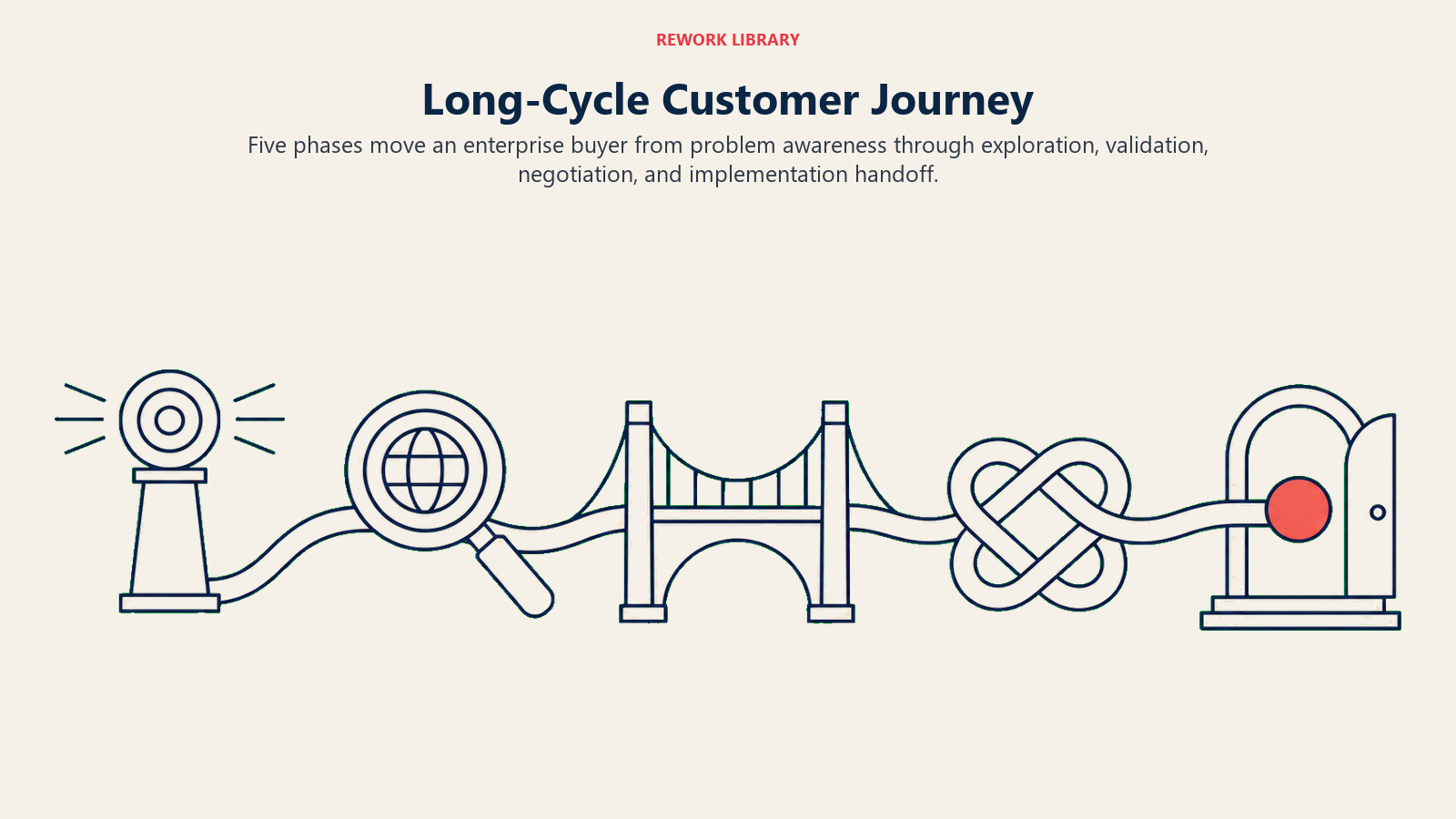
Perjalanan ini melalui lima fasa yang berbeza, dengan setiap fasa memperdalam kefahaman pembeli, penyelarasan pemegang kepentingan, dan komitmen.
Fasa 1: Kesedaran Masalah (Bulan 1-3)
Objektif: Bantu prospek menyedari magnitud masalah
Aktiviti:
- Kepimpinan pemikiran eksekutif
- Perkongsian penyelidikan industri
- Pengenalan rangkaian rakan sejawat
- Penyampaian kandungan pendidikan
- Bengkel pengkuantitian masalah
Pembinaan Hubungan:
- Hadiri acara industri bersama
- Jemput ke meja bulat eksklusif
- Kongsi pandangan tanpa agenda jualan
- Perkenalkan sambungan yang relevan
Penunjuk Kejayaan:
- Penglibatan penaja eksekutif
- Champion dalaman muncul
- Masalah diiktiraf sebagai keutamaan
- Perbualan bajet dimulakan
Fasa 2: Penerokaan Penyelesaian (Bulan 3-6)
Objektif: Letak diri sebagai rakan kongsi strategik, bukan vendor
Proses Penemuan:
- Temubual pelbagai pemegang kepentingan (6-12 orang)
- Pemetaan proses perniagaan
- Pengkuantitian pain point
- Definisi kriteria kejayaan
- Penilaian risiko
Pembangunan Cadangan Nilai:
- Permodelan ROI tersuai
- Ko-penciptaan kes perniagaan
- Contoh khusus industri
- Sambungan pelanggan rujukan
- Reka bentuk program perintis
Pemetaan Pemegang Kepentingan:
- Kenal pasti semua pembuat keputusan dan yang mempengaruhi
- Fahami motivasi peribadi
- Petakan kuasa formal dan tidak formal
- Bangunkan strategi pendekatan berbilang hubungan
Penunjuk Kejayaan:
- Akses kepada jawatankuasa eksekutif
- Penilaian formal dimulakan
- Bajet diperuntukkan untuk inisiatif
- Pasukan projek dihimpunkan
Fasa 3: Penilaian dan Pengesahan (Bulan 6-12)
Objektif: Tunjukkan nilai yang unggul dan kurangkan risiko keputusan
Pengesahan Teknikal:
- Demo produk terperinci (pelbagai sesi)
- POC atau program perintis
- Semakan seni bina teknikal
- Penilaian integrasi
- Semakan keselamatan dan pematuhan
- Penanda aras prestasi
Pengesahan Perniagaan:
- Analisis ROI terperinci
- Perancangan pelaksanaan
- Penilaian pengurusan perubahan
- Keperluan latihan
- Definisi metrik kejayaan
Kedudukan Kompetitif:
- Perbandingan ciri/keupayaan
- Analisis jumlah kos pemilikan
- Panggilan pelanggan rujukan
- Lawatan tapak kepada pelanggan sedia ada
- Perkongsian laporan analis
Pengurusan Pemegang Kepentingan:
- Taklimat eksekutif berkala
- Pembentangan khusus jabatan
- Mesyuarat pemegang kepentingan satu-satu
- Bahan pemberdayaan champion
- Dokumentasi bantahan dan respons
Penunjuk Kejayaan:
- Pengesahan teknikal berjaya
- Kes perniagaan diluluskan oleh kewangan
- Pembinaan konsensus eksekutif
- Perolehan terlibat
- Rundingan kontrak bermula
Fasa 4: Rundingan dan Kelulusan (Bulan 12-15)
Objektif: Navigasi proses kelulusan yang kompleks
Rundingan Komersial:
- Perbincangan harga dan pembungkusan
- Penstrukturan deal berbilang tahun
- Rundingan terma pembayaran
- Perjanjian SLA
- Skop perkhidmatan profesional
- Permintaan pembangunan tersuai
Semakan Undang-undang:
- Pengurusan garis merah (selalunya 3-6 pusingan)
- Perjanjian pemprosesan data
- Keperluan keselamatan dan privasi
- Liabiliti dan indemnifikasi
- Rundingan terma kontrak
Kelulusan Dalaman:
- Tandatangan ketua jabatan
- Kelulusan kewangan CFO
- Kelulusan teknikal CIO
- Semakan undang-undang
- Kelulusan lembaga (untuk deal terbesar)
- Semakan akhir perolehan
Mitigasi Risiko:
- Fasa pelaksanaan
- Jaminan kejayaan
- Laluan perintis-ke-enterprise
- Klausa keluar dan peruntukan penutupan
Penunjuk Kejayaan:
- Mutual Action Plan dipersetujui
- Semua pemegang kepentingan sejajar
- Garis merah undang-undang dimuktamadkan
- Bajet disahkan
- Tandatangan sahaja yang tertangguh
Fasa 5: Penutupan dan Peralihan (Bulan 15-18)
Objektif: Pastikan komitmen dan mulakan dengan jayanya
Aktiviti Penutupan Akhir:
- Majlis tandatangan eksekutif
- Perancangan mesyuarat permulaan
- Pengenalan pasukan
- Pemuktamadan jadual pelaksanaan
- Persetujuan metrik kejayaan
Peralihan kepada Pelaksanaan:
- Dokumentasi peralihan terperinci
- Pemindahan hubungan pemegang kepentingan
- Penyelesaian item terbuka
- Pelan komunikasi
- Pengenalpastian kemenangan awal
Penunjuk Kejayaan:
- Kontrak dilaksanakan sepenuhnya
- Pembayaran diterima
- Permulaan pelaksanaan selesai
- Pelan customer success ditetapkan
- Hubungan eksekutif dikekalkan
Seni Bina Pipeline Kitaran Panjang
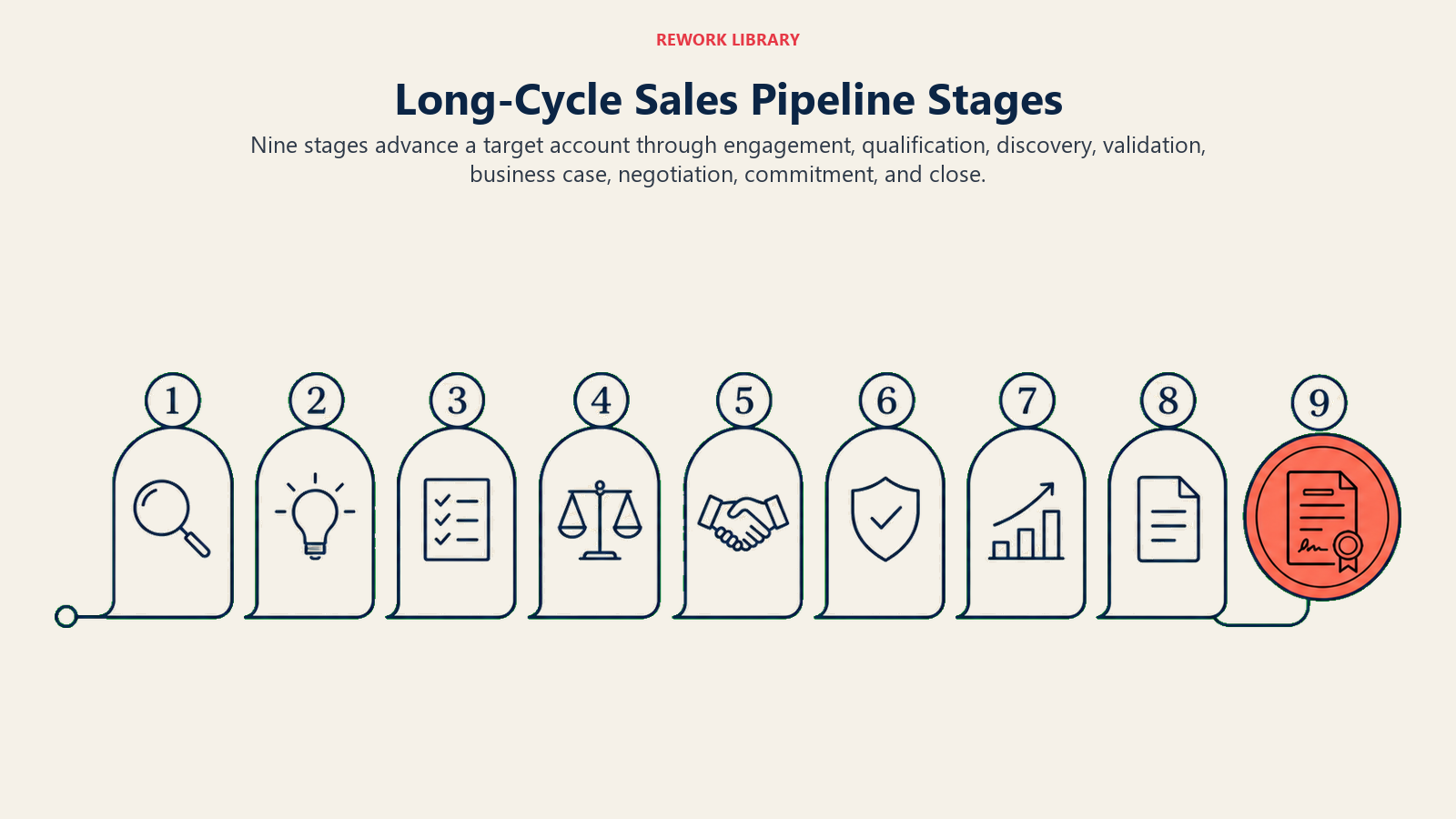
Pipeline menggunakan gerbang bukti yang jelas untuk memastikan peluang 12-18 bulan terus bergerak tanpa mengelirukan aktiviti dengan kemajuan.
Reka Bentuk Peringkat Pipeline
Akaun Sasaran (Bulan 0)
- Dikenal pasti sebagai sasaran strategik
- Penyelidikan awal selesai
- Strategi jangkauan ditetapkan
Penglibatan (Bulan 1-3)
- Hubungan eksekutif diwujudkan
- Mesyuarat awal diadakan
- Kesedaran masalah berkembang
Kelayakan (Bulan 3-6)
- Kriteria MEDDPICC dinilai
- Champion dikenal pasti
- Perbincangan bajet dimulakan
Penemuan (Bulan 6-9)
- Penilaian formal dimulakan
- Pelbagai pemegang kepentingan terlibat
- Keperluan didokumentasikan
Pengesahan Teknikal (Bulan 9-12)
- POC atau perintis sedang berjalan
- Semakan teknikal selesai
- Integrasi disahkan
Kes Perniagaan (Bulan 12-14)
- Model ROI dibangunkan
- Kes perniagaan diluluskan
- Cadangan diserahkan
Rundingan (Bulan 14-16)
- Terma komersial sedang dirunding
- Semakan undang-undang sedang berjalan
- Kelulusan dalaman sedang diproses
Komitmen Lisan (Bulan 16-17)
- Persetujuan dalam prinsip
- Pemuktamadan kontrak
- Tandatangan tertangguh
Ditutup-Menang (Bulan 18)
- Kontrak dilaksanakan
- Pelaksanaan bermula
Sasaran Halaju Mengikut Peringkat
Berbeza daripada jualan kitaran pendek, halaju kitaran panjang diukur dalam bulan:
- Sasaran ke Penglibatan: 1-3 bulan
- Penglibatan ke Kelayakan: 2-3 bulan
- Kelayakan ke Penemuan: 1-2 bulan
- Penemuan ke Pengesahan Teknikal: 2-3 bulan
- Pengesahan Teknikal ke Kes Perniagaan: 1-2 bulan
- Kes Perniagaan ke Rundingan: 1-2 bulan
- Rundingan ke Lisan: 1-2 bulan
- Lisan ke Ditutup: 0.5-1 bulan
Jumlah kitaran: purata 12-18 bulan
Keperluan Liputan Pipeline
Kitaran panjang memerlukan Pipeline yang dalam dengan masa pendahuluan yang lebih panjang:
Kuota Tahunan: RM3J
Purata Saiz Deal: RM500K
Win Rate: 40%
Deal diperlukan: 6 setahun
Pipeline diperlukan: 15 peluang yang layak

Masa pendahuluan: Mulakan 15-18 peluang pada Bulan 1 untuk mencapai kuota pada Bulan 18
Kerangka Kelayakan MEDDPICC
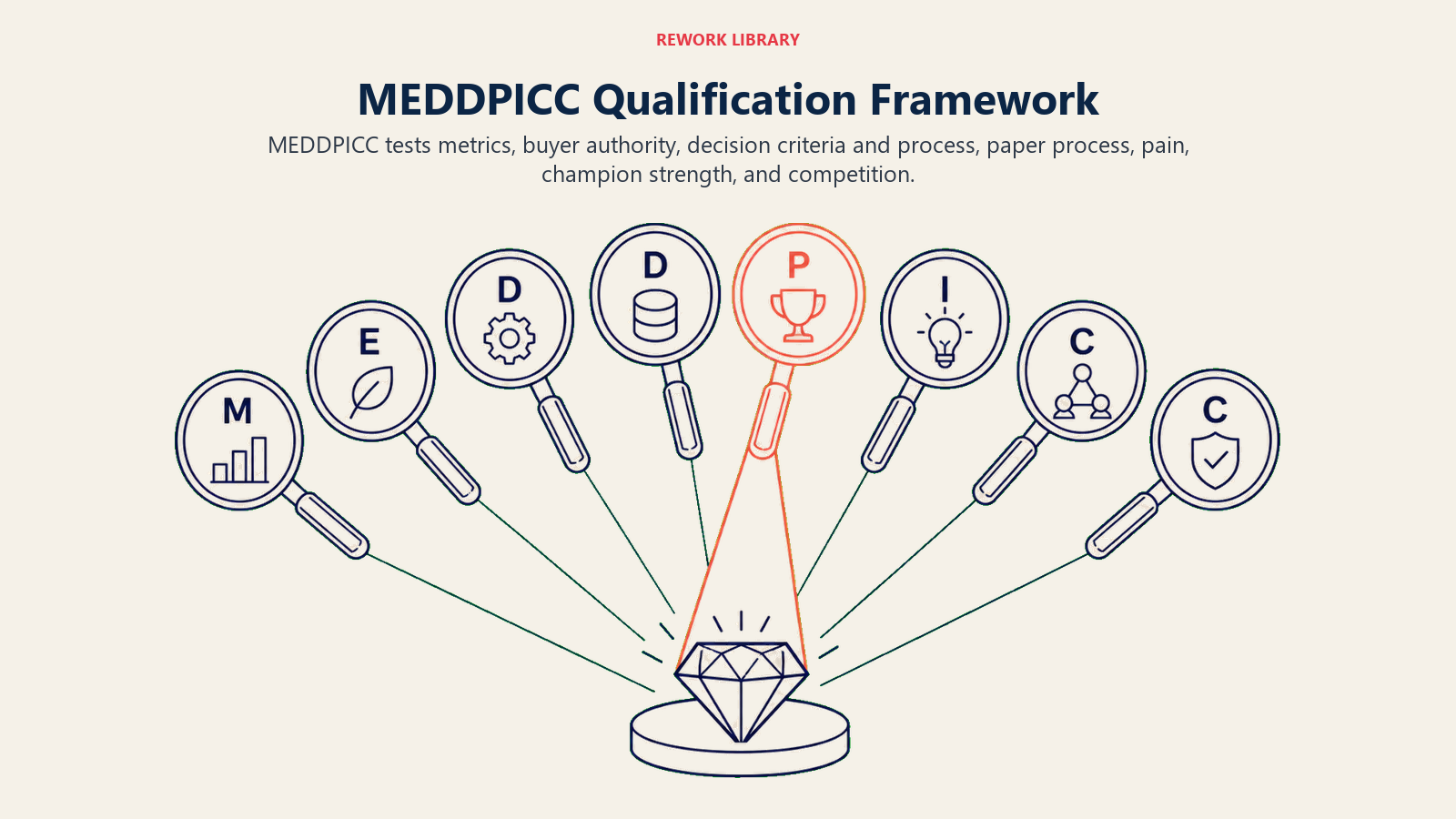
Untuk jualan kitaran panjang, kelayakan yang ketat adalah penting:
M - Metrik
Soalan:
- Apakah metrik spesifik yang akan terjejas?
- Apakah peningkatan yang anda sasarkan?
- Bagaimana kejayaan akan diukur?
- Apakah impak kewangan keadaan semasa?
E - Pembeli Ekonomi
Soalan:
- Siapa yang mempunyai kuasa bajet?
- Siapa yang akan menandatangani kontrak?
- Apakah peranan mereka dalam penilaian?
- Apakah keutamaan peribadi mereka?
D - Kriteria Keputusan
Soalan:
- Apakah faktor yang akan mendorong keputusan?
- Bagaimana pilihan akan dinilai?
- Apakah keutamaan berwajaran setiap kriteria?
- Siapa yang menentukan kriteria?
D - Proses Keputusan
Soalan:
- Apakah langkah kelulusan formal?
- Siapa yang mesti meluluskan di setiap peringkat?
- Apakah jadual yang mengawal proses ini?
- Apa yang boleh melambatkan atau menyimpangkannya?
P - Proses Kertas
Soalan:
- Apakah proses perolehan?
- Berapa lama semakan undang-undang mengambil masa?
- Apakah terma kontrak yang tidak boleh dirunding?
- Siapa yang menguruskan pengkontrakkan vendor?
I - Kenal Pasti Kesakitan
Soalan:
- Apakah masalah perniagaan teras?
- Mengapa ia penting sekarang?
- Apakah kos jika tidak diselesaikan?
- Siapa yang paling merasai kesakitan ini?
C - Champion
Soalan:
- Siapa yang akan menyokong kita secara dalaman?
- Adakah mereka mempunyai kredibiliti dan pengaruh?
- Mengapa mereka bermotivasi secara peribadi?
- Bolehkah mereka mengemudi organisasi?
C - Persaingan
Soalan:
- Siapa lagi yang sedang dinilai?
- Apakah pembezaan kita?
- Siapa pengguna sedia ada (status quo)?
- Apakah kedudukan kita berbanding alternatif?
Perancangan Akaun untuk Jualan Kitaran Panjang
Pelan akaun yang kukuh menggabungkan penyelidikan syarikat dengan peta pengaruh dan beberapa benang hubungan yang tahan lama.

Penyelidikan Akaun
Analisis Syarikat:
- Prestasi dan trend kewangan
- Inisiatif dan keutamaan strategik
- Struktur organisasi
- Landskap teknologi
- Berita dan pengumuman terkini
- Kedudukan kompetitif
Penyelidikan Pemegang Kepentingan:
- Analisis profil LinkedIn
- Penglibatan ucapan dan artikel
- Aktiviti media sosial
- Trajektori kerjaya
- Minat peribadi
- Sambungan bersama
Pemetaan Hubungan
Carta Organisasi:
- Struktur pelaporan formal
- Kuasa membuat keputusan
- Kawalan bajet
- Kepakaran teknikal
- Komuniti pengguna
Peta Pengaruh:
- Dinamik kuasa tidak formal
- Pengenalpastian pempengaruh
- Pengenalpastian penyekat
- Pakatan politik
- Rangkaian champion
Strategi Pendekatan Berbilang Hubungan
Jangan bergantung pada satu hubungan sahaja:
Sasaran Kedalaman Hubungan:
- 1 penaja eksekutif (peringkat C-level)
- 1-2 champion (peringkat Director/VP)
- 3-5 ahli pasukan penilaian
- 2-3 pengguna akhir
- 1 autoriti teknikal
- 1 hubungan perolehan
Kadence Penglibatan:
- Eksekutif: Perbincangan strategik bulanan
- Champion: Kemas kini projek mingguan
- Pasukan penilaian: Perbincangan teknikal mengikut keperluan
- Pengguna: Demo dan sesi maklum balas
- Teknikal: Semakan seni bina dan keselamatan
- Perolehan: Koordinasi proses
Jualan Nilai untuk Kitaran Panjang
Pembangunan Kes Perniagaan
Analisis Keadaan Semasa:
- Kuantifikasi kos sedia ada
- Dokumentasi ketidakcekapan
- Ukur jurang prestasi
- Kira kos peluang
Visi Keadaan Masa Depan:
- Tentukan hasil sasaran
- Kuantifikasi manfaat yang dijangkakan
- Jadual waktu untuk realisasi nilai
- Pelan mitigasi risiko
Pengiraan ROI:
Nilai Tahunan = (Penjimatan Kos + Keuntungan Hasil) - Kos Pelaksanaan

Tempoh Bayaran Balik = Jumlah Pelaburan / Nilai Tahunan

NPV 3-Tahun = Σ(Nilai Tahunan / (1 + Kadar Diskaun)^Tahun) - Pelaburan
Pemacu Nilai Lazim:
- Peningkatan produktiviti
- Pengurangan kos
- Peningkatan hasil
- Mitigasi risiko
- Pemberdayaan pematuhan
- Penambahan keupayaan strategik
Penyampaian Nilai Sebelum Penutupan
Tunjukkan nilai semasa proses jualan:
- Berikan pandangan dan penyelidikan industri
- Kongsi risikan kompetitif
- Perkenalkan sambungan yang bernilai
- Tawarkan nasihat strategik
- Cipta analisis tersuai
- Fasilitasi jaringan rakan sejawat
Menguruskan Kitaran Jualan yang Panjang
Penyelenggaraan Momentum
Titik Hubungan Berkala:
- Semakan champion mingguan
- Kemas kini pemegang kepentingan dua minggu sekali
- Taklimat eksekutif bulanan
- Semakan perniagaan suku tahunan (walaupun pra-jualan)
Komunikasi Bernilai Tambah:
- Pandangan industri yang relevan dengan perniagaan mereka
- Risikan kompetitif
- Kajian kes yang relevan
- Laporan analis
- Pengenalan rakan sejawat
Menangani Kelewatan
Punca Kelewatan Lazim:
- Pembekuan atau pengagihan semula bajet
- Perubahan organisasi
- Keutamaan yang bersaing
- Pertukaran champion
- Faktor luaran (ekonomi, peraturan)
Strategi Respons:
- Kekalkan hubungan tanpa tekanan
- Teruskan penyampaian nilai
- Sentiasa dimaklumkan tentang perubahan situasi
- Pelihara hubungan eksekutif
- Dokumentasikan titik persetujuan
- Sabar tetapi gigih
Navigasi Politik
Memahami Dinamik:
- Siapa yang mendapat manfaat daripada status quo?
- Siapa yang melihat ini sebagai ancaman?
- Apakah struktur kuasa tidak formal?
- Di mana pakatan politik?
Strategi:
- Bina gabungan sokongan yang luas
- Tangani kebimbangan penyekat yang berpotensi
- Selaraskan dengan politik organisasi
- Manfaatkan kepintaran politik champion
Struktur Pasukan Jualan untuk Kitaran Panjang
Profil Eksekutif Akaun Enterprise
Pengalaman Diperlukan:
- 5-10+ tahun jualan enterprise
- Rekod jejak terbukti dengan deal besar
- Kepakaran industri
- Kehadiran eksekutif
- Keupayaan pemikiran strategik
Kemahiran Utama:
- Jualan perundingan
- Ketajaman perniagaan
- Permodelan kewangan
- Kepakaran rundingan
- Pengurusan projek
- Pembinaan hubungan
Fokus Aktiviti:
- 5-10 peluang aktif (bukan 50)
- Penembusan akaun yang mendalam
- Perancangan strategik
- Penglibatan eksekutif
- Pembangunan cadangan
Pampasan:
- Asas: RM120K-180K
- Berubah: RM120K-250K ke atas
- Kuota: RM2J-5J setahun
- Masa peralihan yang panjang (6-12 bulan)
Peranan Sokongan
Jurutera Jualan / Arkitek Penyelesaian:
- Penemuan teknikal
- Reka bentuk seni bina
- Pelaksanaan POC
- Pengesahan teknikal
Pengurus Akaun / CSM:
- Pengurusan hubungan
- Pengenalpastian peluang pengembangan
- Pemantauan risiko
- Penglibatan eksekutif
Meja Deal / Operasi Jualan:
- Harga dan pembungkusan
- Penstrukturan deal
- Sokongan rundingan kontrak
- Aliran kerja kelulusan
Tindanan Teknologi untuk Jualan Kitaran Panjang
Alat Penting
CRM Enterprise (Salesforce)
- Penjejakan peluang yang komprehensif
- Pengurusan akaun dan hubungan
- Pengurusan dokumen
- Pengurusan ramalan
- Penyesuaian yang meluas
Perancangan Akaun (Altify, Prolifiq)
- Pemetaan hubungan
- Analisis pemegang kepentingan
- Pengenalpastian ruang putih
- Pembangunan strategi
Automasi Cadangan (Qvidian, RFPIO)
- Pengurusan perpustakaan respons
- Pembangunan cadangan kolaboratif
- Kawalan versi
- Aliran kerja kelulusan
Risikan Hasil (Gong, Clari)
- Pengenalpastian risiko deal
- Rakaman dan analisis panggilan
- Ketepatan ramalan
- Pandangan deal
Mutual Action Plan (Recapped, DealHub)
- Pengurusan jadual masa bersama
- Kerjasama pemegang kepentingan
- Penjejakan pencapaian
- Perkongsian dokumen
Pengurusan Dokumen (DocuSign, PandaDoc)
- Pengurusan kontrak
- Aliran kerja tandatangan elektronik
- Penjejakan garis merah
- Penghalaan kelulusan
Metrik dan KPI
Penunjuk Utama
Kesihatan Pipeline:
- Nisbah liputan Pipeline (6-8x kuota)
- Purata usia mengikut peringkat
- Kadar penukaran peringkat
- Keluasan penglibatan pemegang kepentingan
Metrik Aktiviti:
- Mesyuarat eksekutif setiap bulan
- Titik hubungan pemegang kepentingan setiap deal
- Bengkel nilai yang disampaikan
- Permulaan POC
Penunjuk Lewat
Kemajuan Deal:
- Purata tempoh kitaran jualan
- Masa dalam setiap peringkat
- Win rate mengikut senario kompetitif
- Kadar gelinciran deal
Metrik Hasil:
- Purata nilai kontrak
- Jumlah nilai kontrak (TCV)
- Nilai kontrak tahunan (ACV)
- % deal berbilang tahun
- Tempahan pengembangan
Sasaran Penanda Aras
| Metrik | Sasaran | Cemerlang |
|---|---|---|
| Kitaran jualan | 12 bulan | 9 bulan |
| Win rate | 30% | 50% |
| Purata ACV | RM500K | RM1J ke atas |
| Liputan Pipeline | 6x | 8x ke atas |
| Ketepatan ramalan | 85% | 90% ke atas |
| Pendekatan berbilang hubungan | 5 hubungan | 8+ hubungan |
| Penglibatan eksekutif | 50% | 75% ke atas |
Cabaran Kitaran Panjang yang Lazim
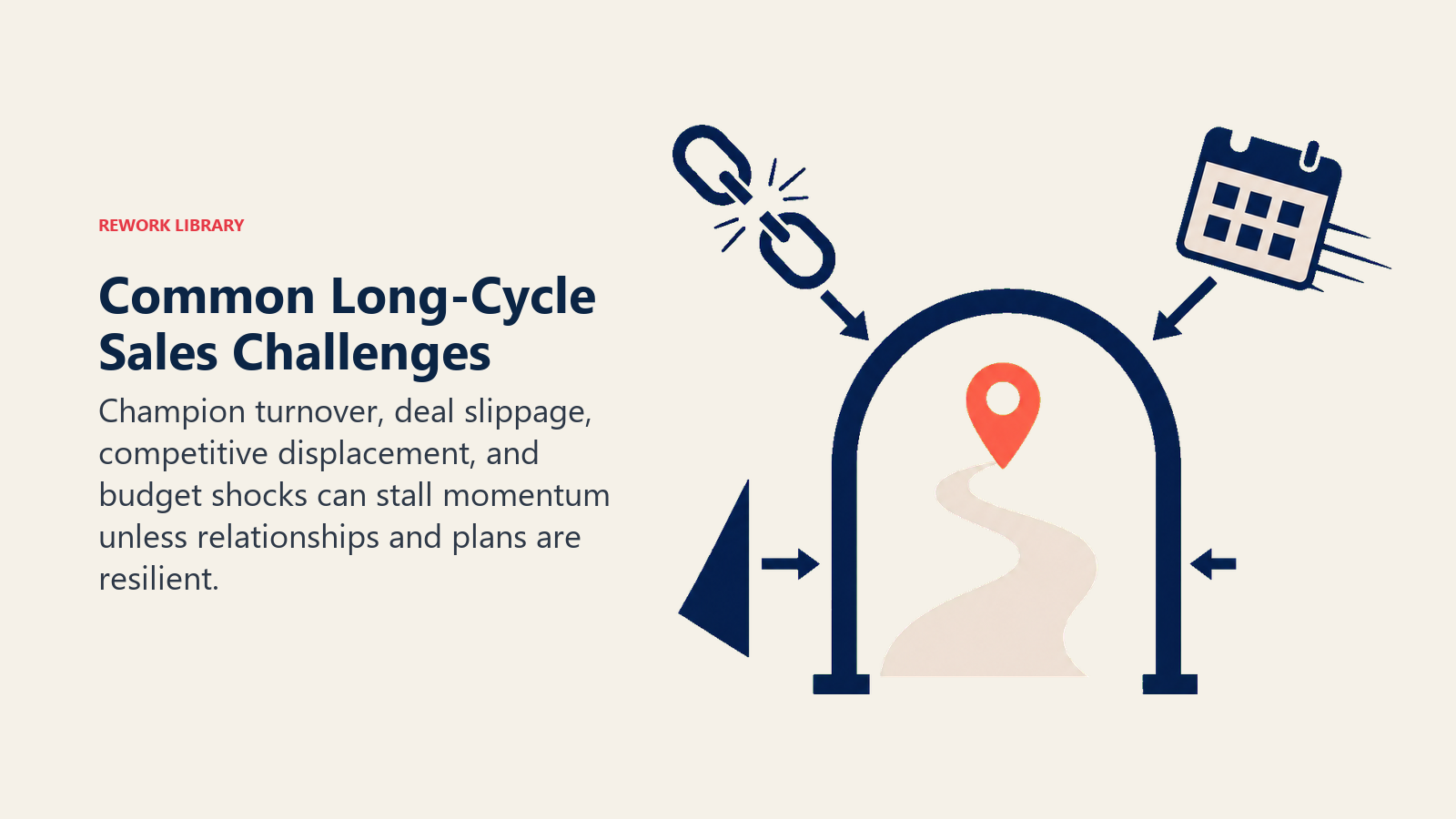
Deal panjang memerlukan daya tahan kerana risiko pemegang kepentingan, masa, pesaing, dan bajet boleh muncul lama selepas kelayakan awal.
Pertukaran Champion
Cabaran: Champion utama meninggalkan semasa kitaran jualan
Pencegahan:
- Wujudkan pendekatan berbilang hubungan lebih awal
- Dokumentasikan persetujuan secara bertulis
- Wujudkan hubungan eksekutif
- Bina sokongan organisasi yang luas
Respons:
- Hubungi pengganti champion dengan segera
- Manfaatkan hubungan eksekutif untuk mengekalkan momentum
- Tetapkan semula penemuan dengan pemegang kepentingan baharu
- Laraskan strategi berdasarkan keutamaan baharu
Gelinciran Deal
Cabaran: Tarikh penutupan yang dijangkakan terus ditolak
Pencegahan:
- Mutual Action Plan dengan pencapaian yang jelas
- Pengesahan jadual masa yang berkala
- Pengenalpastian proses kelulusan lebih awal
- Masa penimbal dalam ramalan
Respons:
- Fahami punca kelewatan
- Wujudkan semula jadual masa keputusan
- Kenal pasti dan buang penyekat
- Kekalkan hubungan semasa kelewatan
Penggantian Kompetitif
Cabaran: Pesaing mendapat kelebihan lewat dalam proses
Pencegahan:
- Pembentukan pembezaan lebih awal
- Pembangunan champion yang kukuh
- Perangkap untuk pesaing
- Penetapan perangkap semasa penemuan
Respons:
- Kempen pemasaran persepsi negatif (FUD)
- Pengaktifan pelanggan rujukan
- Peningkatan penglibatan eksekutif
- Penyelaman mendalam tentang kelemahan pesaing
Kejatuhan Ekonomi
Cabaran: Pembekuan bajet atau perubahan keutamaan
Pencegahan:
- Letak diri sebagai inisiatif strategik, bukan kemewahan
- Selaraskan dengan keutamaan peringkat CEO
- Bina pelbagai kes perniagaan
- Wujudkan fleksibiliti dalam struktur deal
Respons:
- Pivotkan cadangan nilai kepada keutamaan semasa
- Tawarkan pelaksanaan berperingkat
- Terma pembayaran fleksibel
- Kekalkan hubungan untuk pemulihan akhirnya
Amalan Terbaik
Perancangan Akaun Strategik
- Pelan akaun tahunan untuk peluang teratas
- Semakan akaun suku tahunan bersama kepimpinan
- Peta hubungan yang didokumentasikan
- Pengumpulan risikan kompetitif
- Pemantauan trend industri
Penglibatan Eksekutif
- Hubungan C-level ke C-level
- Perbincangan perniagaan strategik
- Perkongsian pandangan industri
- Fasilitasi jaringan rakan sejawat
- Keterlihatan peringkat lembaga (apabila sesuai)
Jualan Kolaboratif
- Pemberdayaan dan bimbingan champion
- Ko-penciptaan kes perniagaan
- Pembangunan pembentangan bersama
- Pemilikan Mutual Action Plan
- Metrik kejayaan bersama
Penyampaian Nilai Berterusan
- Pandangan sebelum kontrak
- Program perintis
- Pelaksanaan berperingkat
- Pengenalpastian kemenangan cepat
- Realisasi nilai awal
Kesimpulan
Kerangka jualan kitaran panjang mengutamakan kedalaman hubungan, pemikiran strategik, dan kegigihan yang sabar berbanding kemenangan cepat. Kejayaan memerlukan pemahaman dinamik organisasi yang kompleks, membina hubungan berbilang benang, dan menyampaikan nilai sepanjang proses penilaian yang panjang.
Profesional jualan kitaran panjang yang paling berkesan bertindak sebagai penasihat strategik dan bukannya vendor produk, melabur dalam pemahaman pelanggan yang mendalam dan pengurusan perubahan organisasi untuk menutup deal yang transformatif.
Topik Berkaitan

Sales Operations Practice Lead
On this page
- Apakah Jualan Kitaran Panjang?
- Keadaan Ideal untuk Jualan Kitaran Panjang
- Prinsip Teras
- 1. Hubungan Melebihi Transaksi
- 2. Asimetri Maklumat sebagai Kelebihan
- 3. Kesabaran dan Kegigihan
- Perjalanan Pelanggan Kitaran Panjang
- Fasa 1: Kesedaran Masalah (Bulan 1-3)
- Fasa 2: Penerokaan Penyelesaian (Bulan 3-6)
- Fasa 3: Penilaian dan Pengesahan (Bulan 6-12)
- Fasa 4: Rundingan dan Kelulusan (Bulan 12-15)
- Fasa 5: Penutupan dan Peralihan (Bulan 15-18)
- Seni Bina Pipeline Kitaran Panjang
- Reka Bentuk Peringkat Pipeline
- Sasaran Halaju Mengikut Peringkat
- Keperluan Liputan Pipeline
- Kerangka Kelayakan MEDDPICC
- M - Metrik
- E - Pembeli Ekonomi
- D - Kriteria Keputusan
- D - Proses Keputusan
- P - Proses Kertas
- I - Kenal Pasti Kesakitan
- C - Champion
- C - Persaingan
- Perancangan Akaun untuk Jualan Kitaran Panjang
- Penyelidikan Akaun
- Pemetaan Hubungan
- Strategi Pendekatan Berbilang Hubungan
- Jualan Nilai untuk Kitaran Panjang
- Pembangunan Kes Perniagaan
- Penyampaian Nilai Sebelum Penutupan
- Menguruskan Kitaran Jualan yang Panjang
- Penyelenggaraan Momentum
- Menangani Kelewatan
- Navigasi Politik
- Struktur Pasukan Jualan untuk Kitaran Panjang
- Profil Eksekutif Akaun Enterprise
- Peranan Sokongan
- Tindanan Teknologi untuk Jualan Kitaran Panjang
- Alat Penting
- Metrik dan KPI
- Penunjuk Utama
- Penunjuk Lewat
- Sasaran Penanda Aras
- Cabaran Kitaran Panjang yang Lazim
- Pertukaran Champion
- Gelinciran Deal
- Penggantian Kompetitif
- Kejatuhan Ekonomi
- Amalan Terbaik
- Perancangan Akaun Strategik
- Penglibatan Eksekutif
- Jualan Kolaboratif
- Penyampaian Nilai Berterusan
- Kesimpulan
- Topik Berkaitan