Bahasa Indonesia
Marketing Automation untuk E-commerce: Desain Workflow, Pemilihan Platform, Integrasi, dan Pengukuran ROI
Turn this article into takeaways for your work.


Each assistant summarizes the article only for you and suggests best practices for your work.
Anda mengirim 500 email secara manual setiap minggu. Setiap email butuh 3 menit untuk personalisasi, segmentasi, dan penjadwalan. Itu berarti 25 jam kerja repetitif yang menghasilkan open rate yang sama, click-through yang sama, dan revenue yang sama dengan automated workflow yang berjalan saat Anda tidur.
Marketing automation bukan tentang mengganti tim marketing Anda. Ini tentang membangun infrastruktur komunikasi yang cerdas yang merespons perilaku pelanggan secara instan, personalisasi dalam skala besar, dan menghasilkan revenue yang predictable melalui workflow sistematis berbasis trigger. Toko yang menghasilkan 40-60% revenue dari automated flow tidak bekerja lebih keras. Mereka mengatur sequence multi-channel yang terkoordinasi untuk memandu pelanggan melalui customer journey yang dirancang dengan hati-hati.
Panduan ini menunjukkan cara merancang workflow dengan konversi tinggi, memilih platform yang tepat, mengintegrasikan tech stack, dan mengukur ROI automation yang sesungguhnya.
Apa Sebenarnya Marketing Automation Itu
Marketing automation adalah infrastruktur komunikasi sistematis berbasis trigger. Pelanggan meninggalkan cart mereka pukul 3 sore. Sistem Anda menunggu 1 jam, mengirim email dengan isi cart dan diskon 10%, mengirim reminder SMS di jam ke-24 jika tidak dibuka, dan menambahkan mereka ke retargeting audience. Tidak ada intervensi manual. Tidak ada spreadsheet. Tidak ada follow-up yang terlupakan.
Komponen inti automation:
Triggers: Tindakan atau kondisi pelanggan yang memulai workflow. Browse kategori produk 3 kali, tambah $100+ ke cart tapi tidak purchase, lakukan purchase pertama, mencapai 90 hari sejak order terakhir, capai threshold spending VIP, engage dengan email tapi tidak konversi.
Workflows: Sequence multi-step dengan logic kondisional. Jika email dibuka, tunggu 2 hari lalu kirim cross-sell. Jika tidak dibuka, kirim reminder SMS. Jika purchased, keluar dari flow dan masuk post-purchase sequence. Jika abandoned lagi, tingkatkan diskon.
Channel orchestration: Messaging terkoordinasi di email, SMS, push notification, dan web. Mulai dengan email (biaya terendah), eskalasi ke SMS (urgency lebih tinggi), retarget dengan ads (visibility tertinggi), tampilkan on-site popup (peluang konversi immediate).
Personalisasi dalam skala: Konten dinamis berdasarkan data pelanggan. Rekomendasi produk dari browsing history, pricing tier berdasarkan customer segment, content block berdasarkan kategori purchase, send time berdasarkan engagement pattern, offer berdasarkan lifetime value.
Efficiency multiplier ini nyata. Satu e-commerce manager menjalankan 47 active workflow yang melayani 180.000 kontak. Eksekusi manual akan membutuhkan 12 karyawan full-time. Eksekusi otomatis berjalan di satu platform seharga $1.200/bulan. Itu pengurangan biaya tenaga kerja 50x dengan performa yang lebih baik.
Mengapa Marketing Automation Memberikan ROI yang Terukur
Business case untuk automation bukan teoretis. Toko yang mengimplementasikan infrastruktur automation komprehensif melihat peningkatan konsisten di metrics efisiensi, revenue, dan retensi.
Time dan cost savings: Pengurangan 50-70% dalam waktu eksekusi campaign. Satu marketer mengelola workflow yang sebelumnya butuh tim 4 orang. Deployment campaign turun dari 8 jam menjadi 45 menit. Waktu yang dihemat dialihkan ke strategi, testing, dan analisis (pekerjaan yang benar-benar meningkatkan performa).
Peningkatan conversion rate: Automated workflow konversi 25-35% lebih baik dari campaign batch-and-blast. Mengapa? Timing, relevansi, dan persistensi. Cart abandonment recovery email yang dikirim 1 jam setelah abandonment konversi 3x lebih baik dari delay 24 jam. Browse abandonment sequence yang menangkap intent konversi 15-20% dari visitor yang tidak pernah add to cart.
Peningkatan email performance: Triggered email melihat open rate 30-50% lebih tinggi dan click rate 40-60% lebih tinggi dibanding promotional campaign. Pelanggan mengharapkan follow-up setelah tindakan spesifik. Open rate untuk post-purchase sequence rata-rata 45-55% vs 18-22% untuk promotional blast.
Dampak customer retention: Automated retention workflow meningkatkan repeat purchase rate 40-60%. Win-back campaign memulihkan 8-15% dari lapsed customer. Post-purchase email sequence yang mengedukasi, cross-sell, dan mengumpulkan review meningkatkan repeat rate 60 hari sebesar 35-45%.
Personalisasi yang scalable: Personalisasi manual tidak scalable melampaui 1.000 pelanggan. Personalisasi otomatis menangani 100.000+ dengan dynamic product recommendation, segment-specific content, individual send time optimization, dan behavior-triggered messaging (semua tanpa intervensi manusia).
Satu DTC brand mengotomasi 8 core workflow: welcome series, browse abandonment, cart abandonment, post-purchase education, cross-sell sequence, review request, win-back campaign, dan VIP treatment. Revenue dari automated flow naik dari 12% menjadi 47% dari total revenue dalam 18 bulan. Tim marketing yang sama. Ad spend yang sama. Revenue automation 4x melalui implementasi workflow sistematis.
Core Automation Workflow yang Dibutuhkan Setiap Toko
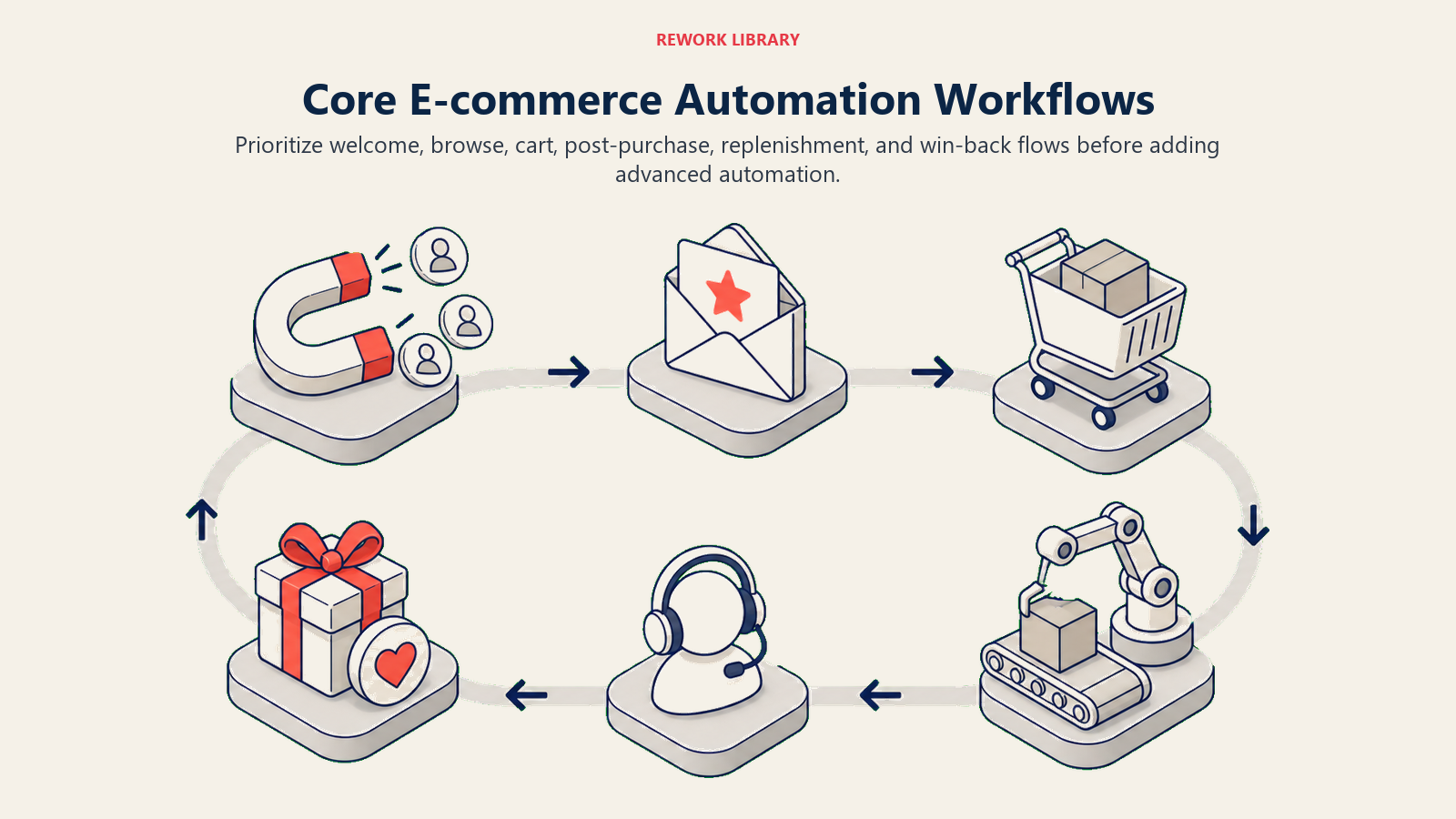
Workflow fundamental ini menghasilkan 60-80% dari automation revenue. Mulai di sini, optimasi performa, lalu ekspansi ke advanced sequence.
Welcome series (Hari 1-7): Onboarding subscriber baru yang membangun brand value, edukasi manfaat produk, dan mendorong first purchase.
Email 1 (Immediate): Welcome discount (10-15% off), brand story, bestseller Email 2 (Hari 2): Social proof, customer review, user-generated content, press mention Email 3 (Hari 4): Education content, cara memilih produk, usage guide, sizing information Email 4 (Hari 7): Urgency, discount expiration, limited inventory, last chance messaging
Welcome subscriber konversi 40-50% lebih tinggi dari regular list contact selama 90 hari. Relationship-building di 7 hari pertama ini menentukan lifetime value.
Browse abandonment: Menangkap visitor yang melihat produk tapi tidak add to cart. Mengirim 1-3 email selama 3-7 hari dengan produk yang dilihat, rekomendasi, dan insentif.
Timing: 2-4 jam setelah exit (saat intent masih fresh) Content: Produk yang tepat yang dilihat, rekomendasi "others also looked at" Conversion lift: 10-18% dari recipient melakukan purchase
Cart abandonment: Workflow dengan ROI tertinggi di e-commerce. Memulihkan 15-30% dari abandoned cart melalui multi-step sequence. Lihat panduan lengkap cart abandonment recovery untuk detail implementasi.
Standard sequence:
- Jam 1: Cart reminder dengan product image
- Jam 24: Tambahkan 10% discount jika tidak dibuka
- Jam 48: Tingkatkan ke 15% discount + free shipping
- Jam 72: Final reminder dengan urgency messaging
Post-purchase sequence: Maksimalkan customer lifetime value melalui edukasi, engagement, dan dorongan repeat purchase.
Hari 1: Order confirmation dan shipping timeline Hari 3: Shipping notification dengan tracking Hari 7: Delivery follow-up, usage tip, care instruction Hari 14: How-to content, complementary product suggestion Hari 21: Review request dengan incentive Hari 30: Cross-sell berdasarkan kategori yang dibeli Hari 60: Replenishment reminder untuk consumable
Post-purchase sequence komprehensif meningkatkan repeat rate 90 hari sebesar 35-50%. Pelanggan yang paling mungkin membeli lagi adalah yang baru saja membeli.
Cross-sell dan upsell automation: Triggered oleh purchase history dan product relationship.
"Complete the set" workflow untuk multi-product category "You might also need" sequence untuk complementary item "Upgrade your experience" campaign untuk premium alternative Replenishment reminder untuk consumable product
Satu home goods store mengotomasi cross-sell berdasarkan room category. Kitchen purchase trigger dinnerware recommendation. Living room trigger decor dan lighting. Average order value dari automated cross-sell berjalan 45% lebih tinggi dari catalog browsing.
Win-back campaign: Re-engage pelanggan yang belum purchase dalam 60-90 hari.
Hari 60: "We miss you" dengan bestseller showcase Hari 75: Personalized recommendation dari browsing history Hari 90: Aggressive discount (20-30% off) dengan expiration Hari 105: Last-chance message, lalu segment ke lower-frequency list
Win-back campaign memulihkan 8-15% dari lapsed customer. Yang return memiliki repeat rate 60-70% selama 90 hari berikutnya, lebih baik dari general customer base.
VIP dan loyalty workflow: Berikan perlakuan eksklusif kepada high-value customer.
Automatic tier progression notification Early access ke sale dan new product Birthday dan anniversary campaign dengan gift Surprise-and-delight random reward
VIP automation meningkatkan retensi di antara top 20% pelanggan Anda sebesar 25-35%. Pelanggan yang menghasilkan 60-70% revenue layak mendapat apresiasi otomatis.
Review request automation: Triggered post-purchase untuk maksimalkan review volume.
Kirim 10-15 hari setelah delivery (produk digunakan tapi experience masih fresh) Sertakan direct review link (kurangi friction) Tawarkan incentive untuk completion (discount untuk next order) Follow up sekali jika tidak completed
Automated review request menghasilkan 5-8x lebih banyak review dari manual campaign. Social proof terakumulasi secara sistematis.
SMS dan Multi-Channel Automation
Email tidak cukup. SMS, push notification, dan coordinated multi-channel sequence meningkatkan conversion rate 40-60% dibanding email-only workflow. Pelajari implementasi SMS marketing strategy lengkap di panduan khusus kami.
SMS vs email berdasarkan use case:
| Use Case | Primary Channel | Alasan |
|---|---|---|
| Cart abandonment | SMS first (jika opted in) | 98% open rate, immediate visibility |
| Browse abandonment | Email first | Lower urgency, richer content |
| Shipping update | SMS | Real-time delivery tracking |
| Flash sale | SMS | Time-sensitive, immediate action |
| Welcome series | Educational content, relationship building | |
| Win-back | Email then SMS | Butuh space untuk explain value |
SMS-specific automation trigger:
High-value cart abandonment: Jika cart value melebihi $150 dan pelanggan opt-in ke SMS, kirim SMS reminder di jam 2, sebelum email di jam 4. SMS conversion rate berjalan 15-25% (vs 8-12% untuk email) pada high-intent, high-value cart.
Shipping dan delivery notification: Automated SMS untuk shipped, out-for-delivery, dan delivered status. Mengurangi "where's my order" support ticket 60-70% sambil meningkatkan customer satisfaction.
Flash sale announcement: Time-sensitive promotion dengan window 2-4 jam. SMS open rate 95%+ dalam 15 menit mendorong immediate traffic spike. Satu fashion retailer menghasilkan $15.000-$25.000 per flash sale SMS ke 8.000 subscriber.
Back-in-stock alert: Pelanggan meminta SMS notification ketika out-of-stock item return. Automated notification konversi 20-35% dalam 48 jam. Inventory demand signal menginformasikan keputusan purchasing.
Multi-channel sequence architecture:
Coordinated escalation: Mulai dengan email (biaya terendah), eskalasi ke SMS jika tidak ada engagement, tambah retargeting ad untuk multi-touch reinforcement. Contoh cart abandonment sequence:
Jam 1: Email reminder Jam 24: SMS reminder (jika email tidak dibuka) Jam 48: Email dengan increased discount Jam 72: SMS final notice (jika previous tidak dibuka) Hari 3-14: Retargeting ad dengan cart product
Channel preference learning: Track response pattern per pelanggan. Jika seseorang secara konsisten konversi via SMS, prioritaskan SMS di future workflow. Jika mereka tidak pernah buka SMS tapi engage dengan email, sesuaikan channel mix secara otomatis.
Preference center automation: Biarkan pelanggan mengontrol channel frequency dan type. Automated preference respect mengurangi unsubscribe rate 30-40% sambil mempertahankan engagement dengan opted-in audience.
Satu DTC brand menambahkan SMS ke cart abandonment workflow. Email-only recovery rate: 18%. Email + SMS recovery rate: 31%. Lift 13 poin menghasilkan $180.000 additional annual revenue dari existing traffic. Tidak ada new acquisition cost.
Platform Selection dan Comparison
Memilih marketing automation platform yang salah menghabiskan 6-12 bulan dalam migration pain, integration rebuilding, dan lost workflow sophistication. Platform selection menentukan apa yang possible untuk 2-3 tahun ke depan.
Core platform requirement:
E-commerce native integration: Direct connection ke platform Anda (Shopify, BigCommerce, WooCommerce) yang mensinkronkan customer data, purchase history, product catalog, dan behavioral event secara real-time. "Integration" berbasis API yang membutuhkan Zapier bukan real integration.
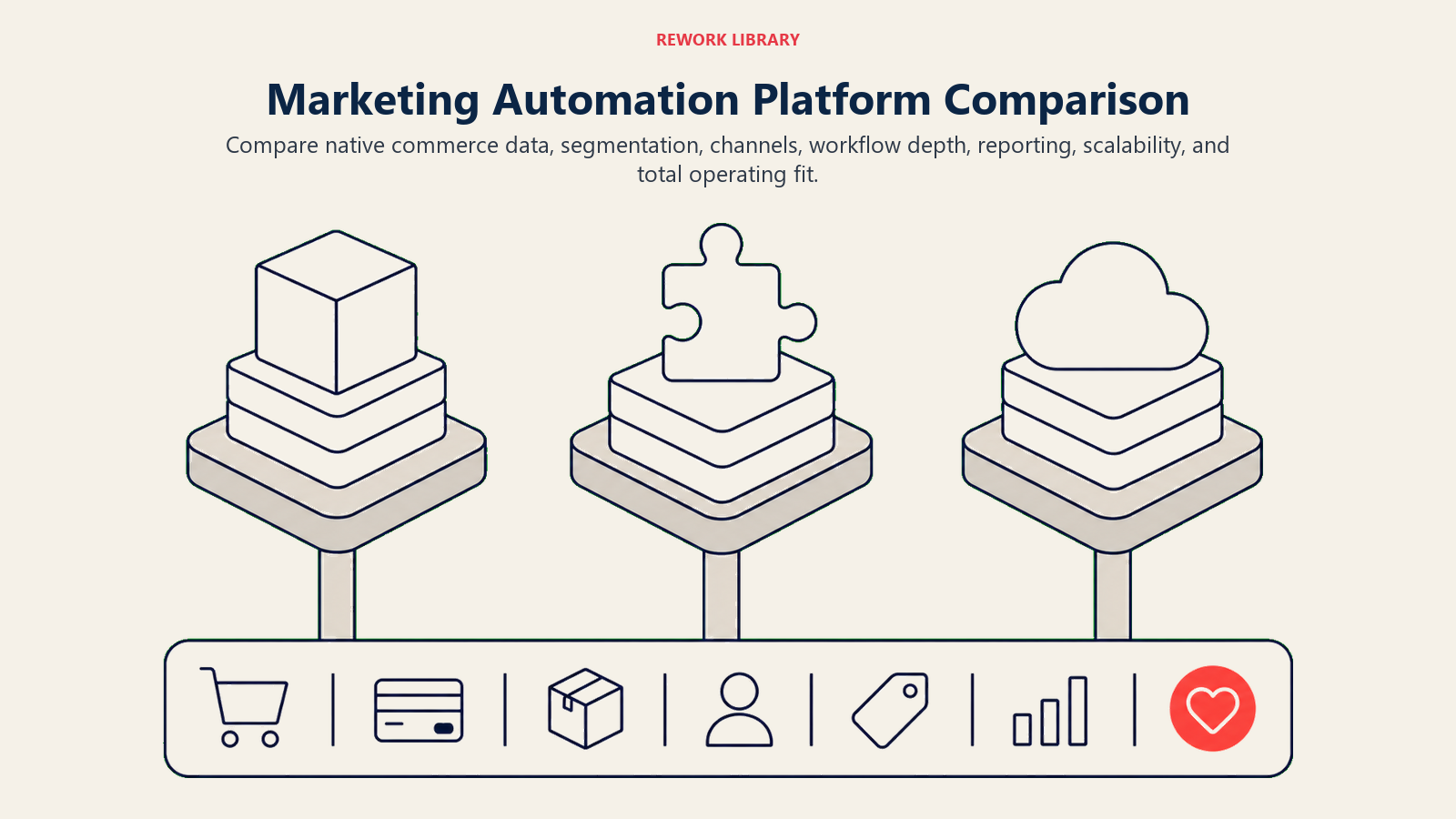
Advanced segmentation: Bangun segment pada behavioral data (viewed category X, purchased product Y, abandoned cart >$Z), demographic data, engagement history, predictive metric, dan custom property. Segment refresh harus automatic dan real-time.
Visual workflow builder: Drag-and-drop interface untuk multi-step flow dengan conditional logic, wait period, A/B test, dan channel selection. Jika Anda butuh developer untuk membangun workflow, adoption akan lambat.
Multi-channel capability: Unified platform untuk email, SMS, push notification, dan on-site messaging. Managing separate platform untuk setiap channel membuat coordinated workflow impossible.
Deliverability infrastructure: Dedicated IP untuk high-volume sender, shared IP reputation management untuk smaller sender, authentication protocol (SPF, DKIM, DMARC), dan ISP relationship yang menjaga message keluar dari spam folder.
Analytics dan attribution: Revenue tracking per workflow, channel, dan campaign. Attribution modeling yang menunjukkan assisted conversion. Cohort analysis yang mengukur long-term impact. Tanpa ini, Anda mengoptimasi secara blind.
Platform comparison matrix:
Klaviyo (Market leader untuk e-commerce) Kekuatan: Best-in-class e-commerce integration, advanced segmentation, predictive analytics, excellent deliverability, complete attribution Keterbatasan: Higher cost di scale ($600-$1.500/bulan untuk 50.000 contact), learning curve untuk advanced feature Best for: Toko yang melakukan $100K+/bulan dengan experienced marketing team
Omnisend (All-in-one automation) Kekuatan: Built-in SMS dan push, e-commerce-specific workflow, competitive pricing ($400-$800/bulan untuk 50.000 contact), easier learning curve Keterbatasan: Less advanced segmentation dari Klaviyo, fewer advanced feature Best for: Growing store ($25K-$150K/bulan) yang menginginkan unified platform tanpa kompleksitas
HubSpot Marketing Hub (Enterprise platform) Kekuatan: CRM integration, content management, landing page, comprehensive marketing stack, sales team coordination Keterbatasan: Not e-commerce native (butuh significant customization), expensive ($800-$3.200/bulan), overcomplicated untuk pure e-commerce Best for: B2B e-commerce atau store dengan complex sales process
ActiveCampaign (Automation-focused) Kekuatan: Powerful automation builder, CRM included, good value ($250-$600/bulan untuk 50.000 contact), extensive integration Keterbatasan: Not e-commerce-specific (butuh more setup), limited native e-commerce feature Best for: Store dengan strong technical team willing to customize
Mailchimp (Entry-level automation) Kekuatan: Familiar interface, low entry cost (free-$350/bulan untuk 50.000 contact), basic e-commerce integration Keterbatasan: Weak automation dibanding specialist, limited segmentation, higher cost di scale dari alternative Best for: Store under $10K/bulan just starting automation
Integration depth evaluation:
Check ini sebelum committing:
Real-time sync vs batch update (24-hour delay membunuh cart abandonment effectiveness) Historical data import (bisakah Anda access pre-integration purchase history?) Product catalog sync (dynamic product recommendation butuh full catalog) Custom event tracking (bisakah Anda mengirim custom behavioral trigger?) Bi-directional data flow (apakah customer data flow back ke store Anda?)
Total cost of ownership calculation:
Platform subscription adalah 40-60% dari total cost. Account for:
SMS cost ($0.01-$0.015 per message, menambah $500-$2.000/bulan untuk active program) Dedicated IP ($30-$50/bulan untuk deliverability control) Additional contact/email overage Professional service untuk implementation ($2.000-$10.000 one-time) Migration cost jika switching platform ($5.000-$20.000 tergantung complexity)
Satu brand membandingkan Klaviyo di $1.200/bulan dengan Mailchimp di $350/bulan. Klaviyo's better segmentation dan attribution mendorong 35% higher automation revenue, $42.000 additional monthly revenue. Price difference $850/bulan membayar dirinya sendiri dalam 18 jam additional sale.
Platform selection bukan tentang menemukan tool termurah. Ini tentang memilih infrastruktur yang memungkinkan advanced workflow dan scale dengan revenue growth. Lihat panduan e-commerce platform selection untuk related technology decision.
Integration Architecture untuk Automation Success
Marketing automation platform Anda adalah hub. Customer data, purchase history, behavioral event, dan engagement data flow masuk. Personalized message flow keluar. Integration architecture menentukan apa yang possible.
Native e-commerce platform integration:
Store platform Anda (Shopify, BigCommerce, WooCommerce) mengirim customer dan order data ke automation platform Anda. Critical data flow:
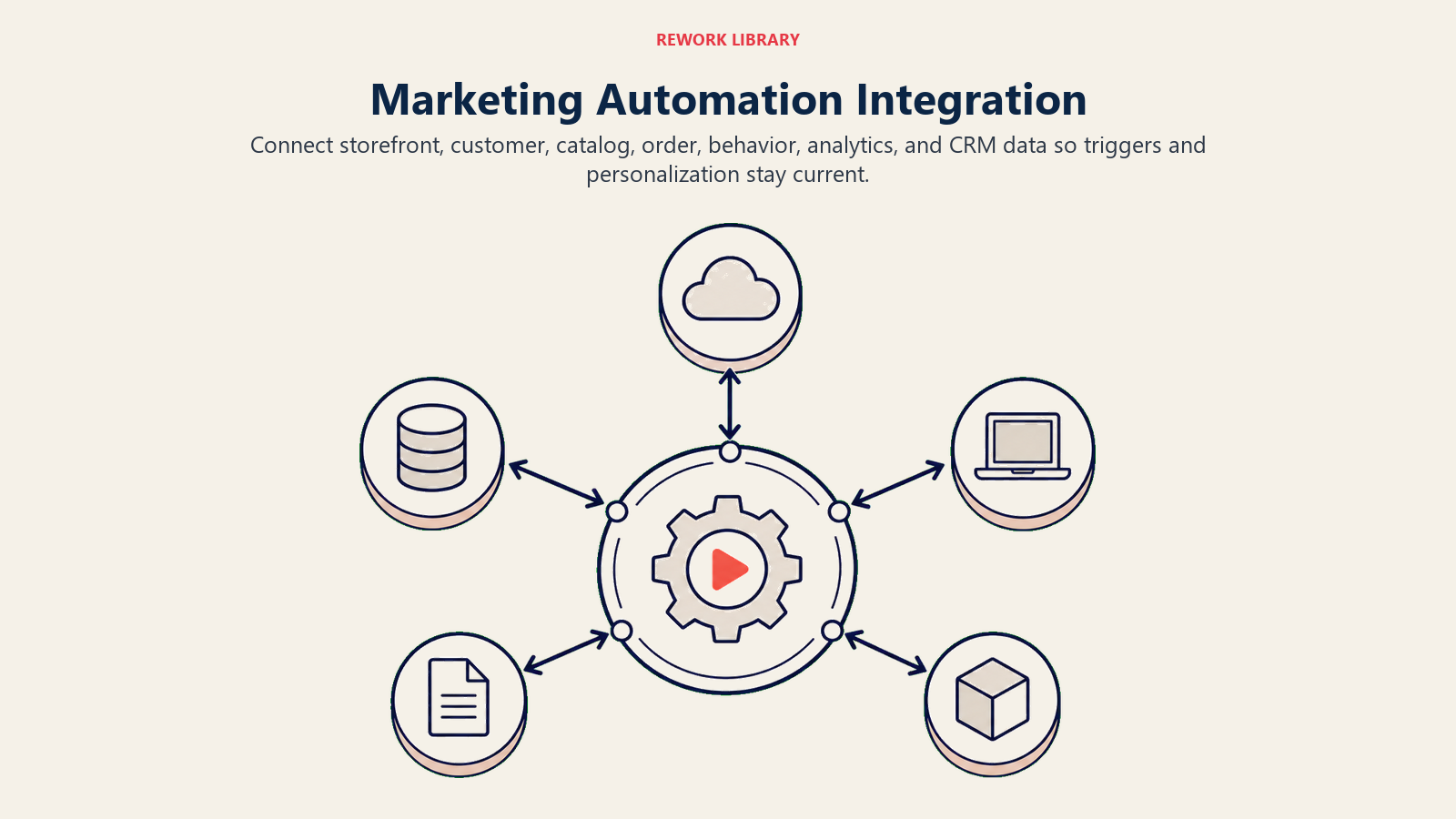
Customer creation/update: New signup, profile change, custom attribute Product catalog sync: SKU, image, pricing, inventory untuk dynamic recommendation Order event: Placed, fulfilled, cancelled, refunded untuk lifecycle trigger Behavioral event: Product view, add-to-cart, checkout started, search query
Implementation: Gunakan native integration app (Klaviyo untuk Shopify, Omnisend untuk WooCommerce). Hindari custom API connection kecuali absolutely necessary. Native app mencakup pre-built workflow dan proven data model.
Customer Data Platform (CDP) integration:
Untuk store dengan multiple data source (mobile app, retail POS, subscription platform), customer data platform menyatukan customer identity dan membuat complete profile tersedia untuk automation.
Data consolidation: CDP merge web visitor, email subscriber, app user, dan in-store customer menjadi single profile Segment activation: Bangun segment di CDP, push ke automation platform untuk messaging Event forwarding: CDP mengumpulkan all behavioral event, route relevant trigger ke automation
Contoh: Pelanggan browse produk di mobile app, add to cart di website, abandon. CDP mengenali orang yang sama, trigger unified cart abandonment workflow dengan app + web cart content.
Analytics integration untuk closed-loop measurement:
Connect automation platform ke analytics and tracking infrastructure untuk complete attribution dan ROI measurement.
UTM parameter tagging: Automatically tag all email dan SMS link untuk source tracking Conversion tracking: Pass automation-attributed order back ke analytics platform Revenue synchronization: Match automation platform revenue ke actual store revenue Cohort analysis: Ukur long-term impact dari automation pada customer lifetime value
CRM integration untuk sales coordination:
B2B e-commerce atau high-touch sales butuh bidirectional CRM sync.
Lead scoring: Automation engagement feed lead score di CRM Sales trigger: High-value cart abandonment atau repeated browsing create sales task Deal tracking: CRM opportunity creation bisa trigger nurture sequence Win/loss learning: Closed deal menginformasikan automation messaging dan segmentation
Webhook dan API integration untuk custom workflow:
Advanced automation butuh custom event trigger beyond standard e-commerce event.
Custom event: Subscription renewal, support ticket closure, webinar attendance, quiz completion External trigger: Inventory alert dari WMS, shipping exception dari 3PL, payment issue dari gateway Action trigger: Automation bisa trigger action di other system (create support ticket, update inventory, notify fulfillment)
Real-time vs batch synchronization:
Integration timing matters:
Real-time (immediate sync): Cart abandonment, browse behavior, form submission, purchase confirmation, action yang butuh immediate response Near real-time (5-15 menit): Product view, search behavior, email engagement, batched untuk system efficiency Batch (hourly/daily): Profile update, catalog sync, historical data import, scheduled untuk resource optimization
Satu growing store mengimplementasikan real-time cart abandonment (vs previous 24-hour batch mereka). Recovery rate naik dari 11% menjadi 23%. Real-time integration memungkinkan 1-hour email timing yang menangkap high-intent customer sebelum mereka lupa tentang cart mereka.
Workflow Design Best Practice
Membangun workflow itu mudah. Membangun high-converting workflow yang tidak mengganggu pelanggan butuh systematic design discipline.
Trigger identification dan optimization:
Setiap workflow dimulai dengan trigger. Memilih trigger yang tepat dan refining condition menentukan workflow relevance.
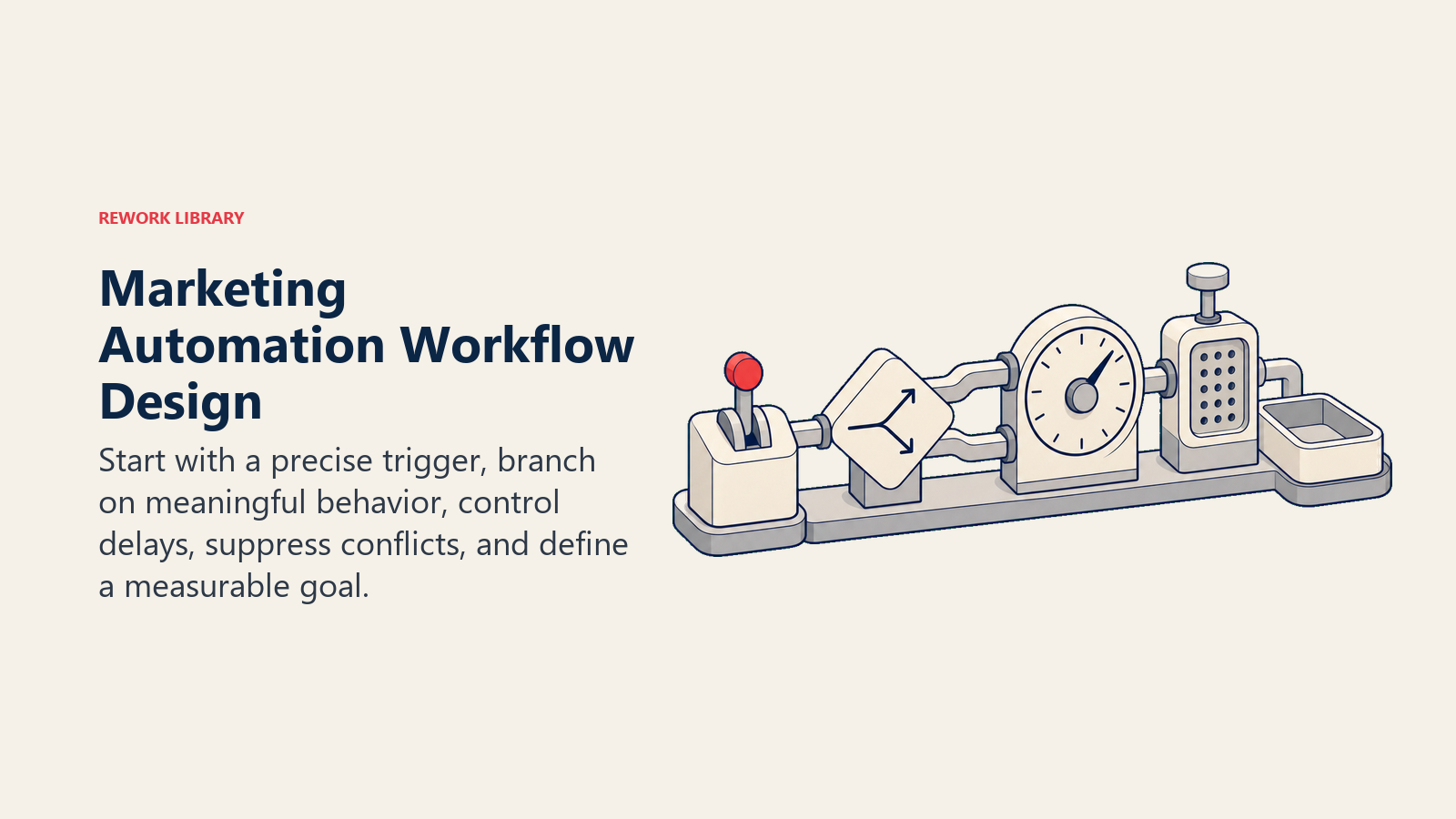
Behavioral trigger: Specific customer action (viewed product category 3+ kali, added $100+ to cart, spent 5+ menit di product page, downloaded resource, completed quiz) Transactional trigger: Order event (placed, shipped, delivered, 7 hari post-delivery, 30 hari post-delivery) Time-based trigger: Schedule atau delay (7 hari after signup, 60 hari since last purchase, 24 jam after cart abandonment) Segment-based trigger: Customer attribute change (reached VIP status, moved to "at risk" segment, birthday month started)
Trigger refinement: Mulai broad, narrow based on performance. Initial browse abandonment trigger: "Viewed any product." After analysis: "Viewed products in category X for 3+ minutes with 2+ page views." Refined trigger memiliki 40% higher conversion dengan 60% less volume (better customer experience dan economic).
Conditional logic dan branching:
Linear workflow membuang opportunity. Branching path berdasarkan customer behavior meningkatkan relevance.
Engagement-based branching: Jika email opened → wait 2 hari, send cross-sell. Jika not opened → resend dengan different subject line, then exit jika still not opened. Behavioral branching: Jika purchased → exit flow, enter post-purchase sequence. Jika visited site tapi didn't purchase → send urgency message. Jika no activity → wait 3 hari, send different angle. Attribute-based branching: Jika VIP customer → exclusive offer. Jika first-time buyer → education content. Jika male/female → gender-specific product. Channel branching: Jika opened email → continue via email. Jika didn't open tapi SMS opted-in → send SMS reminder.
Satu cart abandonment workflow dengan 4 decision point (opened email, visited site, added to cart again, purchased) converted 31% dari entrant vs 18% untuk linear workflow. Branching path matched communication ke actual behavior.
Frequency capping dan customer experience:
Automation bisa menjadi spam tanpa frequency control.
Cross-workflow suppression: Jangan kirim cart abandonment email ke seseorang yang baru saja menerima post-purchase email. Set global send limit (max 1 email per hari, 3 per minggu). Engagement-based frequency: High engager bisa menerima more message. Jika open rate >40%, increase frequency. Jika <10%, decrease. Smart send time optimization: Learn individual customer preference. Jika mereka typically open email di 7 PM, schedule send untuk 6:45 PM. Fatigue monitoring: Track engagement decline. Jika open rate drop 30%+ selama 30 hari, reduce frequency automatically.
Delay optimization:
Wait period antara workflow step mempengaruhi both conversion rate dan customer experience.
Cart abandonment delay: 1 jam (optimal untuk high-intent, converts 8-12%), 24 jam (captures procrastinator, converts 4-6%), 48 jam (last chance, converts 2-3%). Testing secara konsisten menunjukkan 1-hour send time beats 24-hour by 45-60%.
Post-purchase delay: Immediate (confirmation), 3 hari (shipping), 7 hari (delivery), 14 hari (usage education), 21 hari (review request), 30 hari (cross-sell). Respect product usage timeline. Jangan request review sebelum pelanggan benar-benar menggunakan produk Anda.
Welcome series delay: Immediate (welcome + discount), 2 hari (social proof), 4 hari (education), 7 hari (urgency). Beri waktu untuk engage tanpa overwhelming.
A/B testing dalam workflow:
Anda bisa test setiap workflow element:
Subject line, send time, discount amount, content block, call-to-action, email length, personalization element, image
Test workflow-level variation: 2-email sequence vs 3-email sequence, email-only vs email + SMS, 10% discount vs free shipping
Statistical significance requirement: 95% confidence, 250+ conversion per variant (not just open), 7-14 hari test duration. Jangan buat keputusan berdasarkan 50 open.
Satu brand test cart abandonment discount timing: Option A offered 10% di first email. Option B offered product reminder first, 10% di second email jika not purchased. Option B converted 6% higher. Pelanggan yang butuh discount mendapatkannya, other converted without incentive margin erosion.
Segmentation dan Personalization at Scale
Generic workflow underperform. Segmented, personalized workflow convert 40-60% better. Challenge? Personalizing untuk 50.000+ pelanggan tanpa manual work.
Dynamic segment refresh:
Segment update automatically saat customer behavior berubah. Static segment go stale.
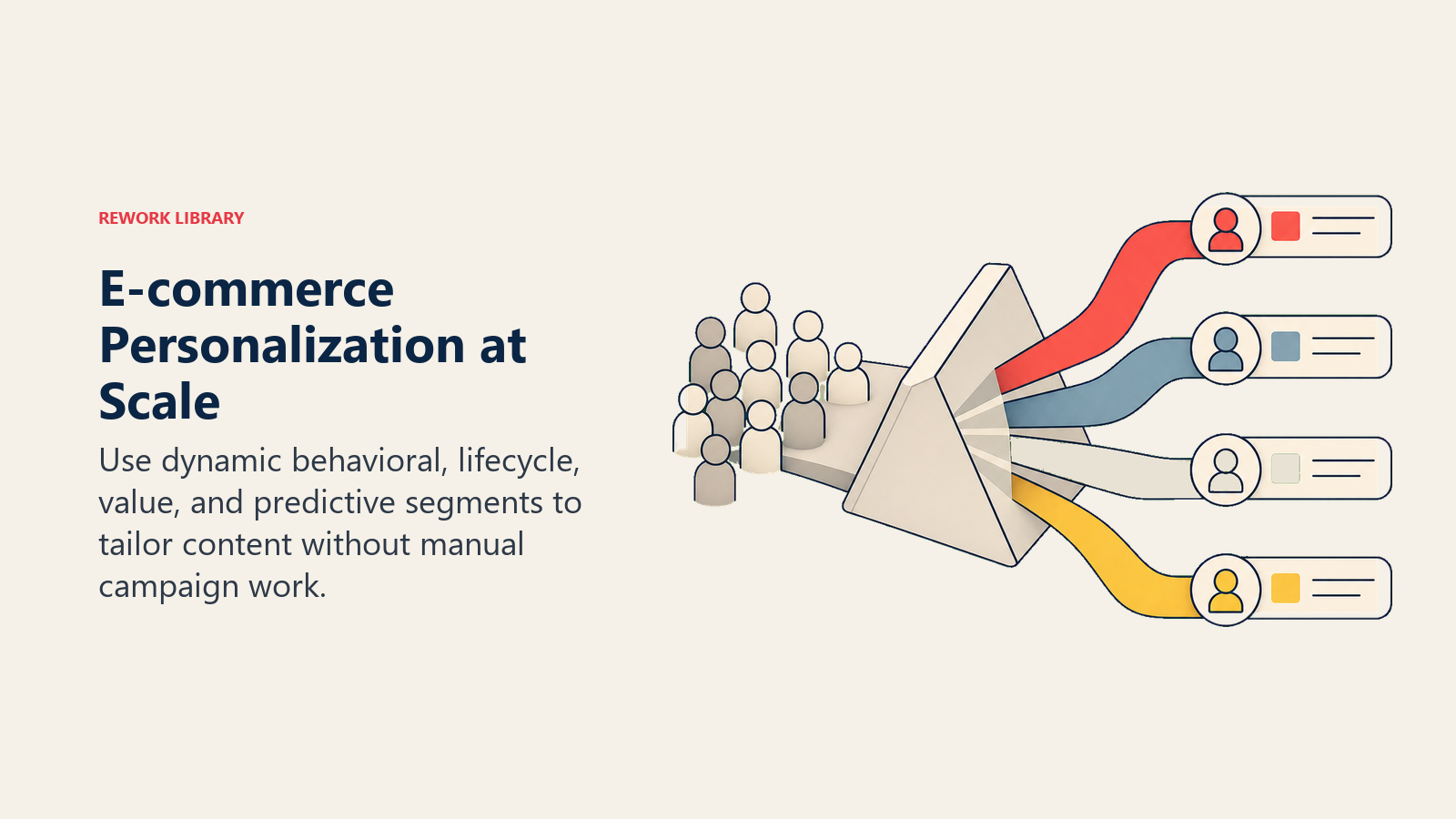
Behavioral segment: Recent purchaser (<30 hari), active browser (7 hari), cart abandoner, email engager (opened 3+ dari last 10), dormant customer (90+ hari no activity) Value segment: VIP (top 10% LTV), high-potential (high AOV, low frequency), bargain hunter (only purchase on discount), one-time buyer Lifecycle segment: New subscriber, first-time buyer, repeat customer, loyal customer, at-risk, lapsed Product affinity segment: Category purchaser (apparel, accessories, home goods), brand preference, price sensitivity tier
Automation platform refresh segment continuously. Seseorang move dari "cart abandoner" ke "recent purchaser" instantly, exiting cart workflow dan entering post-purchase workflow. No manual list management.
Predictive segmentation:
Machine learning mengidentifikasi pattern yang humans miss.
Churn prediction: Identifikasi pelanggan likely to lapse di next 30 hari berdasarkan engagement decline, purchase frequency change, browsing pattern shift Purchase likelihood: Score pelanggan by probability of purchase di next 14 hari, prioritize high-scoring contact untuk promotional campaign Product affinity prediction: Recommend product customer most likely to purchase berdasarkan similar customer purchase pattern Optimal send time: Predict best time untuk send email untuk each individual berdasarkan historical open pattern
Klaviyo's predictive analytics mengidentifikasi 2.400 pelanggan (12% dari list) yang generated 43% dari next-30-day revenue. Targeting high-likelihood segment meningkatkan campaign ROI 3.2x.
Personalization token dan dynamic content:
Scale personalization dengan automating content insertion:
Basic personalization: First name, last purchase date, VIP status, points balance Behavioral personalization: Recently viewed product, browsed category, abandoned cart content, previous purchase Conditional content block: Jika purchased apparel, show apparel recommendation. Jika purchased home goods, show home recommendation. Single template, dynamic content. Countdown timer: Dynamic urgency ("Your discount expires in [time remaining]") update secara real-time
Satu email template dengan 8 conditional content block serve 12 customer segment. Build once, personalize automatically. Previous approach butuh 12 separate email dan manual segment management.
Lifecycle stage progression:
Move pelanggan through stage automatically:
Subscriber → First-time buyer → Repeat customer → Loyal customer → VIP → Brand advocate
Setiap stage memiliki specific workflow:
Subscriber: Welcome series, engagement nurture First-time buyer: Post-purchase education, second purchase encouragement Repeat customer: Category expansion, cross-sell Loyal customer: Exclusive preview, loyalty program VIP: Concierge treatment, surprise reward Advocate: Referral program, user-generated content request
Automated stage progression memastikan pelanggan menerima relevant message untuk relationship phase mereka. Manual stage assignment tidak scale.
ROI Measurement dan Attribution
"Marketing automation works" tidak cukup. Anda butuh quantified ROI yang justifies platform investment dan guides optimization priority.
Baseline metrics establishment:
Ukur pre-automation performance:
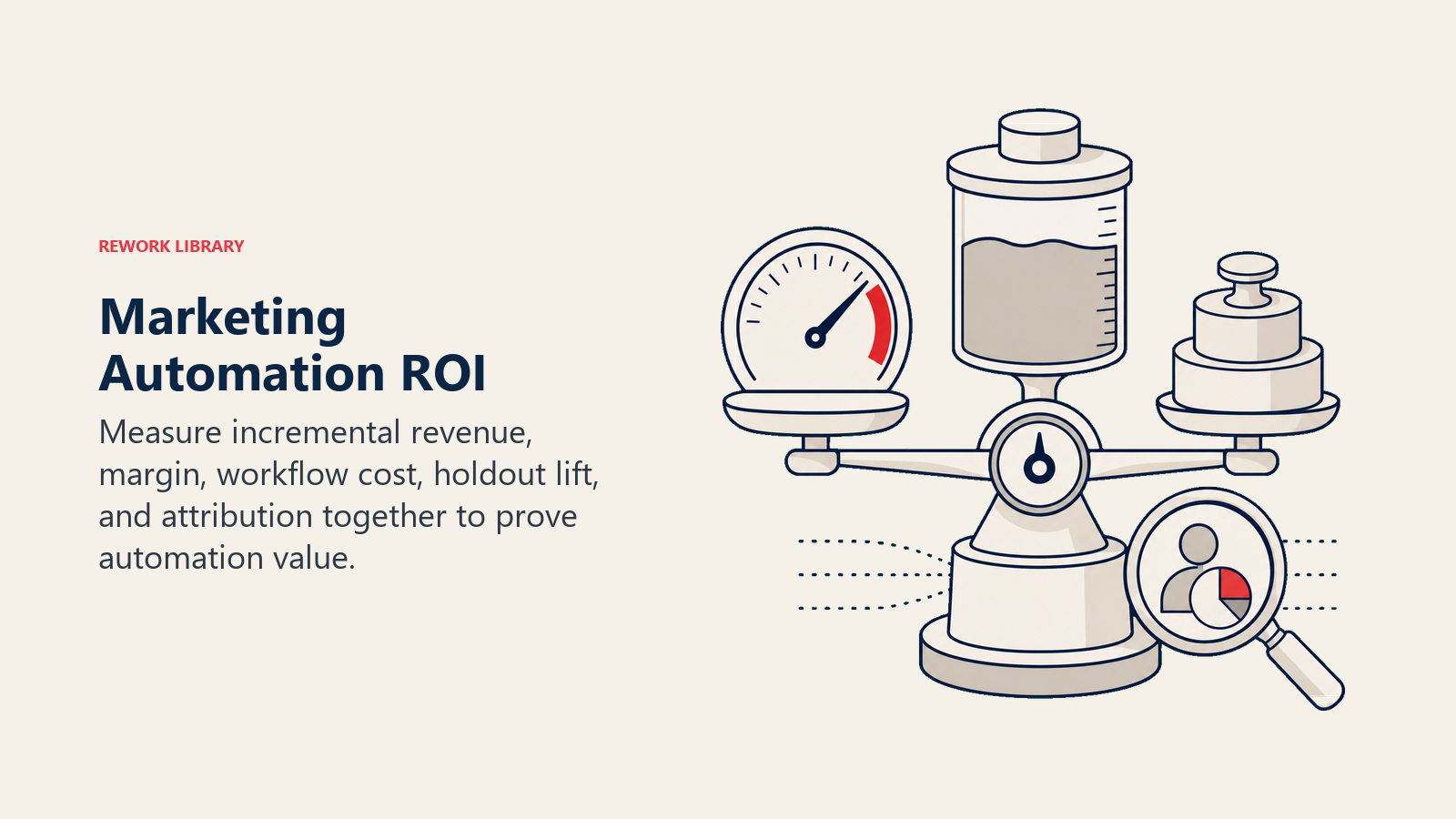
Email revenue as % dari total revenue Average order value dari email Repeat purchase rate Email list growth rate Campaign deployment time
Post-automation comparison menunjukkan true impact. Satu store mengukur 8% email revenue pre-automation, 34% post-automation. Itu 4.25x multiplier dari systematic workflow implementation.
Revenue attribution model:
Direct attribution: Pelanggan clicked email, purchased immediately. Simple, underestimate impact. Automation platform show ini by default ($X revenue from workflow Y).
Assisted attribution: Pelanggan engaged dengan multiple touchpoint. Email introduced product, retargeting ad reminded, customer purchased later. Multi-touch attribution gives partial credit ke each touchpoint.
Incremental attribution: Revenue generated beyond apa yang would have happened anyway. Control group show true lift. Contoh: Cart abandonment workflow recover 18% dari cart. Tapi 5% would have returned anyway. Incremental recovery: 13%. That's true automation value.
Holdout testing untuk incremental measurement:
Randomly exclude 5-10% dari pelanggan dari automation workflow (control group). Compare purchase rate:
Treatment group (receives workflow): 22% conversion Control group (no workflow): 14% conversion Incremental lift: 8 percentage point (57% improvement)
Jika workflow generated $180.000 revenue, incremental revenue adalah $62.000 (amount yang wouldn't have happened without automation). That's your true ROI calculation base.
Cost per acquisition (CPA) improvement:
Automation reduce effective CPA dengan increasing conversion dari existing traffic.
Pre-automation: $50.000 ad spend, 500 customer, $100 CPA Post-automation: $50.000 ad spend, 750 customer (improved retention + cart recovery), $67 CPA
Same acquisition investment, 33% CPA reduction melalui automation-driven conversion improvement. And this scale. Setiap dollar saved on CPA bisa fund additional acquisition.
Customer lifetime value (CLV) impact:
Automation workflow increase customer lifetime value melalui retention dan repeat purchase:
Pre-automation CLV: $180 (1.5 purchase, $120 AOV) Post-automation CLV: $285 (2.4 purchase, $118 AOV) CLV increase: 58%
This compound: Higher CLV justify higher acquisition cost, enable market share growth, dan improve unit economic across the business.
Workflow-level performance metric:
Track each workflow independently untuk understand e-commerce metrics and KPI yang drive growth:
Revenue per recipient: Total workflow revenue ÷ number of customer who entered Conversion rate: Customer who purchased ÷ customer who entered Revenue per email sent: Total revenue ÷ number of email sent (measure efficiency) Time to conversion: How long from workflow start to purchase (faster = better) Exit point: Where customer leave workflow without converting (optimization opportunity)
Cart abandonment workflow example:
- 1.000 entry per minggu
- 180 conversion (18% conversion rate)
- $12.600 revenue
- $12.60 revenue per recipient
- 2.1 email sent per conversion
Compare workflow: Cart abandonment at $12.60 per recipient outperform browse abandonment at $4.20 per recipient. Optimization priority: improve browse abandonment atau increase cart abandonment volume.
Platform ROI justification:
Calculate total automation value vs platform cost:
Monthly automation revenue: $85.000 (tracked via platform attribution) Incremental percentage (from holdout test): 65% True incremental revenue: $55.250 Platform cost: $1.200/bulan ROI: 4.504% (atau 46x return)
Bahkan conservative estimate (30% incremental attribution) deliver 17x ROI. Platform investment pays for itself in days, not months.
Satu store presented quarterly business review: "Marketing automation generated $624.000 incremental revenue on $14.400 platform investment (43x ROI). Recommendation: increase automation sophistication dengan advanced segmentation dan SMS expansion." That's how you justify platform upgrade dan expanded automation investment.
Compliance, Deliverability, dan Data Privacy
Automation spam destroy deliverability. Legal violation risk fine. Systematic compliance protect both deliverability dan customer trust.
Consent management:
Anda butuh explicit permission untuk send message.
Email opt-in: Checkbox pada signup form (pre-checked doesn't count), confirmation email untuk double opt-in (best practice), clear language about what they'll receive SMS opt-in: Separate explicit consent required (can't assume email permission extends to SMS), clear messaging frequency expectation, disclosure dari message/data rate Preference center: Biarkan pelanggan choose message type (promotional, transactional, educational) dan frequency (daily, weekly, monthly)
Compliance bukan just legal requirement, it improve engagement. Opted-in, engaged subscriber convert 5-8x better dari scraped/purchased list.
GDPR, CCPA, dan CAN-SPAM compliance:
Different regulation, similar principle:
CAN-SPAM (US): Clear identification, honest subject line, valid physical address, easy unsubscribe, honor opt-out within 10 hari GDPR (EU): Explicit consent, purpose disclosure, right to access data, right to deletion, data portability CCPA (California): Disclosure dari data collection, opt-out right, no discrimination untuk opt-out
Most automation platform handle technical compliance (unsubscribe link, suppression list, preference management). Anda handle consent collection dan privacy policy disclosure.
Unsubscribe dan preference handling:
Make opting out easy (even though it hurt):
One-click unsubscribe: No login required, no confirmation needed (just "are you sure?" option) Preference option: Before full unsubscribe, offer frequency reduction atau topic selection Feedback collection: Ask why they're leaving (too frequent, not relevant, purchased elsewhere) Automated suppression: Unsubscribe immediately remove from all promotional send (transactional email like order confirmation still allowed)
Store yang make unsubscribing easy maintain 2-3% unsubscribe rate. Store yang hide atau complicate unsubscribing see 8-12% spam complaint rate, which kill deliverability.
List hygiene automation:
Dead address dan unengaged contact hurt deliverability:
Bounce handling: Hard bounce (invalid address) automatically suppressed after 1 failure. Soft bounce (temporary issue) suppressed after 3 failure. Engagement-based suppression: Contact yang haven't opened email in 90-180 hari move to "sunset segment" dengan re-engagement campaign. Jika still no engagement, suppress from promotional send. Spam trap monitoring: Automation platform monitor untuk spam trap hit (honeypot address set by ISP untuk catch list abuse). Clean list avoid trap. Invalid address removal: Remove obvious fake address (asdf@asdf.com, test@test.com) before they generate bounce
Satu brand mengimplementasikan 90-day engagement suppression. List size dropped 18%, tapi deliverability improved from 87% ke 96%, dan overall revenue increased 12% (higher quality audience + better inbox placement).
Spam prevention dan deliverability:
Getting email delivered butuh ongoing reputation management:
Authentication protocol: SPF (sender verification), DKIM (message signing), DMARC (policy enforcement), all configured correctly Sender reputation: Maintained through low bounce rate (<2%), low complaint rate (<0.1%), high engagement (>15% open rate) Content best practice: Avoid spam trigger word ("FREE!!!"), balanced text/image ratio, clean HTML, testing dengan spam checker before sending Sending pattern: Consistent volume (not 0 send then 100K send), gradual warm-up untuk new IP/domain, engagement-based sending (prioritize engaged subscriber)
Deliverability determine automation ROI. 70% deliverability berarti 30% dari workflow Anda never reach customer. Maintain 95%+ inbox placement through systematic reputation management.
Maturity Stage: From Basic to Advanced Automation
Marketing automation capability grow in stage. Mulai dengan foundation, expand saat Anda prove ROI dan build expertise.
Stage 1: Basic triggered email (Bulan 1-3)
Core workflow running:
- Welcome series (1-3 email)
- Cart abandonment (1-2 email)
- Post-purchase confirmation dan shipping
Focus: Getting infrastructure working, learning platform, proving basic ROI
Expected impact: 15-25% dari email revenue from automation
Stage 2: Expanded workflow coverage (Bulan 3-6)
Adding workflow:
- Browse abandonment
- Post-purchase education dan cross-sell
- Win-back campaign
- Review request
Focus: Covering more customer journey touchpoint, improving workflow performance through testing
Expected impact: 30-40% dari email revenue from automation
Stage 3: Segmentation dan personalization (Bulan 6-12)
Adding depth:
- Dynamic segmentation by behavior dan value
- Conditional content dan product recommendation
- Multiple workflow variation by segment
- Predictive analytics integration
Focus: Moving from one-size-fits-all ke personalized customer experience
Expected impact: 40-50% dari email revenue from automation, 25-35% increase in repeat purchase rate
Stage 4: Multi-channel orchestration (Bulan 12-18)
Channel expansion:
- SMS integrated into core workflow
- Push notification untuk mobile app customer
- On-site personalization triggered by email engagement
- Coordinated cross-channel sequence
Focus: Right message, right channel, right time
Expected impact: 45-55% dari total revenue from automated multi-channel workflow
Stage 5: AI-driven optimization (Bulan 18+)
Advanced capability:
- Machine learning send time optimization
- Predictive product recommendation
- Automated workflow branching based on propensity model
- Dynamic creative optimization (automated A/B testing)
- Churn prediction dan proactive retention
Focus: Removing human bottleneck, scaling optimization beyond manual capacity
Expected impact: 50-65% dari revenue from automated workflow, 40-60% improvement in customer lifetime value
Most store plateau at Stage 3-4. Yang push ke Stage 5 generate sustainable competitive advantage through automation capability yang competitor can't easily replicate.
Making Automation Work untuk Store Anda
Marketing automation bukan project. It's infrastructure. Store yang generating 40-60% dari revenue dari automated workflow tidak implement everything at once. Mereka mulai dengan cart abandonment, proved ROI, expanded ke welcome series, proved ROI again, added browse abandonment, dan systematically built comprehensive automation infrastructure over 12-18 bulan.
Mulai dengan workflow yang akan generate immediate revenue: cart abandonment dan welcome series. Get those working, measure incremental revenue, then expand coverage. Choose platform yang match current revenue scale Anda tapi bisa grow dengan Anda. Integrate deeply so customer data flow automatically. Test systematically untuk improve performance. Add channel saat Anda prove email ROI.
Marketing team yang managing 47 workflow dan 180.000 contact tidak start there. Mereka mulai dengan 2 workflow dan 5.000 contact. Growth came from proving value, expanding capability, dan building systematic workflow development process. Infrastructure yang mereka built generate predictable revenue every month while they focus on strategy dan testing (not manual campaign execution).
Automation infrastructure Anda determine what's possible untuk 2-3 tahun ke depan. Build it right.
Related Resources:

On this page
- Apa Sebenarnya Marketing Automation Itu
- Mengapa Marketing Automation Memberikan ROI yang Terukur
- Core Automation Workflow yang Dibutuhkan Setiap Toko
- SMS dan Multi-Channel Automation
- Platform Selection dan Comparison
- Integration Architecture untuk Automation Success
- Workflow Design Best Practice
- Segmentation dan Personalization at Scale
- ROI Measurement dan Attribution
- Compliance, Deliverability, dan Data Privacy
- Maturity Stage: From Basic to Advanced Automation
- Making Automation Work untuk Store Anda