Bahasa Indonesia
Optimasi Checkout Flow: Mengurangi Friction dan Meningkatkan Conversions
Turn this article into takeaways for your work.


Each assistant summarizes the article only for you and suggests best practices for your work.
Checkout process adalah final dan most critical stage dari e-commerce conversion funnel. Setelah berinvestasi dalam traffic acquisition, product page optimization, dan membangun customer intent, kehilangan pelanggan selama checkout mahal. Ini adalah high-intent shoppers yang sudah memutuskan untuk membeli dan menambahkan items ke cart mereka. Namun average checkout abandonment rate melayang sekitar 70%. Bisnis kehilangan tujuh dari sepuluh potential sales di finish line. Memahami cart abandonment recovery strategies kritis untuk merebut kembali peluang yang hilang ini.
Masalahnya bukan bahwa pelanggan tiba-tiba berubah pikiran tentang ingin produk. Research menunjukkan checkout abandonment berasal dari friction: unexpected costs, complex forms, limited payment options, security concerns, dan unclear processes. Setiap friction point menciptakan opportunity untuk doubt merayap masuk dan intent menghilang.
Ini menciptakan massive opportunity. Kebanyakan stores memperlakukan checkout sebagai technical necessity untuk konfigurasi sekali dan lupakan. Strategic e-commerce operations mengakui checkout optimization sebagai salah satu highest-ROI conversion improvements yang tersedia. Mengurangi checkout friction dengan streamlining forms, expanding payment options, dan clarifying process dapat meningkatkan conversion rates sebesar 20-40% tanpa mengubah apapun tentang produk atau pricing.
Masalah Checkout Friction
Memahami mengapa pelanggan abandon selama checkout adalah first step untuk memperbaiki masalah. Friction points consistent dan measurable.
Unexpected costs adalah number one checkout abandonment trigger. Pelanggan menambah produk ke cart di satu price, kemudian hit shipping fees, taxes, handling charges, atau costs lain di checkout yang tidak clearly communicated lebih awal. Final price melebihi expectations, menciptakan instant hesitation dan often abandonment. Clear shipping strategy and pricing approach helps prevent surprises ini.
Psikologinya straightforward: pelanggan membuat buying decisions berdasarkan expected total cost. Ketika checkout mengungkapkan totals signifikan lebih tinggi dari yang diantisipasi, it feels like bait-and-switch bahkan ketika all charges legitimate. Trust damage often outweighs desire untuk produk.
Checkout complexity dan form friction menciptakan abandonment melalui pure exhaustion. Long, complicated forms dengan excessive required fields mengubah apa yang seharusnya simple transaction menjadi tedious data entry exercise. Setiap additional field meningkatkan cognitive load dan provides another opportunity untuk reconsider purchase.
Mobile users face compounded friction. Forms yang merely annoying di desktop menjadi genuinely difficult di mobile devices dengan small screens dan touch keyboards. Effort yang diperlukan untuk complete checkout melebihi perceived value dari purchase.
Limited payment method options mencegah conversions ketika pelanggan encounter payment limitations. Requiring credit card payment eliminates pelanggan yang prefer PayPal, Apple Pay, atau Buy Now Pay Later options. Rigid requirement memaksa pelanggan untuk either share payment information mereka uncomfortable providing atau abandon entirely.
Security dan trust concerns meningkat selama checkout ketika pelanggan bersiap untuk share sensitive financial information. Element apapun yang creates doubt, missing security badges, unfamiliar payment processors, unclear privacy policies, can trigger abandonment. Higher cart value, more pronounced these concerns become. Implementing effective trust signals and social proof throughout checkout helps address these anxiety points.
Account creation requirements merepresentasikan salah satu most common dan easily preventable friction sources. Forcing pelanggan untuk create accounts sebelum purchasing adds steps, requires remembering passwords, dan creates perception dari unnecessary commitment untuk what might be one-time purchase.
Cumulative impact dari these friction points substantial. Setiap element individually might seem minor, tapi they compound. Pelanggan yang annoyed oleh unexpected shipping costs, frustrated oleh excessive form fields, concerned tentang payment security, dan forced to create unwanted account akan abandon. Remove these friction points systematically dan conversion rates improve dramatically.
Checkout Flow Fundamentals
Structural design dari checkout flow significantly impacts completion rates. Dua primary approaches dominate: single-page checkout versus multi-step checkout.
Single-page checkout displays all checkout elements, shipping address, payment information, order review, on one page. Approach ini minimizes perceived effort (no additional pages to navigate), provides complete visibility into process, dan allows pelanggan to see all information dan edit any element tanpa page transitions.
Single-page checkout works best untuk simple purchases dengan minimal customization. It particularly suits mobile users yang find page transitions dan back-navigation frustrating. Psychological benefit dari seeing "everything on one screen" reduces perceived complexity.
Drawback: single-page layouts can appear overwhelming ketika they include extensive form fields. Visual density dari single page containing 20+ input fields intimidates some customers.
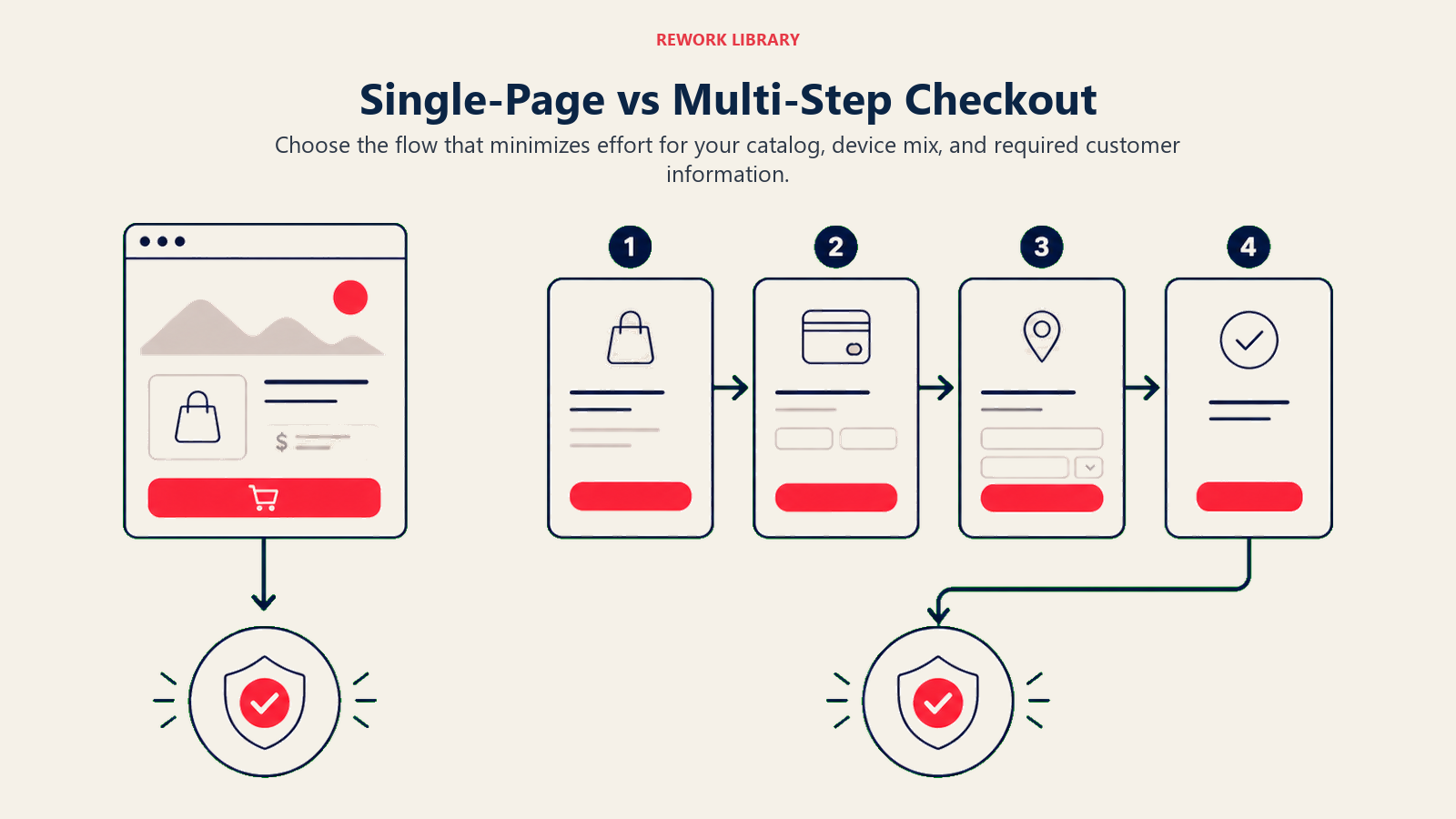
Multi-step checkout breaks process into distinct stages, typically shipping information, payment details, dan order review. Setiap step displays only relevant fields untuk that stage, creating visual simplicity dan clear progress through defined process.
Multi-step checkout works well untuk complex purchases requiring significant information (custom products, multiple shipping addresses, detailed customization). It provides psychological momentum melalui progress indicators showing movement through steps.
Drawback: additional page loads create more abandonment opportunities, particularly ketika load times slow. Setiap transition gives pelanggan moment to reconsider atau get distracted.
Optimal choice depends on specific context Anda. Test both approaches dengan actual customers Anda daripada assuming one superior to other universally. Factors yang influence which performs better include: average cart complexity, typical customer demographics, mobile vs. desktop traffic ratios, dan page load speeds.
Number of steps dan page load optimization directly correlate dengan abandonment rates. Setiap additional step atau page load creates abandonment risk. Minimize steps tanpa sacrificing clarity. Three-step checkout (shipping → payment → review) typically represents minimum untuk multi-step approaches. Anything beyond four steps harus dipertanyakan.
Page load time matters enormously during checkout. Pelanggan yang decided to buy akan wait lebih lama daripada casual browser, tapi patience has limits. Target page load times under 2 seconds untuk checkout pages, as delays beyond this trigger measurable abandonment increases. Comprehensive site speed and performance optimization becomes especially critical during checkout.
Form field reduction strategies focus pada minimizing required information ke absolute essential untuk order fulfillment. Every non-essential field removed improves completion rates.
Start dengan auditing current checkout forms. Question every field: Is this information truly required to process dan deliver order? Company name fields, secondary phone numbers, fax numbers, these commonly appear di checkout forms despite being unnecessary untuk most orders.
Smart defaults reduce effective field counts. Pre-filling country berdasarkan IP address, setting standard shipping as default, auto-selecting payment method berdasarkan detected card type, these techniques reduce active selections pelanggan must make.
Form Optimization Best Practices
Form design dramatically affects checkout completion rates. Small changes dalam field structure, validation, dan presentation create measurable conversion impacts.
Required versus optional field strategy requires discipline. Mark only genuinely essential fields as required. Make everything else optional. Display optional field labels clearly to set expectations.
Common over-requirement mistakes: requiring phone numbers ketika email provides sufficient contact capability, requiring secondary address lines yang most customers leave blank anyway, requiring company names untuk consumer purchases.
Counter-intuitive finding: removing "optional" fields entirely often works better daripada marking them optional. Jika field tidak worth requiring, it's usually not worth including. Visual clutter dan decision fatigue dari optional fields can exceed their value.
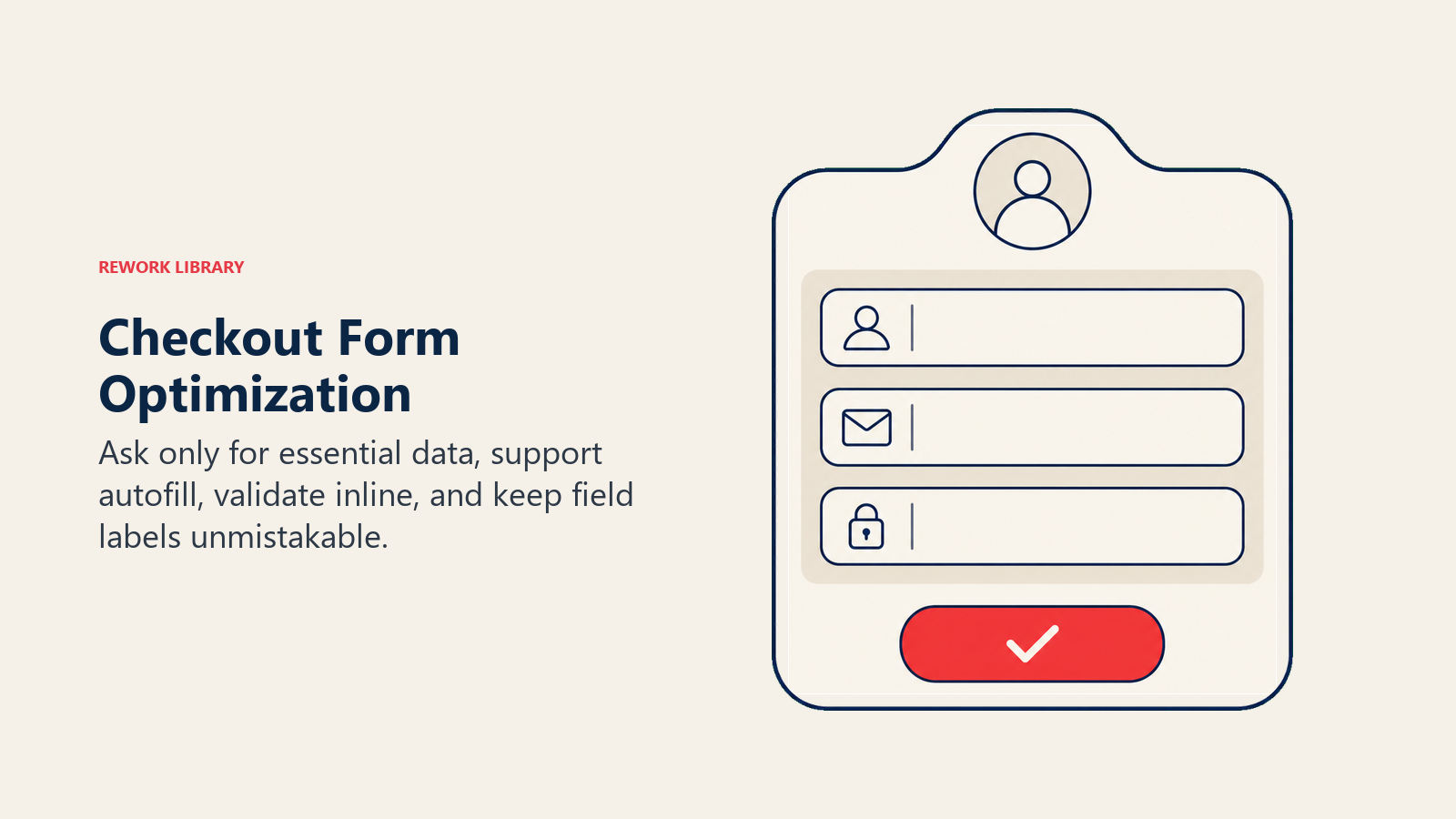
Smart field autofill dan detection leverages browser capabilities dan intelligent processing untuk reduce manual entry. Enable browser autofill untuk standard fields (name, address, email, phone). This allows returning customers dan users dengan saved information to complete forms dengan minimal typing.
Address autocomplete integration dengan services seperti Google Places API provides fast, accurate address entry. Pelanggan type partial addresses dan select dari suggestions daripada manually entering every address component. This reduces entry time, minimizes errors, dan improves delivery accuracy.
Payment card detection automatically identifies card type (Visa, Mastercard, Amex) as pelanggan type card numbers. This small feature provides visual confirmation bahwa information is being recognized correctly, reducing anxiety tentang whether payment will process.
Validation dan error handling requires thoughtful implementation. Poor validation creates frustration dan abandonment. Effective validation prevents errors sambil providing helpful guidance.
Real-time validation provides immediate feedback as pelanggan complete fields. Email address format validation, password strength indicators, ZIP code format checks, these inline validations catch errors immediately ketika they're easiest to correct.
Error message quality matters as much as error detection. "Invalid input" provides no helpful information. "Email address must include @ symbol" explains exactly what's wrong dan how to fix it. Clear, specific error messages reduce frustration dan abandonment.
Validation timing affects user experience significantly. Validating while pelanggan masih typing creates annoying interruptions. Validating after field completion (on blur) provides feedback tanpa interrupting typing flow.
Progressive disclosure techniques reveal information dan options gradually berdasarkan customer selections daripada displaying everything simultaneously. This reduces visual complexity dan cognitive load.
Example: Don't display gift wrapping options, custom message fields, dan delivery instructions sampai after pelanggan selects shipping method. These options tidak relevant sampai core information is provided.
Conditional fields appear only ketika relevant. Jika pelanggan selects "billing address different from shipping," then billing address fields appear. Otherwise, they remain hidden. This keeps forms visually simple sambil maintaining necessary flexibility.
Payment Options dan Security
Payment flexibility significantly impacts conversion rates. Pelanggan have strong payment method preferences, dan inability to use preferred methods triggers abandonment. Comprehensive payment processing strategy ensures Anda offer right mix dari payment options.
Multiple payment method support addresses diverse customer preferences. Essential payment options untuk modern e-commerce include: major credit cards (Visa, Mastercard, American Express, Discover), debit cards, PayPal, digital wallets (Apple Pay, Google Pay), dan increasingly, Buy Now Pay Later options (Affirm, Klarna, Afterpay).
Implementation strategy: Start dengan credit cards dan PayPal as baseline. Add digital wallets next, these provide one-click checkout untuk pelanggan dengan saved information. Consider BNPL untuk average order values above $50 di mana installment payment appeals to customers.
Display available payment methods clearly early dalam checkout process. Pelanggan shouldn't discover payment limitations only after completing shipping information. Show payment logos di cart pages dan early dalam checkout to set expectations.
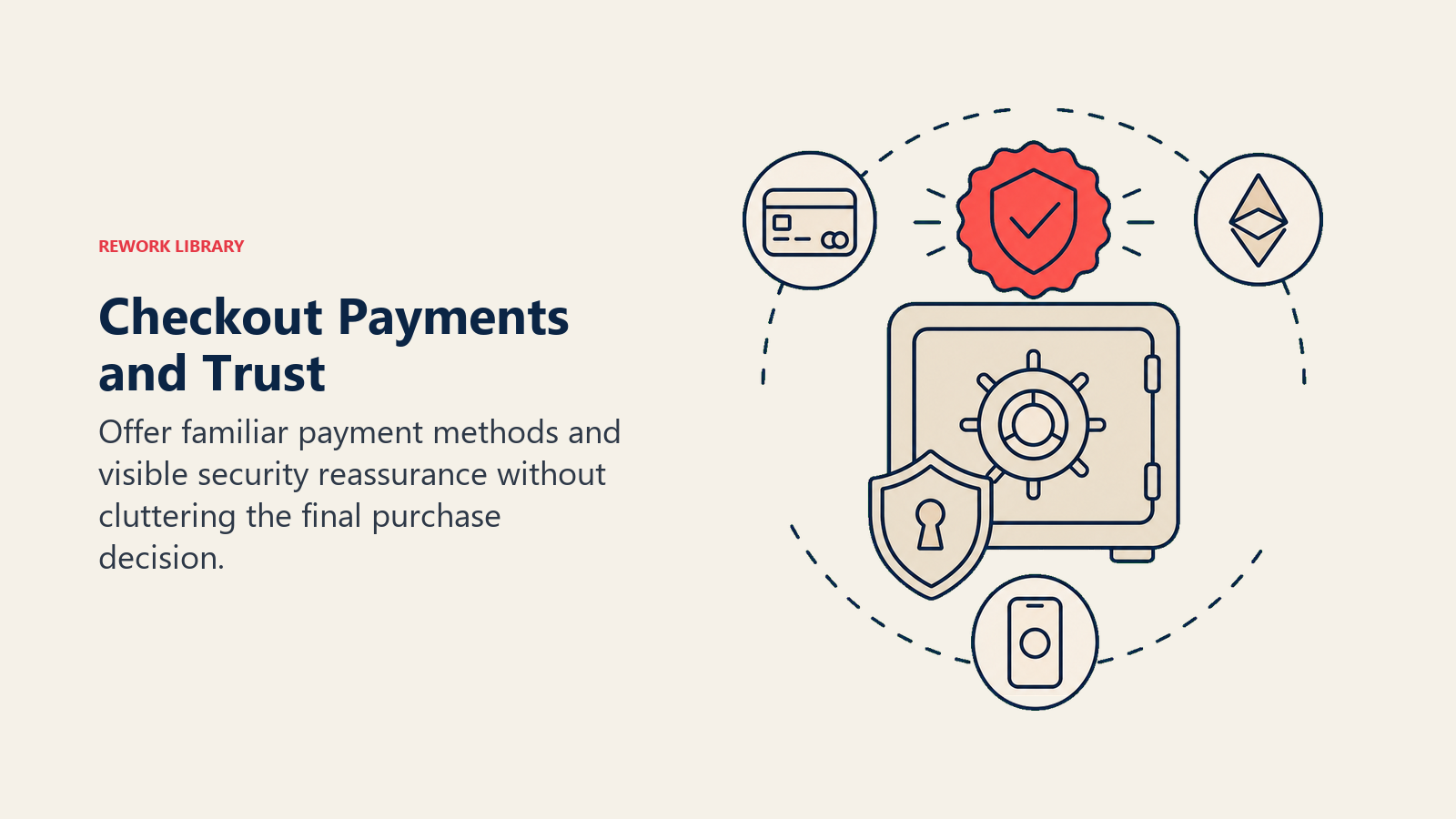
Apple Pay, Google Pay, dan PayPal integration provides streamlined checkout untuk pelanggan dengan saved payment information. These services store customer shipping dan payment details, enabling one-click purchasing yang bypasses traditional form completion.
Conversion impact substantial. Pelanggan using express checkout options convert di significantly higher rates daripada those completing traditional forms. Reduced friction dan saved time create measurably better experiences.
Implementation requires technical integration dengan payment processors yang support these methods. Most modern e-commerce platforms (Shopify, WooCommerce, BigCommerce) include built-in support. Enable these options prominently, dedicated express checkout buttons should appear di top checkout flows, tidak buried di payment method selections.
Buy Now Pay Later (BNPL) options appeal to pelanggan yang prefer spreading payments across installments daripada paying full amounts upfront. This particularly impacts higher-value purchases di mana $200 paid immediately feels more significant daripada 4 payments dari $50.
BNPL services (Klarna, Affirm, Afterpay) handle credit checks, payment collection, dan default risk. Anda receive full payment upfront sambil pelanggan pay BNPL provider over time. Cost adalah BNPL service fees (typically 2-6% dari transaction value) dan potential lower average order values jika pelanggan optimize purchases to installment thresholds.
Strategic implementation: Display BNPL payment amounts di product pages ("or 4 interest-free payments of $49.75"). This converts abstract consideration dari whether installments available menjadi concrete visualization dari affordable payments.
Trust badges dan security signals address heightened security concerns pelanggan experience ketika entering payment information. Display security badges prominently di checkout pages, particularly near payment form fields.
Effective security signals include: SSL/HTTPS indicators, PCI compliance badges, recognized security service logos (Norton Secured, McAfee Secure), payment processor security logos. Position these directly adjacent to payment fields di mana pelanggan actively consider security.
Generic "secure checkout" claims carry less weight daripada specific, recognizable security certifications. Pelanggan recognize Norton dan McAfee brands dan transfer trust dari these established security companies to your checkout process.
PCI compliance indicators demonstrate adherence to Payment Card Industry Data Security Standards. While pelanggan may not understand technical PCI details, message "PCI DSS Compliant" atau "Bank-Level Security" communicates serious security commitment.
Include brief explanatory text ketika space allows: "Your payment information is encrypted and secured according to banking industry standards." This translates technical compliance into customer-meaningful assurance.
Guest Checkout Strategy
Account creation requirements represent salah satu most debated checkout optimization elements. Strategic question: require accounts, encourage accounts, atau default to guest checkout?
Guest versus account creation friction creates measurable conversion impact. Studies consistently show bahwa forced account creation reduces checkout completion rates by 15-30%. Friction stems dari multiple sources: additional form fields (username, password, password confirmation), concerns tentang unwanted marketing emails, resistance to "commitment" untuk potential one-time purchases.
Business case untuk accounts legitimate: accounts enable order history access, faster repeat purchases, targeted marketing, dan customer lifetime value optimization. Tapi these benefits only materialize jika pelanggan complete initial purchases. Abandoned checkouts provide zero lifetime value.
Optimal implementation: default guest checkout dengan optional account benefits balances conversion optimization dengan account value. Allow guest checkout as default path, requiring only information essential untuk order fulfillment (shipping address, payment, email untuk confirmation).
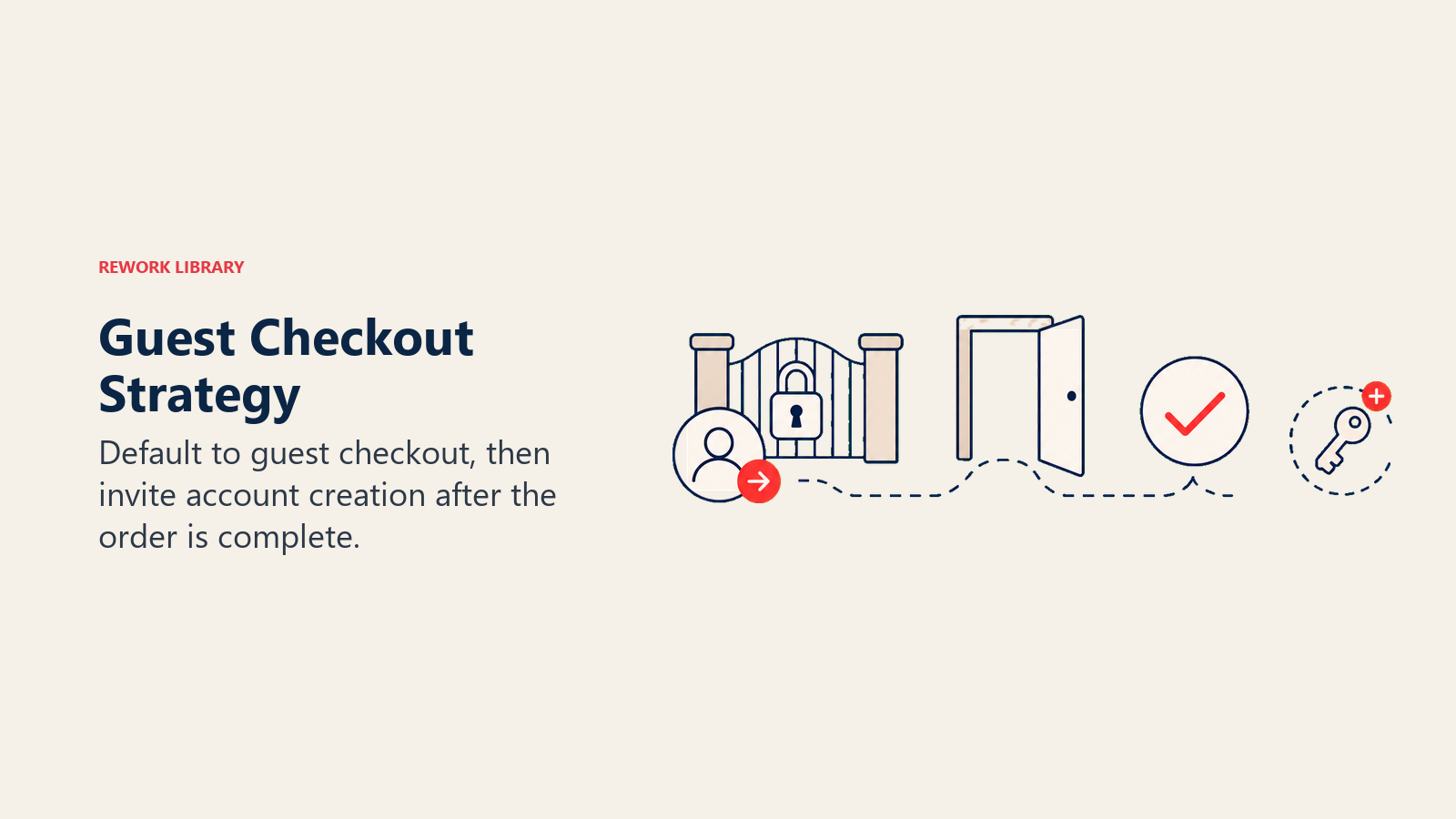
Display clear, non-intrusive messaging tentang account benefits: "Create an account for faster checkout next time," "Save this information for future purchases," atau "Track your order easily with an account." Frame account creation as customer benefit daripada site requirement.
Optional account benefits communication requires specificity. Generic "create an account for benefits" messaging carries minimal persuasive power. Specific benefits resonate: "Save your information for 1-click checkout next time," "Get exclusive member discounts," "Track orders and view purchase history easily."
Key: communicate benefits tanpa creating pressure atau adding friction ke primary goal completing current purchase.
Post-purchase account setup represents often-overlooked opportunity. Allow guest checkout, then offer account creation after successful purchase: "Your order is confirmed! Create an account now to track shipping and save your information for next time."
This timing leverages post-purchase satisfaction dan makes account creation optional daripada required. Pelanggan yang just completed successful transactions lebih receptive ke account creation daripada those still evaluating whether to buy.
Implementation technically straightforward: guest checkout captures email dan creates temporary account. Post-purchase flow offers password creation to convert temporary account ke full account. Jika pelanggan decline, they received order confirmation tapi can't access account features.
Account recovery options address common scenario di mana pelanggan forget they have accounts dan attempt guest checkout dengan previously-used email addresses. Smart systems detect this dan offer streamlined sign-in: "Looks like you've shopped with us before! Sign in for faster checkout."
This recognition creates positive experience ("they remember me") sambil reducing friction melalui saved information daripada creating it melalui rigid requirements.
Progress Indicators dan Clarity
Checkout transparency reduces anxiety dan abandonment dengan clearly communicating di mana pelanggan are dalam process dan what to expect.
Step indicators dan progress bars provide visual roadmaps untuk multi-step checkout. Show all steps, highlight current step, dan indicate completed steps. This creates psychological momentum dan reduces uncertainty tentang how many additional steps remain.
Effective progress indicators include step names (Shipping → Payment → Review) daripada just numbers (Step 1 → Step 2 → Step 3). Names provide context tentang what information each step requires.
Visual design considerations: Make progress indicators prominent tapi not intrusive. Position them di top checkout pages di mana they provide orientation tanpa cluttering main content. Use clear visual distinctions antara completed, current, dan upcoming steps.
Order summary clarity ensures pelanggan understand exactly apa yang they're buying throughout checkout. Persistent order summaries should remain visible as pelanggan complete checkout steps. This includes product images, names, quantities, prices, dan totals.
Mobile implementation: Order summaries di mobile often collapse into expandable sections to save screen space. This acceptable tapi include clear expandability indicators dan ensure summary opens easily ketika pelanggan want to review.
Transparent cost breakdown addresses number one abandonment trigger dengan clearly displaying all costs sebelum final purchase commitment. Show subtotal, shipping, taxes, fees, discounts, dan final total dengan clear labels untuk each line item.
Timing cost revelation matters enormously. Hiding shipping costs sampai final checkout step feels deceptive bahkan ketika technically disclosed sebelum purchase. Show shipping costs as early as possible, ideally di cart pages sebelum checkout begins.
Untuk stores dengan variable shipping (based on address, shipping speed, atau weight), display shipping costs immediately after address entry daripada waiting sampai final review. Earlier costs appear, less they feel like surprise charges.
Shipping cost visibility upfront prevents most common unexpected cost abandonment. Jika shipping free, prominently display "FREE SHIPPING" early dan often. Jika shipping has costs, show them clearly.
Strategic approaches untuk variable shipping: Display typical shipping cost ranges di product pages ("Shipping typically $5-$12"), offer shipping calculators sebelum checkout, atau default to common addresses untuk estimation purposes.
Mobile Checkout Optimization
Mobile traffic represents 60-70% e-commerce visits tapi converts di lower rates daripada desktop, largely due to checkout friction yang more pronounced di small screens. Comprehensive mobile commerce optimization addresses these unique challenges.
Touch-friendly form inputs adapt to mobile interaction patterns. Standard form fields designed untuk mouse precision often frustrate touch users. Optimize untuk touch dengan increasing touch target sizes (minimum 44x44 pixels), adding adequate spacing antara interactive elements, dan using mobile-optimized input controls.
Dropdown menus yang work fine di desktop become difficult di mobile. Consider alternative inputs like radio buttons atau segmented controls untuk limited option sets (shipping method selection, for example).
Keyboard optimization leverages HTML5 input types to trigger appropriate mobile keyboards. Use type="email" untuk email addresses (displays @ dan .com keys), type="tel" untuk phone numbers (displays numeric keypad), type="number" untuk numeric inputs (displays number keyboard).
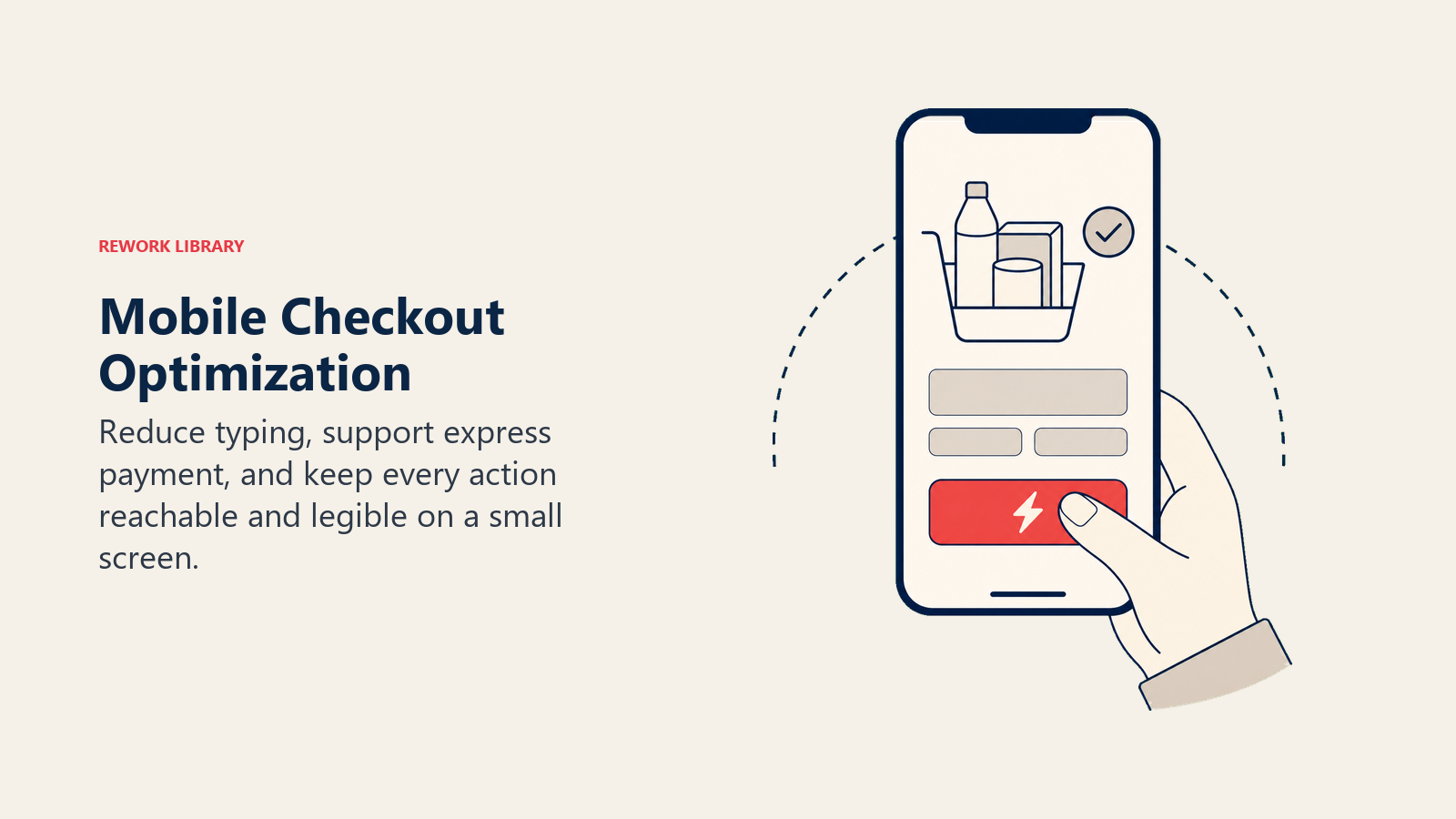
These small technical optimizations significantly reduce typing friction. Entering email addresses dengan easy access ke @ symbols dan entering phone numbers di numeric keypads instead full keyboards creates measurably better mobile experiences.
Mobile-specific payment methods like Apple Pay dan Google Pay provide significant mobile conversion advantages. One-tap purchasing bypasses form completion entirely, reducing mobile checkout dari potentially dozens interactions ke dua atau tiga.
Prominence matters: Display express checkout buttons above standard checkout forms. Make them visually distinct dan obviously clickable. Test whether showing express options di cart pages sebelum traditional checkout further improves conversion.
Single-hand usability acknowledges how most people hold dan use phones. Position interactive elements (buttons, links, form fields) within easy thumb reach untuk one-handed operation. Avoid placing critical actions di top corners yang require hand repositioning to access.
Testing approach: Complete checkout di actual mobile devices (not just desktop browser emulation) sambil standing, sitting, dan holding phone one-handed. Jika Anda struggle to complete checkout comfortably, pelanggan will too.
Address dan Shipping Optimization
Shipping information collection represents significant checkout friction. Optimization focuses on accuracy, ease, dan clarity.
Address autocomplete dramatically reduces address entry friction. Integration dengan address validation services (Google Places API, SmartyStreets, Loqate) allows pelanggan to type partial addresses dan select dari suggested completions. This reduces typing by 60-80% sambil improving address accuracy.
Accuracy improvement prevents failed deliveries dari address errors, reducing customer service contacts dan reshipping costs. ROI dari address validation often exceeds service costs melalui saved shipping expenses alone.
Address validation catches errors sebelum they cause delivery failures. Real-time validation checks untuk invalid ZIP codes, mismatched city/state combinations, dan formatting errors. Alert pelanggan to potential issues dengan clear messaging: "This ZIP code doesn't match the city you entered. Please verify your address."
Validation timing: After address entry completion tapi sebelum advancement to payment. This allows correction sambil address information top-of-mind.
Shipping method selection requires clarity tentang costs, timing, dan service level differences. Display shipping options dengan clear names ("Standard Shipping," "Express 2-Day," "Next-Day"), costs, dan delivery timeframes.
Be specific tentang timing: "Delivery by [actual date]" clearer daripada "3-5 business days." Calculate actual delivery dates berdasarkan processing time dan shipping speed, then display these to pelanggan. "Arrives by Friday, June 23" creates clearer expectations daripada "Ships in 1-2 business days, arrives in 3-5 business days."
Delivery time transparency manages expectations dan reduces post-purchase customer service contacts. Clearly communicate processing time (time sebelum order ships) separate dari shipping time (time in transit).
Many stores under-communicate processing time, leading to customer disappointment ketika orders don't ship immediately. Jika Anda need 2 business days to process orders sebelum shipping, say so clearly: "Orders ship within 2 business days. Standard shipping delivers 3-5 business days after shipment."
This transparency prevents customer disappointment dan associated negative reviews, returns, dan service contacts yang arise dari unmet expectations.
Testing dan Measurement
Checkout optimization requires systematic measurement dan testing daripada guesswork. These principles align dengan broader conversion rate optimization strategies applied throughout site Anda.
Checkout funnel analytics track customer progression melalui checkout steps, identifying di mana abandonment occurs. Setup funnel tracking di Google Analytics atau analytics platform Anda showing: cart page → checkout start → shipping information → payment information → order confirmation.
This visualization reveals exactly di mana pelanggan drop off. Jika abandonment spikes di shipping information, focus optimization there. Jika payment information shows major drop-off, investigate payment friction.
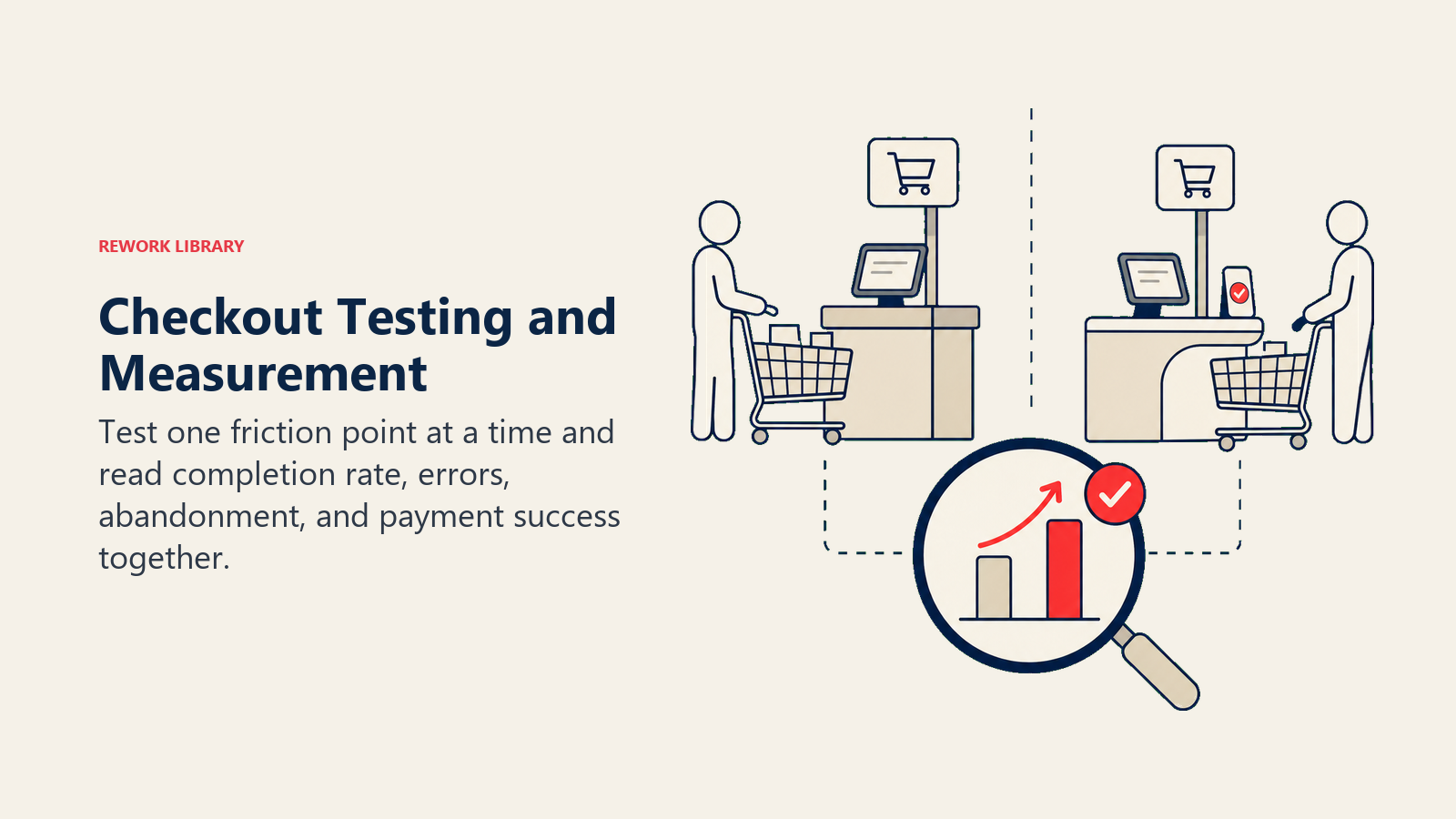
Drop-off point identification requires granular analysis beyond broad step-level tracking. Within each checkout step, track interaction dengan specific elements: payment method selection, shipping method selection, form field completion, error message encounters.
This micro-level analysis often reveals specific friction sources. Anda might discover bahwa pelanggan yang encounter validation errors abandon di 3x rate those yang don't, indicating validation friction worth addressing.
A/B testing strategies systematically improve checkout melalui controlled experiments. Test variables include: single-page vs. multi-step checkout, field requirements, payment method displays, progress indicator designs, security badge placement, button copy variations.
Testing discipline: Test one variable at a time to isolate impact. Run tests to statistical significance (typically thousands checkout sessions). Measure both checkout completion rate dan downstream metrics (average order value, return rates) since some optimizations might improve conversion sambil encouraging lower-quality purchases.
Conversion rate benchmarks provide context untuk performance evaluation. Average e-commerce checkout conversion rates (pelanggan yang start checkout dan complete purchase) range dari 25-35%. Rates below 20% indicate significant friction. Rates above 40% suggest well-optimized checkout flows. Understanding e-commerce metrics and KPIs helps contextualize these benchmarks within overall performance Anda.
Industry dan price point affect benchmarks significantly. Higher-value purchases typically show lower checkout conversion rates daripada lower-value purchases. Use industry-specific benchmarks ketika available daripada general e-commerce averages.
Common Checkout Mistakes
Memahami apa yang tidak boleh dilakukan as valuable as knowing what to do. Common checkout mistakes appear repeatedly across e-commerce sites despite causing measurable harm.
Unnecessary form fields plague checkout forms. Every field beyond absolute essentials reduces completion rates. Audit checkout forms ruthlessly: Is this information required to process dan deliver order? If not, remove it.
Common unnecessary fields: company name (for consumer purchases), fax numbers, secondary phone numbers, extra address lines (most addresses need only one), title/salutation fields (Mr./Mrs./Ms.), marketing preference checkboxes disguised as requirements.
Hidden costs create abandonment dan damage brand trust. Surprising pelanggan dengan unexpected fees di final checkout steps triggers immediate abandonment dan creates negative brand perception yang affects repeat purchase likelihood.
Solution: Show all costs as early as possible. Jika shipping costs vary berdasarkan address, calculate dan display them immediately after address entry. Jika taxes vary by location, estimate berdasarkan IP-derived location atau clearly state "plus applicable taxes" di all price displays.
Security concerns arise dari inadequate trust signal display during checkout. Pelanggan about to enter payment information need visible reassurance bahwa transaction secure. Missing SSL indicators, absence security badges, unfamiliar payment processors, these trigger abandonment.
Address security concerns proactively: Display recognized security badges, use clear HTTPS indicators, include brief security messaging ("Your information is encrypted and secure"), dan feature recognized payment processor logos.
Complex navigation during checkout creates opportunities untuk distraction dan abandonment. Simplified checkout layouts dengan minimal navigation, no promotional distractions, dan clear progress toward completion outperform busy layouts dengan full site navigation.
Best practice: Use simplified headers during checkout yang include only essential elements (company logo, cart icon, support contact). Remove main navigation, promotional banners, dan other elements yang provide exit opportunities atau distractions.
Membangun Checkout Optimization Strategy Anda
Checkout optimization delivers some of highest ROI dari any e-commerce improvement. Anda optimizing conversion pelanggan yang already decided to buy, highest-intent traffic site Anda receives.
Start dengan measurement: Implement comprehensive checkout funnel tracking. Identify di mana abandonment occurs dan quantify revenue impact. This data-driven approach focuses optimization efforts di highest-impact areas.
Address fundamentals first: Reduce required form fields to absolute essentials, add guest checkout, display all costs early, implement address autocomplete, expand payment method options. These high-impact changes require minimal investment dan deliver immediate results.
Then advance to sophisticated optimizations: A/B test checkout layouts, implement express checkout options, add BNPL payments, optimize untuk mobile-specific patterns, personalize checkout berdasarkan customer segments.
Stores yang excel di checkout optimization don't just remove friction, they actively reduce anxiety, provide clarity, dan create confidence throughout final purchase steps. This systematic approach transforms checkout dari necessary transaction into final positive experience yang encourages completion dan builds loyalty untuk future purchases.
Related Resources
Expand e-commerce optimization knowledge Anda dengan these complementary guides:
- AOV Optimization Strategy - Increase revenue per transaction melalui strategic upselling dan bundling techniques
- Post-Purchase Email Sequences - Convert one-time buyers into repeat customers dengan strategic post-purchase communication
- Email Marketing for E-commerce - Build comprehensive email strategies yang drive consistent revenue growth

On this page
- Masalah Checkout Friction
- Checkout Flow Fundamentals
- Form Optimization Best Practices
- Payment Options dan Security
- Guest Checkout Strategy
- Progress Indicators dan Clarity
- Mobile Checkout Optimization
- Address dan Shipping Optimization
- Testing dan Measurement
- Common Checkout Mistakes
- Membangun Checkout Optimization Strategy Anda
- Related Resources